Monthly Archives: May 2013

Bolkhovitinov S-2M-103 Sparka

By William Pearce

With the intention of creating a high speed light bomber, Viktor Bolkhovitinov designed what is commonly referred to as the Bolkhovitinov S or Sparka. During flight trials the Soviet Air Force (VVS) referred to the aircraft as S-2M-103, for skorostnoy (high speed) with two M-103 engines; however, a number of other designations have been applied over the years. The common “Sparka” designation means twin—because the aircraft had two engines mounted in tandem. Other designations are BBS-1 for blizhniy bombardirovshchik skorostnoy (short range bomber, high-speed), BB for blizhniy bombardovshchik (short range bomber), and LB-S for lyohkiy bombardirovshchik-sparka (light bomber-paired).
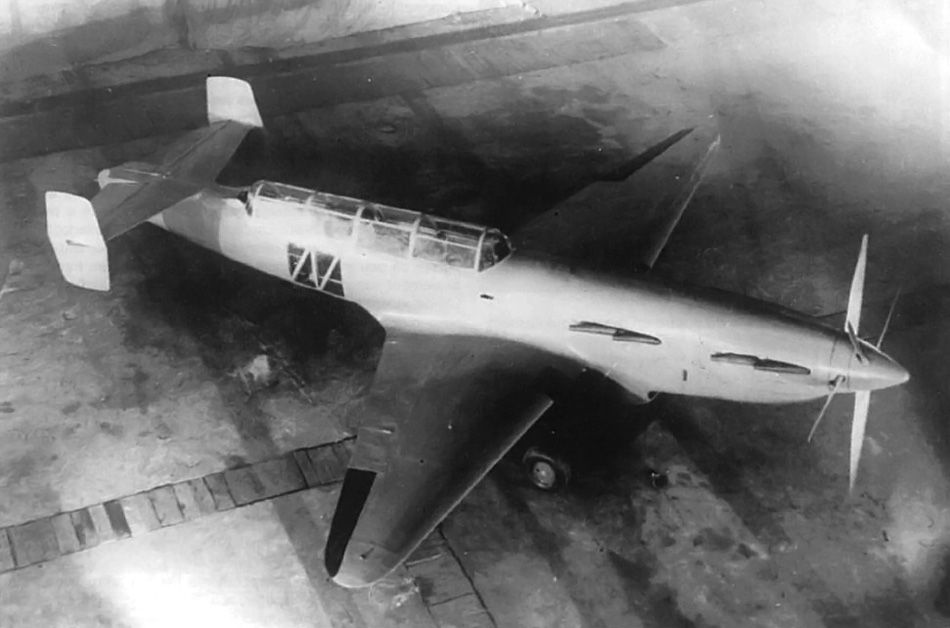
A good view of the twin engine Bolkhovitinov Sparka. Note the plexiglass glazing for the bombardier's downward view.

A good view of the twin-engine Bolkhovitinov Sparka. Note the plexiglass glazing for the bombardier’s downward view.

The Sparka was a low-wing aircraft of all-aluminum construction with stressed skin. The aircraft had a twin fin tail to increase the rear gunner’s field of fire. The undercarriage was fully retractable; the main gear retracted toward the rear, and the wheels rotated 90 degrees to lie flat within the wings. The pilot and navigator/bombardier/gunner sat in tandem under a long canopy. Between the pilot and second crew member was a small bomb bay for 882 lb (400 kg) of bombs. A plexiglass section on the bottom of the aircraft just aft of the bomb bay provided the bombardier a view of the ground. The aircraft was 43 ft 4 in (13.2 m) long and had a relatively short wingspan of 37 ft 4 in (11.38 m). The Sparka weighed 12,460 lb (5,652 kg).

The Sparka was powered by two Klimov M-103A engines positioned in tandem in the aircraft’s nose. This coupled engine package was designated M-103SP. Each engine drove half of the aircraft’s six-blade, coaxial contra-rotating propeller unit. This engine and propeller arrangement was similar to the FIAT AS.6 installed in the Italian MC.72 and the Hispano-Suiza 12Y installed in the French Arsenal VB 10. With this engine arrangement, the front engine drove the rear propeller, and the rear engine drove the front propeller via a drive shaft that ran through the Vee of the front engine.
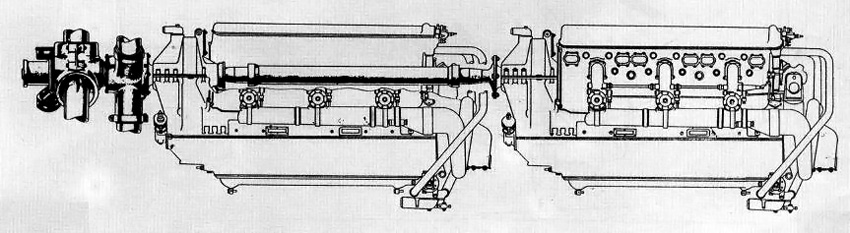
Schematic of the paired Kimlov M-103 engines installed in the Bolkhovitinov Sparka with the rear engine's drive shaft through the Vee of the front engine.

Schematic of the paired Klimov M-103 engines installed in the Bolkhovitinov Sparka with the rear engine’s drive shaft passing through the Vee of the front engine.

The Klimov M-103 engine was derived from the M-100, which was a licensed copy of the Hispano-Suiza 12Ybrs. The M-103SP had a 5.83 in (148 mm) bore and a 6.69 in (170 mm) stroke. Total displacement was 2,142 cu in (35.09 L). The engine produced 960 hp (716 kW). A radiator was installed in a large duct just below the rear engine, and it cooled both of the Sparka’s engines.

Bolkhovitinov started design work on the Sparka in 1937, and prototype construction began in July 1938. The aircraft made its first flight in January 1940 (some say late 1939) with B. N. Kudrin at the controls. VVS testing took place from March through July 1940. The Sparka showed good speed, reaching 354 mph (570 km/h). However, the takeoff run was excessive, landing speeds were high, and visibility over the nose was impaired. In addition, some trouble was encountered with the rear engine’s propeller drive shaft breaking due to excessive vibrations. Even so, the aircraft received a positive assessment, noting that the installation of the tandem engines eliminated a considerable amount of drag over two separate nacelles.
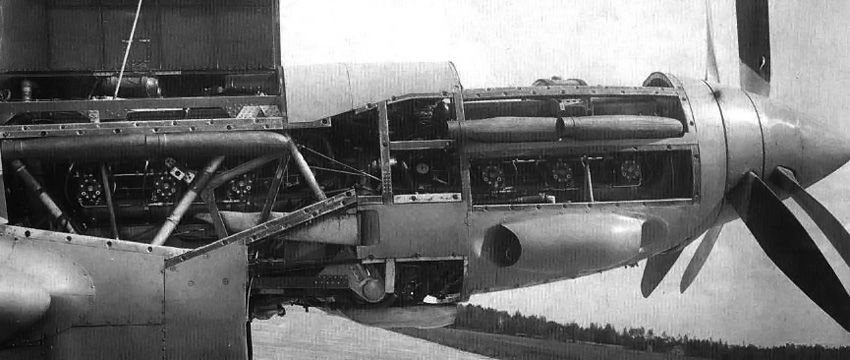
Engine bay view of the two Kimlov M-103 engines.

Engine bay view of the two Klimov M-103 engines.

A new wing was designed with a NACA-230 airfoil section to improve takeoff and landing performance. The aircraft was tested with this new wing from September to December 1940, and it did improve the aircraft’s takeoff and landing characteristics.

The Sparka was reconfigured for a single 1,050 hp (783 kW) Klimov M-105P (some say 103P) engine, which was installed in the forward engine bay. The M-105P was a development of the M-103P and could be fitted with a cannon in the engine’s Vee to fire through the propeller hub. The M-105P retained the bore and stroke of the earlier M-103P (and M-103SP) engine. The aircraft was tested on skis in early 1942 but was underpowered with the single M-105P, attaining a top speed of only 249 mph (400 km/h).
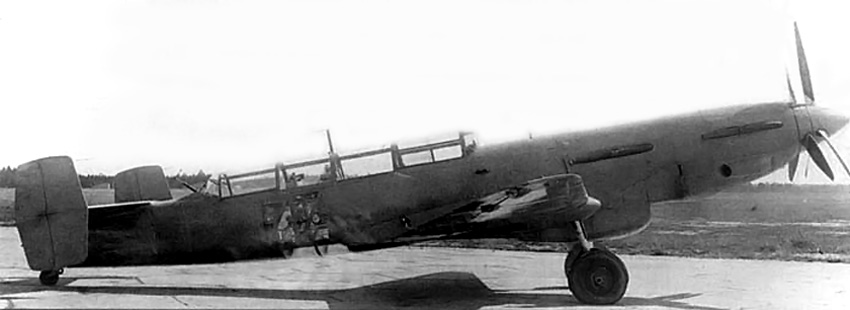
In this side view, the glazing on the bottom of the Sparka can clearly be seen.

In this side view, the glazing on the bottom of the Sparka can clearly be seen.

Some say the single engine version was really a separate aircraft (known as S-1) that flew in January 1940 to test the airframe configuration. This seems unlikely because of the time frame involved. The twin-engine Sparka (S-2) would have been nearly complete by the time the single engine airframe test ship first took to the air, making major changes impossible and minor changes difficult. If the airframe test ship had issues, there would not have been enough time for any changes to be made before the official trials took place in March 1940. Not to mention that adding the power and weight of another engine would change the aircraft’s flight dynamics considerably.
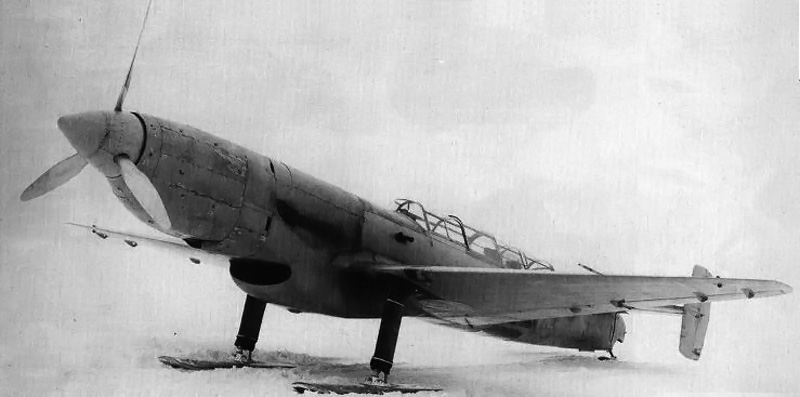
Bolkhovitinov S skis

The single-engined Bolkhovitinov S on skis.

Regardless, development on the Sparka was abandoned in mid-1941, partially a result of the German invasion. However, further studies were made on the feasibility of the tandem engine arrangement powering a fighter, but these studies did not lead to the production of any aircraft. In addition, the factory where the Sparka was built was needed to produce the Petlyakov Pe-2 attack bomber.

Rear view of the Sparka showing the defensive machine gun installation.

Rear view of the Sparka showing the defensive machine gun installation.

Sources:
Soviet X-Planes by Gordon and Gunston (2000)
Soviet Air Power in World War 2 by Yefim Gordon (2008)
Soviet Combat Aircraft of the Second World War, Vol. 2 by Gordon and Khazanov (1999)
Aircraft of the Soviet Union by Bill Gunston (1983)
Russian Piston Aero Engines by Vladimir Kotelnikov (2005)
http://www.secretprojects.co.uk/forum/index.php/topic,4532.msg152239.html#msg152239
http://en.wikipedia.org/wiki/Bolkhovitinov_S
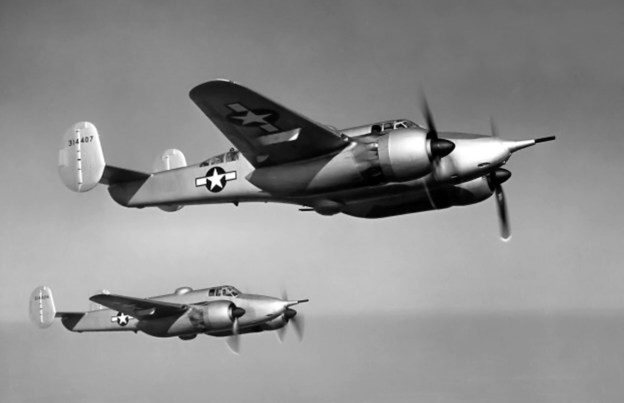
Beech XA-38 Grizzly air 2

Beech Aircraft Company XA-38 Grizzly

By William Pearce

In March 1942, the Beech Aircraft Company began design work on a two-seat heavy fighter to destroy enemy bombers. Since the Curtiss XP-71 had already been delegated this task, the Beech developed the design into an attack aircraft to replace the Douglas A-20 Havoc. Beech gave this aircraft the in-house designation Model 28 and submitted its proposal to the US Army Air Force on 23 September 1942. On 2 December 1942, the AAF ordered two prototypes and designated the aircraft XA-38; this was Beech’s first combat aircraft. Beech originally called the aircraft Destroyer, but the AAF changed the name to Grizzly. The XA-38 was similar in appearance to the Beech 18, but it was an all-new aircraft. The project was led by Bill Cassidy, and the aircraft was to be strong, maneuverable, and well-armed. Its mission was to destroy fortified gun emplacements, armored vehicles, tanks, submarines, and coastal surface vessels.

Beech XA-38 Grizzly air

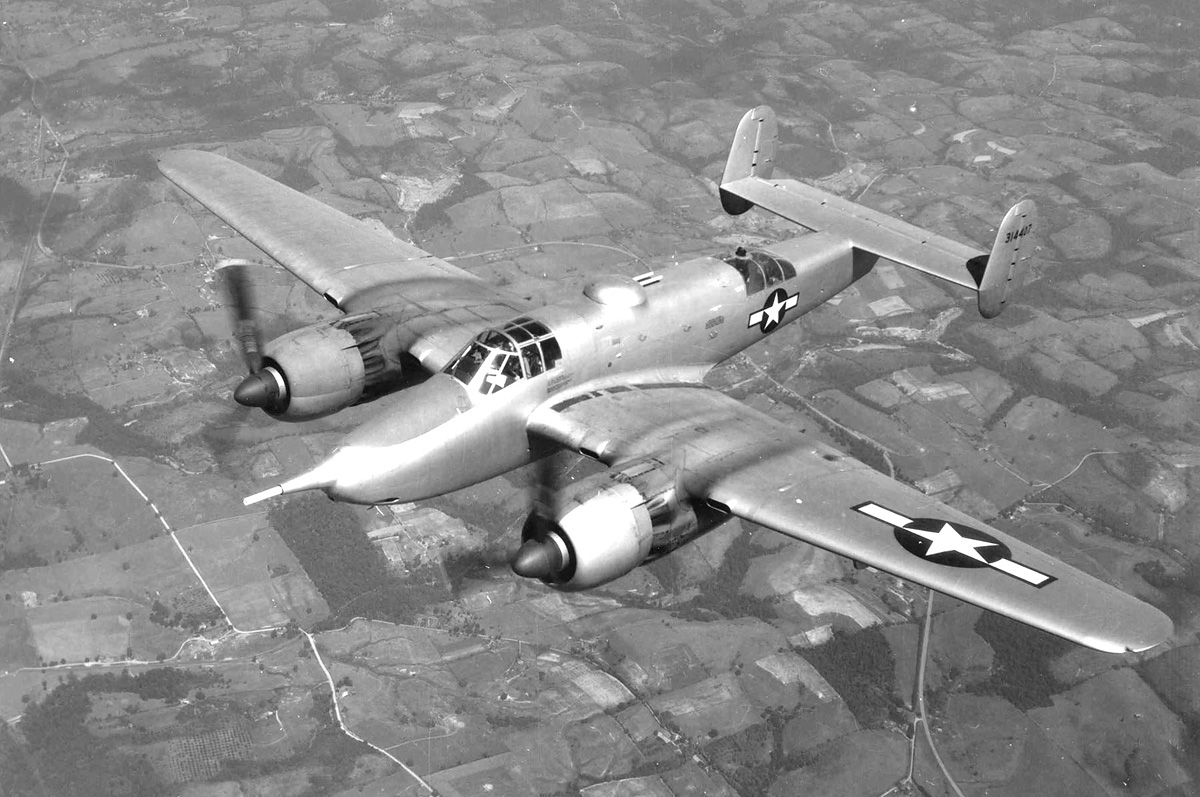
The second Beech XA-38 Grizzly (serial no 43-11407), with all guns installed.

The XA-38 was a two-place, mid-wing aircraft with a slim fuselage and twin tails. The gunner sat in the rear of the fuselage and operated remote upper and lower turrets, each fitted with two Browning .50 cal guns. The ventral turret could be locked in the forward position and fired by the pilot in strafing attacks. In the nose of the aircraft were another two Browning .50 cal guns and a T15E1 (M10) 75 mm cannon. The nose swung open to service the guns and was even removable so that different armament could be used. The .50 cal guns each had 500 rounds, and the 75 mm cannon had 20 rounds. Each wing supported two hard points that could carry a combined total of 2,650 lb (1,200 kg) of ordinance or 600 gal (2,270 L) of fuel.

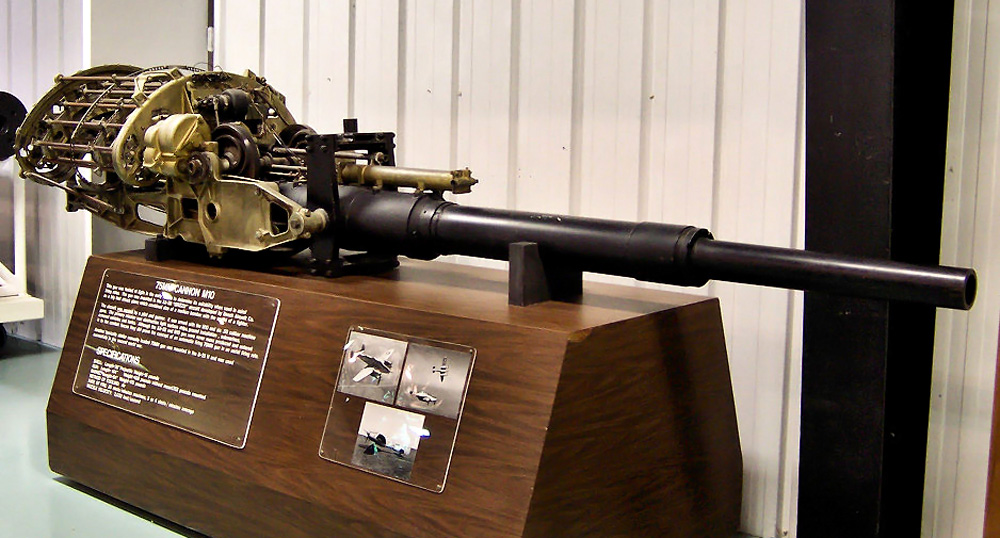
The T15E1 75 mm cannon had an 84 in (2.13 m) barrel that extended about 2 ft (.61 m) beyond the aircraft’s nose. The cannon was self-loading, 144 in (3.66 m) long, and originally weighed 1,800 lb (816 kg). However, through further development, the weight was reduced to 1,138 lb (516 kg). It fired a 26 in (.66 m) shell with a 15 lb (6.8 kg) projectile. The cannon consisted of a 75 mm gun (T9E2), 75 mm feed mechanism (T13), and the 75 mm gun mount (T15E1).

Beech XA-38 Grizzly above

Excellent view of the second XA-38, showing the slim fuselage. The aircraft was on a test flight over Kansas.

The Grizzly’s aluminum skin was entirely flush riveted, and the fully retractable gear, including tailwheel, was engineered for operations out of unimproved airstrips. The aircraft was powered by two Wright R-3350-43 engines producing 2,300 hp (1,715 kW) each. Each engine turned a 14.2 ft (4.32 m), three-blade Hamilton Standard propeller. The XA-38 could carry 640 gal (2,423 L) of fuel in its wings and an additional 185 gal (700 L) in the fuselage behind the pilot. The aircraft had a wingspan of 67.3 ft (20.5 m) and was 51.8 ft (15.8 m) long. It weighed 22,480 lb (10,197 kg) empty and had a maximum takeoff weight of 35,265 lb (15,995 kg). The XA-38’s climb rate was 2,170 fpm (661 m/m), and it had a service ceiling of 27,800 ft (8,475 m). Maximum speed at 3,100 ft (945 m) was 376 mph (605 km/h), and cruise speed at 16,000 ft (4,877 m) was 344 mph (554 km/h). The 45-degree flaps allowed the aircraft to land at 97 mph and operate out of a 2,500 ft (762 m) runway.

Beech XA-38 Grizzly air 2

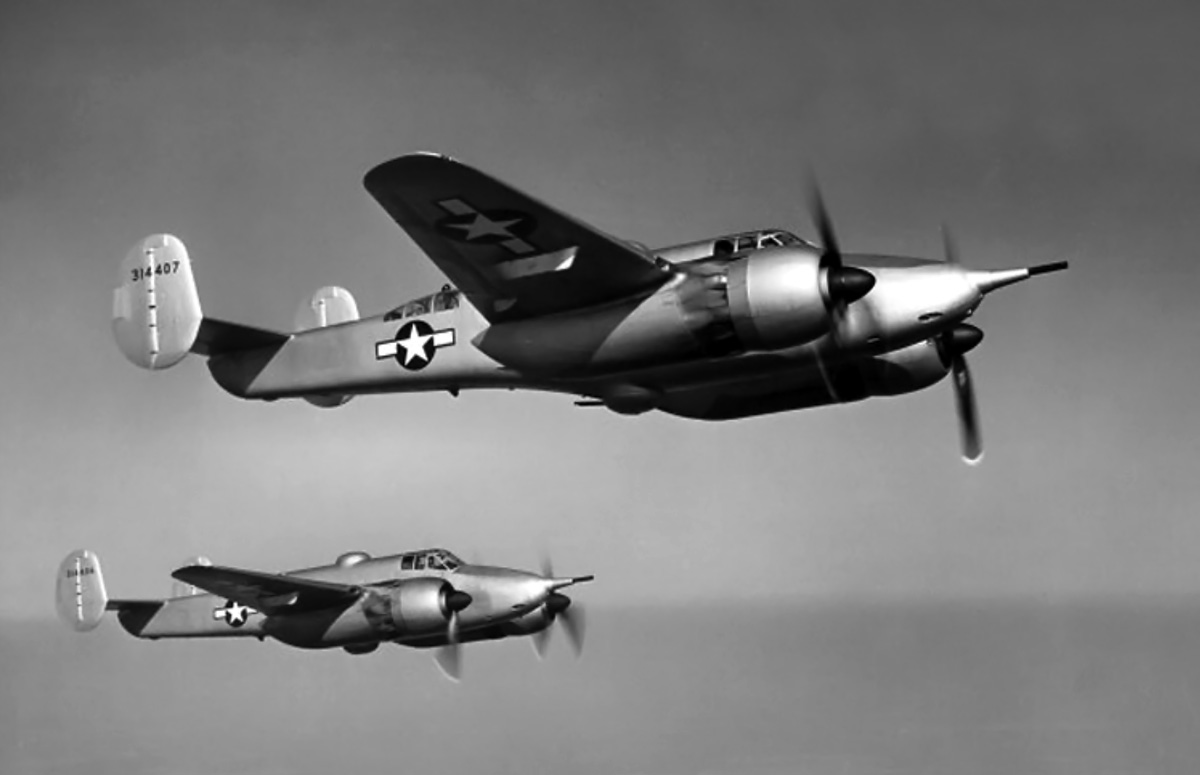
Both XA-38 aircraft in flight. The dummy turrets can be see on the first XA-38 to fly (furthest from camera).

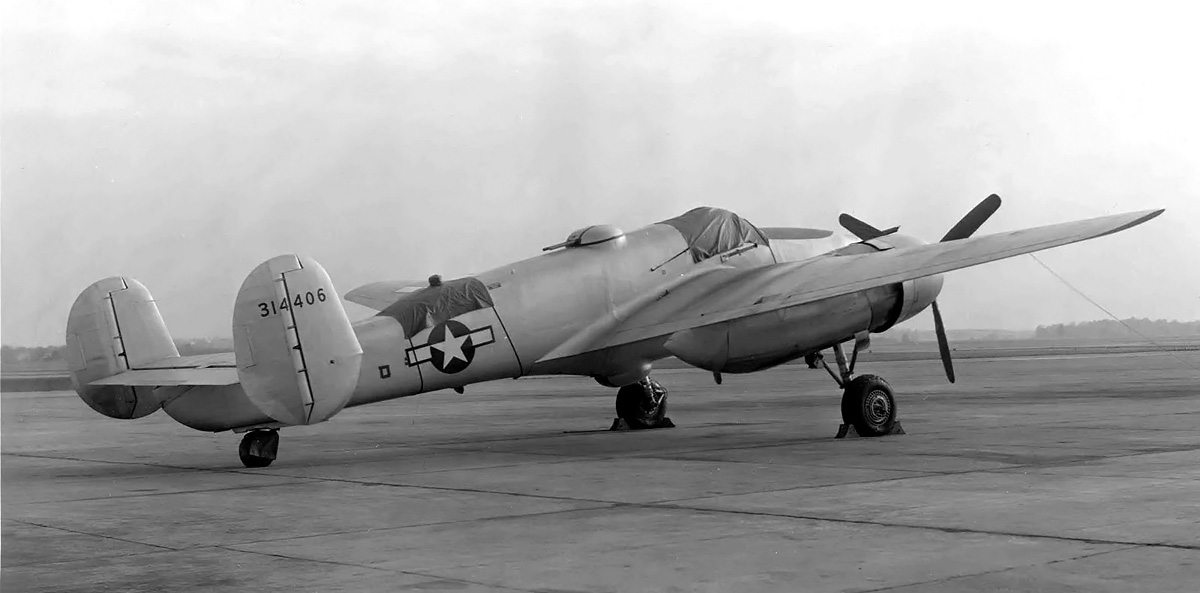
The aircraft program was met with long delays due to the unavailability of the R-3350 engines, remote turrets, and the 75 mm cannon. The Boeing B-29 had engine priority; the Douglas A-26 had the turrets; and the cannon was still being developed. The first XA-38 (serial no 43-14406) took to the air on 7 May 1944 with Vern Carstens at the controls. The turrets were still not available, so dummy turrets were substituted. In July 1944, the aircraft was flown to Tulsa, Oklahoma, where the 75 mm cannon was fitted and ground fired. Later in July, the Grizzly fired the cannon in-flight over Great Bend, Kansas.

Flight tests continued and minor issues were worked out. The aircraft performed very well, and during one early, low-level test flight, the XA-38 was able to pull away from the P-51B chase plane. Capt. Jack Williams evaluated the aircraft for the AAF and made 38 flights in the XA-38 between 13-24 October 1944. The aircraft was reported to be very maneuverable for an aircraft of its size and easy to fly through most aerobatic maneuvers. The aircraft was transferred to Dayton, Ohio for further evaluation on 7 July 1945. At some point, at least a mockup of the upper turret was added to the aircraft.

Beech XA-38 Grizzly 06

What must be a late image of the first Beech XA-38 Grizzly (serial no 43-14406) with what appears to be a mockup of the upper turret installed.

The second aircraft (serial no 43-11407) took to the air on 22 September 1945; Carstens was again at the controls. This aircraft had the correct turrets installed, and all weapons were operational. After initial flight tests, the XA-38 was transferred to Eglin Field, Florida for armament trials. Here, it amassed an additional 38 hours of flight tests, but there was little interest since the war was over.

The Grizzly’s main problem was that its engines were needed elsewhere. B-29 production left no spare R-3350s available for any type of A-38 production until mid-1945. By that time, the war was winding down, and there was no foreseeable need for the A-38. One of the XA-38s reportedly went to Davis-Monthan AFB, Arizona, but its ultimate fate is not recorded. The other aircraft was believed to be scrapped. The only remnant of the XA-38 Grizzly is the T15E1 cannon on display at the United States Air Force Armament Museum in Eglin AFB, Florida.

The T15E1 (M10) 75 mm cannon from the XA-38 as displayed in the United States Air Force Armament Museum. (Tom Fey image)

The T15E1 (M10) 75 mm cannon from the XA-38 as displayed in the United States Air Force Armament Museum. (Tom Fey image)

Sources:
Beech Aircraft and their Predecessors by A.J. Pelleteir (1995)
U.S. Experimental & Prototype Aircraft Projects by Bill Noton (2008)
American Attack Aircraft Since 1926 by E.R. Johnson (2008)
U.S. Aerial Armament in World War II, Vol. 1 by William Wolf (2009)
American Combat Planes of the 20th Century by Ray Wagner (2004)
– 75MM Cannon M10 display in the United States Air Force Armament Museum in Eglin AFB, Florida