Monthly Archives: October 2012

FIAT AS.6 Aircraft Engine (for the MC.72)

By William Pearce

For the 1929 Schneider Trophy Contest, Italy fielded a number of different aircraft and engine combinations. The end result was that none of their entries were developed enough be victorious, and Britain won the contest for the second time in a row. If the British were to win the competition in 1931, the Schneider Contest would be over, and Britain would retain permanent possession of the Schneider Trophy.

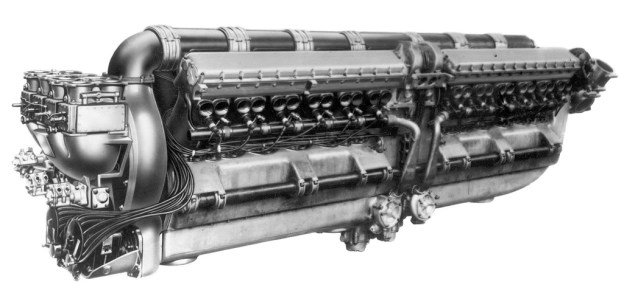
Side view of the FIAT AS.6 illustrating the engine’s length. In the middle of the engine at bottom, two water pumps can clearly be seen with coolant lines feeding the individual cylinders. Right behind the propeller hubs, one of the front engine section’s magnetos can be seen. The small pipes leading from the middle of the engine toward the rear engine section and from right behind the front engine section’s cylinder bank and toward the front engine are for the air starter.

To prevent a British victory in 1931, Italy focused on developing one aircraft and one powerplant for its Schneider efforts. Macchi Aeronautica was chosen to develop the airframe, and with the design talents of Mario Castoldi, the Macchi-Castoldi 72 (MC.72) was born. FIAT was tasked with developing an engine to power the MC.72 and defeat the British. Time was short for FIAT because the MC.72 would be designed around the engine.

As the FIAT engine team, led by Tranquillo Zerbi, began to develop a new powerplant, they quickly realized that there was not enough time to start from scratch; the engine that was to power the MC.72 would have to start from an existing engine. FIAT’s best powerplant at the time was the 1,000 hp (746 kW) AS.5 (Aviazione Spinto) V-12 engine. This engine was used in one of Italy’s 1929 Schneider racers, the FIAT C.29. The Italian team knew the engine would need at least 2,300 hp (1,715 kW) to win the 1931 Schneider Contest and began developing a supercharger, increasing the engine’s compression, and incorporating other enhancements to attempt to achieve the desired power. But even early on, Zerbi knew the AS.5 engine could not develop the power needed to defeat the British.

While working on the enhanced AS.5, a proposal was made to mount two AS.5 engines back-to-back, creating a V-24 engine. FIAT moved forward with the concept and called it the AS.6, but it was not as simple as bolting two AS.5 engines together. The AS.5 engine sections were not coupled together. They shared a common magnesium crankcase and an induction manifold, and there was only one throttle linkage. Everything else (the ignition, coolant, and oil systems) was independent for each engine section.

Rear view of the FIAT AS.6 showing the two four-barrel carburetors feeding the supercharger. Directly below the supercharger are fuel pumps and the two magnetos for the rear engine section.

A 0.60 gear reduction for the propellers would be driven from the back of each AS.5 engine section (middle of the V-24 power plant). A drive shaft would be taken from the gear reduction of each engine. These drive shafts would travel through the Vee of the front engine and to the nose of the aircraft.  The rear engine drove a 69.96 in (1.77 m) shaft inside the front engine’s 52.52 in (1.334 m) shaft. Via the drive shaft, each engine drove one pair of propellers that together made a coaxial contra-rotating unit; the front engine drove the rear propeller, and the rear engine drove the front propeller. Coaxial contra-rotating propellers allowed for a blade short enough to avoid sea spray and also cancelled out the torque of the engine.

The rear engine section powered a supercharger that supplied 6.5 psi (0.45 bar) of air to both engine sections through a manifold approximately 88.58 in (2.25 m) long. The supercharger took 250 hp (186 kW) to run and spun at 17,000 rpm. The propeller pitch was ground adjustable. The front and rear propellers were adjusted to different pitches to compensate for the supercharger’s drain on the second engine section (front propeller) and efficiency differences between the first and second set of blades. The metal propellers were 8.5 ft (2.59 m) in diameter.
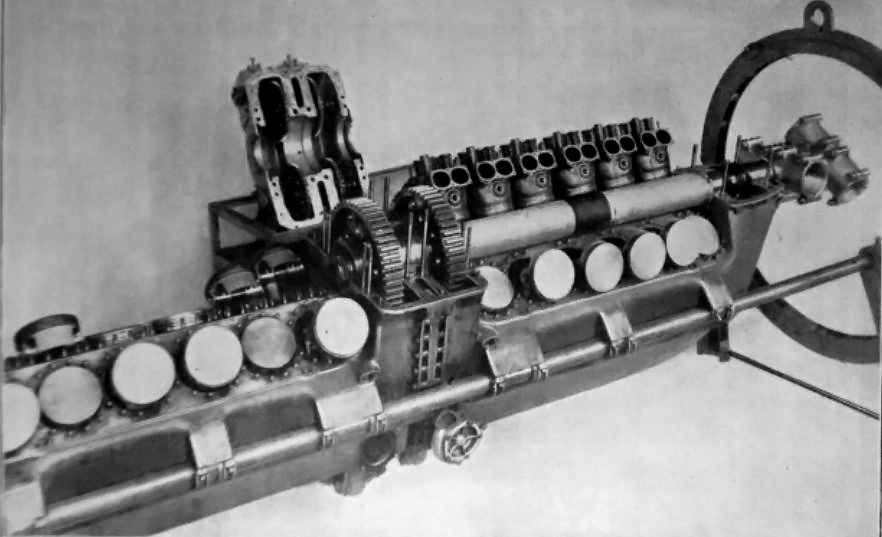
A detailed view inside the FIAT AS.6. The propeller gear reduction and drive shafts can clearly be seen. Note the individual cylinders on the far side of the engine and how the two crankcase sections are joined in the middle.

The FIAT AS.6 was a liquid-cooled, 60-degree, V-24 engine. It used individual steel cylinders, each with a 5.4 in (138 mm) bore and 5.5 in (140 mm) stroke, giving a total displacement of 3,067 cu in (50.256 L). The engine had a maximum compression ratio of 7 to 1. Four valves per cylinder were actuated by dual-overhead camshafts. The AS.6 was 132.48 in (3.365 m) long, 27.64 in (0.702 m) wide, 38.43 in (0.976 m) tall, and weighed 2,050 lb (930 kg). The engine was started by compressed air fed from a distribution pump located on the gear reduction housing. The rear engine section was started first.

Each inboard camshaft was driven from a gear parallel to and smaller than the propeller reduction gear. The outboard camshaft was geared to the inboard camshaft. Oil and water pumps were gear driven from the crankshaft. Each bank of each engine section had its own water pump. Ignition for each engine section was provided by two magnetos. The rear engine section’s magnetos were crankshaft driven and located below the supercharger. The front engine section’s magnetos were located on top of the engine, near the propellers, and driven from the outer (front engine’s) propeller shaft. Each cylinder had two spark plugs installed perpendicular to its axis: one located below the intake valves and the other below the exhaust valves.

Sectional view of the FIAT AS.6 illustrating the propeller drive shafts. Note the gear drive for the camshafts at top, the oil and water pumps at bottom, the front engine section’s magnetos at front, and the supercharger and rear engine section’s magnetos at rear.

During development, the AS.6 engine suffered many technical difficulties. Issues were encountered with spark plugs, ignition, coolant flow, fuel metering, induction, exhaust valves, connecting rods, and supercharger drive, to name a few. Much time was spent to resolve the issues. By April 1931, the engine completed a one hour run, producing 2,300 hp (1,715 kW).

The AS.6 engine was installed in the first of five MC.72 aircraft (MM 177 to MM 181), and flight trials began in the summer of 1931. Almost immediately, a new and very dangerous problem was discovered: while in flight, the engine would backfire at high power and high speed. The cause of this issue was a bit of a mystery because the engine ran perfectly on the ground but not during flight. Even with the engine’s difficulties, the aircraft had attained a speed of 375 mph (604 km/h). To demonstrate the backfire phenomenon, Capt. Giovanni Monti flew the MC.72 (MM 178) for FIAT and Macchi engineers on 2 August 1931. Sadly, a backfire ignited the volatile air/fuel mixture in the long induction manifold and caused it to explode. The MC.72 crashed into Lake Garda. Monti was killed in the crash.
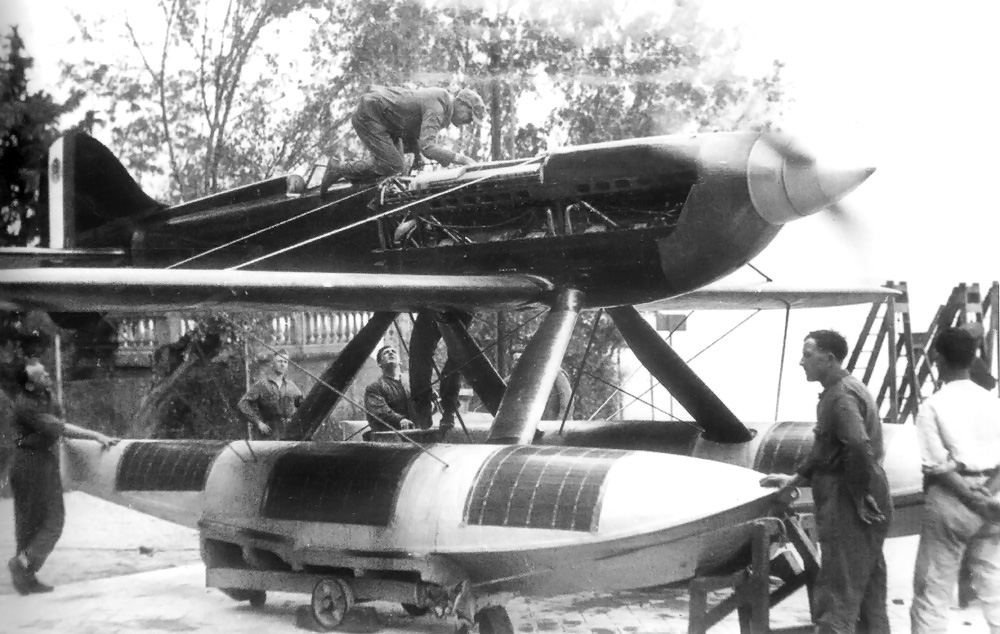
FIAT AS.6 engine being test run in a MC.72.

With the Schneider Contest one month away and the cause of the backfiring still unknown, the decision was made to withdrawal the AS.6-powered MC.72 from the race. The British would make an uncontested flight for the Schneider Trophy and retain it permanently. But the Italians had decided to make an attempt on the absolute world speed record on 13 September 1931, the same day as the Schneider race. On 10 September, Lt. Stanislao Bellini was making a practice run to exceed 394 mph (634 km/h), the fastest the MC.72 had flown, when the aircraft (MM 180) flew straight into rising terrain. Debris found some distance from the impact site indicated that there had been an in-flight fire or explosion. Subsequently, the MC.72 was withdrawn from flight status.

The vision of what the AS.6 and MC.72 could have been continued to stir in the minds of various officials, and a new record attempt was planned. Believing the backfire issue was fuel related, the Italians wanted the help of Rod Banks: the Britain who developed the special fuel used for Rolls-Royce’s R Schneider engine. Banks was closely associated with the British Schneider effort but was not employed by Rolls-Royce or Supermarine. In 1932, the British sent Banks to see what could be done to improve the AS.6 engine.

Rear view of a preserved FIAT AS.6 engine at the Centro Storico Fiat in Turin, Italy. (Gianni image)

Banks arrived to find the AS.6 engine producing 2,400 hp (1,790 kW), but not reliably. A special sprint version of the engine had produced 2,850 hp (2,125 kW), but only for one minute. One of the issues Banks discovered was that the Italians had not fully accounted for the ram effect of having air forced into the induction by the forward speed of the aircraft. The AS.6 ran well on the ground, but the 400+ mph (640+ km/h) air being rammed into the intake caused a lean condition. This lean condition led to a backfire that ignited the air/fuel mixture in the long induction.

Banks knew how Rolls-Royce had dealt with this issue. Rolls-Royce had used a Kestrel engine to run a blower that supplied ram air for the R engine being tested. Banks had the Italians use a similar set-up that provided ram air at 435 mph (700 km/h) into the AS.6’s intake. The AS.6 engine was tuned under these conditions and no longer backfired. The sprint engine was able to produce 2,850 hp (2,125 kW) for an hour.

Warrant Officer Francesco Agello and the FIAT AS.6-powered MC.72 after setting the 3 km absolute world speed record at 440.682 mph (709.209 km/h) on October 23, 1934.

Late in 1932, the MC.72 took to the air once more; the AS.6 engine now produced a reliable 2,400 hp (1,790 kW). On 10 April 1933, Warrant Officer Francesco Agello set a 3 km absolute world speed record at 423.824 mph (682.078 km/h) in MM 177. On 8 October 1933, LtCol. Guglielmo Cassinelli captured the 100 km speed record at 391.072 mph (629.370 km/h). On 21 October, Capt. Pietro Scapinelli won the Blériot Cup in MM 179 for flying in excess of 600 km/h for over half an hour. His actual speed over the 30 minute run was 384.799 mph (619.274 km/h).

A year later, an AS.6 sprint engine was installed in the MC.72 (MM 181). This engine produced 3,100 hp (2,312 kW) at 3,300 rpm; 11.5 psi (0.79 bar) of boost was provided by the supercharger spinning at 19,000 rpm. On 23 October 1934, Agello was again at the controls and upped the 3 km record to 440.682 mph (709.209 km/h)—Agello was the fastest man on earth. This speed has never been surpassed by a piston-powered seaplane.

The record-setting MC.72 (MM 181) and an AS.6 engine are on display in the Museo Storico dell’Aeronautica Militare in Vigna di Valle, Italy. Another AS.6 engine is on display at the Centro Storico Fiat (Fiat Historic Center) in Turin, Italy.

The FIAT AS.6 displayed alongside the MC.72 (MM 181) at the Museo Storico dell’Aeronautica Militare in Vigna di Valle, Italy.

Sources:
The Schneider Trophy Story by Edward Eves (2001)
Schneider Trophy Seaplanes and Flying Boats by Ralph Pegram (2012)
Schneider Trophy Aircraft 1913-1931 by Derek James (1981)
Schneider Trophy Racers by Robert Hirsch (1993)
Jane’s All the World’s Aircraft 1935 by Grey and Bridgman (1935)
Italian High-Speed Airplane Engines NACA Technical Memorandum No. 944 by C. F. Bona (1935/1940) 17.7mb pdf
Technical Aspects of the Schneider Trophy and the World Speed Record for Seaplanes by Ermanno Bazzocchi (1971)
Idrocorsa Macchi by Apostolo and Cattaneo (2007)
I Kept No Diary by F.R. Banks (1978)

Bellanca 28-92 Trimotor

By William Pearce

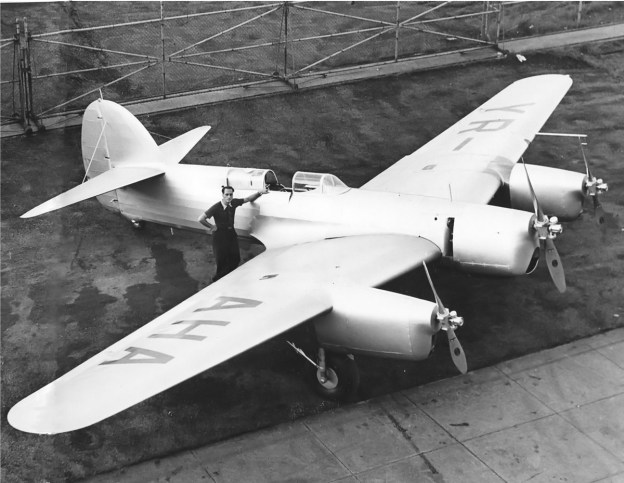
The Bellanca 28-92 (construction no. 903) was developed by Giuseppe Bellanca in 1937 for Capt. Alexandru Papana. Papana was a Romanian Air Force pilot who planned to use the Bellanca on a long-distance good-will flight from New York to Bucharest. He named the aircraft Alba Iulia 1918 to commemorate the assembly of ethnic Romanian delegates who unified what is modern-day Romania at Alba Iulia, Transylvania in 1918. The aircraft carried the Romanian registration YR-AHA.

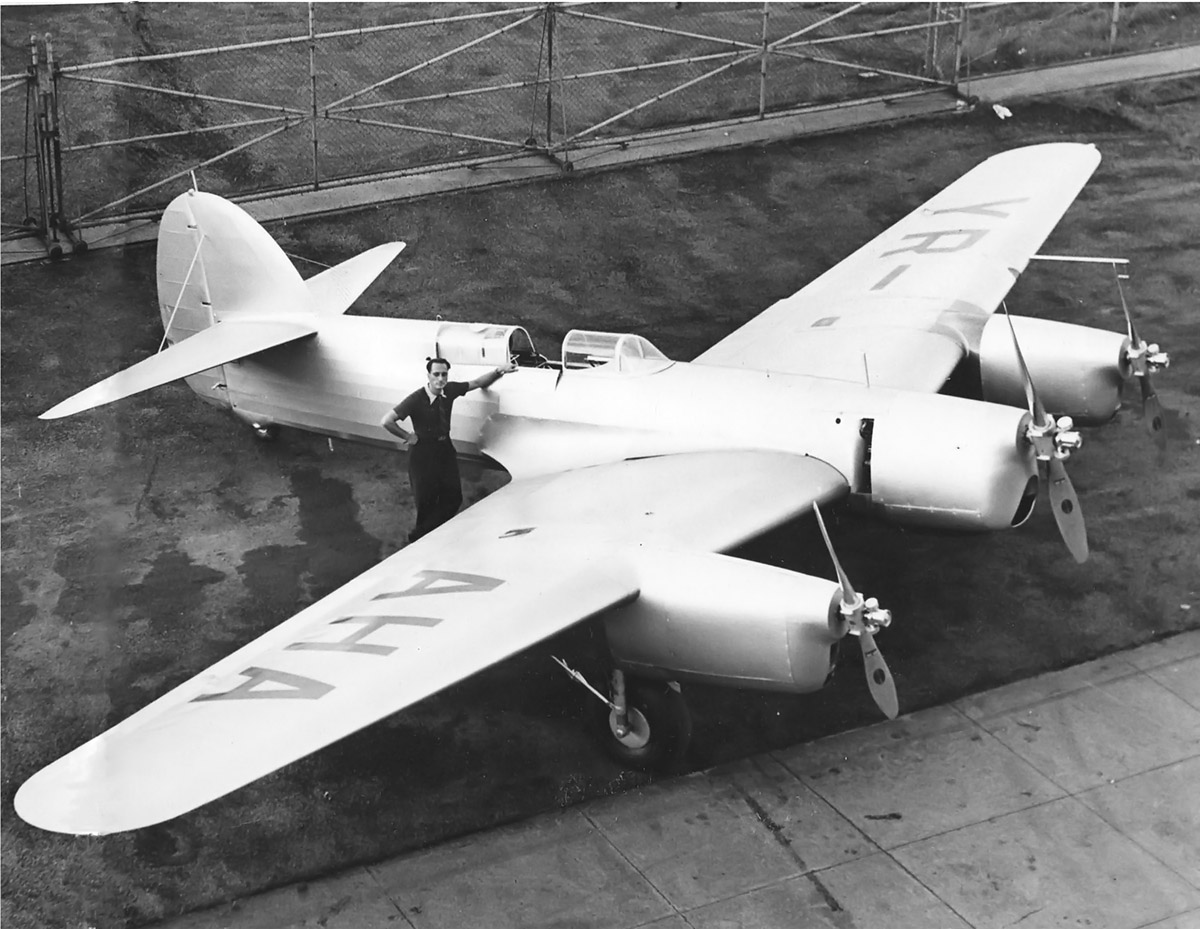
Alex Papana poses with the Bellanca 28-92. The Romanian registration can be seen on the wings but the name, “Alba Iulia 1918,” has yet to be applied. Note the propellers do not have spinners.

The Bellanca 28-92 was a low-wing, single-seat, trimotor design. The fuselage was of tubular steel construction and covered by aluminum back to the cockpit. Aft of the cockpit, the fuselage was covered with fabric. The wings and tail were plywood-covered, and the control surfaces were covered by fabric. The main undercarriage partially retracted into the rear of the wing engine nacelles, but the tailwheel did not retract.

Installed in each wing of the aircraft was a 250 hp (186 kW) Menasco C6S4 engine. The C6S4 Super Buccaneer was a direct drive, air-cooled, inverted, straight-six aircraft engine. The C6S4 was supercharged and displaced 544 cu in (8.9 L). Each C6S4 engine drove a 6 ft 6 in (1.98 m) diameter, two-blade, adjustable-pitch propeller.

The complete 28-92 with spinners and “Alba Iulia 1918” painted on the side. “YR” is painted on the tail, and the registration “YR-AHA” is repeated on the upper fuselage behind the cockpit..

A 420 hp (313 kW) Ranger SGV-770 engine was in the nose of the 28-92. The SGV-770 was an air-cooled, inverted, V-12 engine. The engine was supercharged, displaced 773 cu in (12.7 L), and had gear reduction for the 8 ft 3 in (2.51 m) diameter, two-blade, adjustable-pitch propeller.

All of the trimotor’s engines were hand cranked to start. The 28-92 had a fuel capacity of around 715 gallons (2,707 L). The aircraft had a span of 46 ft 4 in (14.1 m), a length of 28 ft 4 in (8.6 m), and weighed 4,700 lb (2,132 kg) empty. The 28-92 had a top speed of 285 mph (459 km/h) and a 3,000 mile (4,828 km) range at 250 mph (402 km/h) or a 4,160 mile (6,695 km) range at 200 mph (322 km/h). Landing speed was 75 mph (121 km/h).

Front view of the 28-92 trimotor illustrating the limited visibility from the cockpit while the aircraft was on the ground.

Papana was inexperienced with superchargers and inadvertently overboosted the engines during his first test flight in the trimotor. The incident led to a disagreement with Bellanca, and Papana cancelled his order for the aircraft. Since the 28-92 was complete and neither Papana nor the Romanian government paid for the aircraft, it remained at the Bellanca factory.

In 1938, Bellanca registered the aircraft in the United States as NX2433 and entered it in the Bendix Trophy cross-country race. Frank Cordova was the pilot for the race, and the trimotor flew as race number 99. Unfortunately, because of engine trouble, the aircraft did not finish the cross-country race. The Ranger engine in the nose quit, but Cordova continued to fly on the two Menasco engines for another 1,000 miles (1,609 km), landing in Bloomington, Illinois. A new rule for the 1938 races stated that no aircraft entered in the Bendix race could compete in the Thompson Trophy race, so the trimotor was returned to the Bellanca factory.

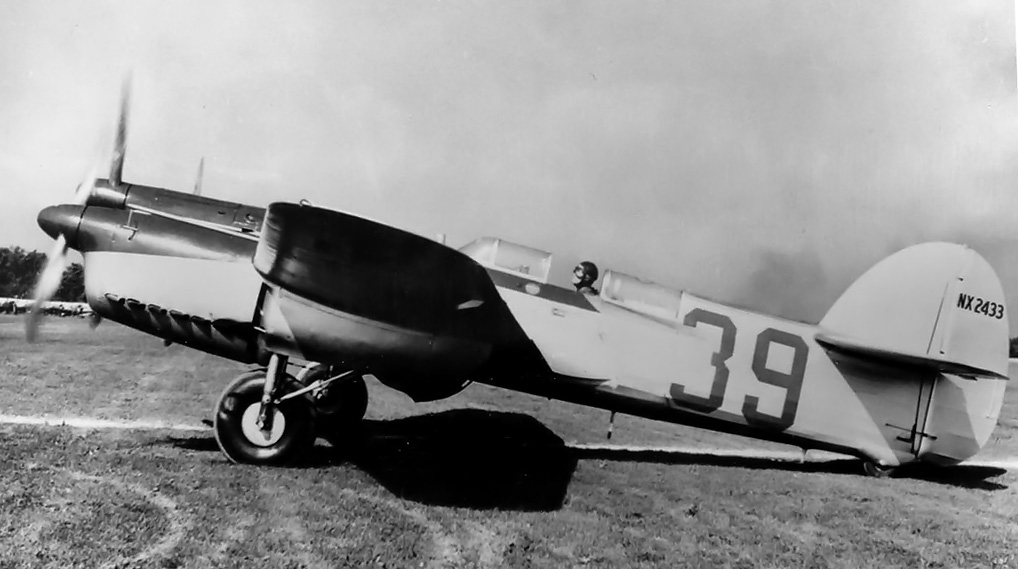
Bellanca 28-92 trimotor with Art Bussy at the controls for the 1939 Bendix race. The aircraft looked the same for the 1938 race except the race number was 99.

The 28-92 was again entered for the 1939 Bendix Trophy race, this time piloted by Art Bussy. Competing as race number 39, the aircraft finished second in the Los Angeles to Cleveland race with an average of 244.486 mph (393.462 km/h). Continuing on to New York, Bussy and the trimotor again finished second, averaging 231.951 mph (373.290 km/h) for the total distance from Los Angeles to New York.

Because of the start of World War II, all air races and record flights were put on hold. The Bellanca 28-92 trimotor was of little use during this time. The aircraft was eventually purchased by the Ecuadorian Air Force and served in South America from 1941 to 1945. Reportedly, the 28-92 was abandoned at a small airfield in Ecuador; a sad end for a unique aircraft.

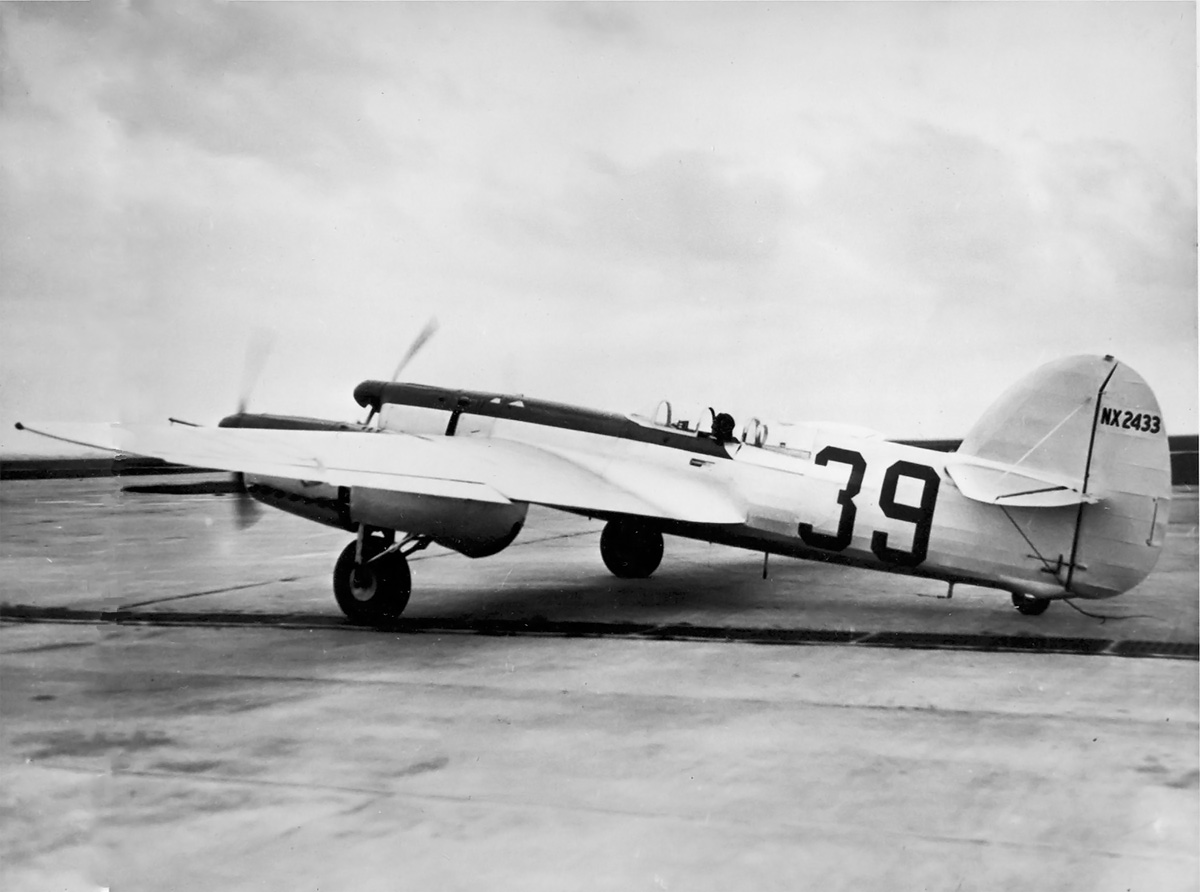
Rear 3/4 view of the Bellanca 28-92 showing the aircraft’s clean lines.

*Sources disagree on what number the aircraft used for which year. Images reportedly from 1939 show number 39 on the fuselage, but it is possible that they are in error and race number 99 could have been used in 1939 and race number 39 used in 1938.

Sources:
Aircraft of Air Racing’s Golden Age by Robert and Ross Hirsh (2005)
The Air Racer by Charles Mendenhall (1994)
Aerosphere 1939 by Glenn Angle (1940)
Bellanca Specials 1925 – 1940 by Theo Wesselink (2015)
Jane’s all the World’s Aircraft 1938 by Grey and Bridgman (1938)

Chrysler A57 Multibank Tank Engine

By William Pearce

When the United States entered World War II, there was a desperate need for a medium tank engine. Chrysler responded with a very unusual idea. Chrysler had its 251 cu in (4.1 L) straight six-cylinder, L-head engine available in large numbers. Under the direction of Executive Engineer Harry Woolson, the Engine Design department, headed by Mel Carpentier, designed a new powerplant that utilized the 251 cu in (4.1 L) engine. The basic idea was to combine five of these six-cylinder engines into a five-bank, 30-cylinder, single engine for medium tanks. This new engine, referred to as the Multibank, was given the designation A57.

Chrysler A57 engine as displayed at the Walter P. Chrysler Museum. Note the central water pump feeding the five engine banks, the individual distributors for each engine bank, and the row of carburetors at top: three on the left and two on the right.

The Multibank A57 engine had a large cast iron crankcase that formed the central structure of the powerplant. Five Chrysler 251 cu in (4.1 L) six-cylinder engines were bolted to this central crankcase. Two of the engines were bolted to the lower portion of the crankcase, one on each side, with their cylinders angled 7-1/2 degrees above horizontal. Two addition engines were bolted to the crankcase above the first two, with their cylinders 27 degrees above horizontal. The fifth engine was bolted vertically at the top of the crankcase. The five six-cylinder engines made up the banks of the A57.

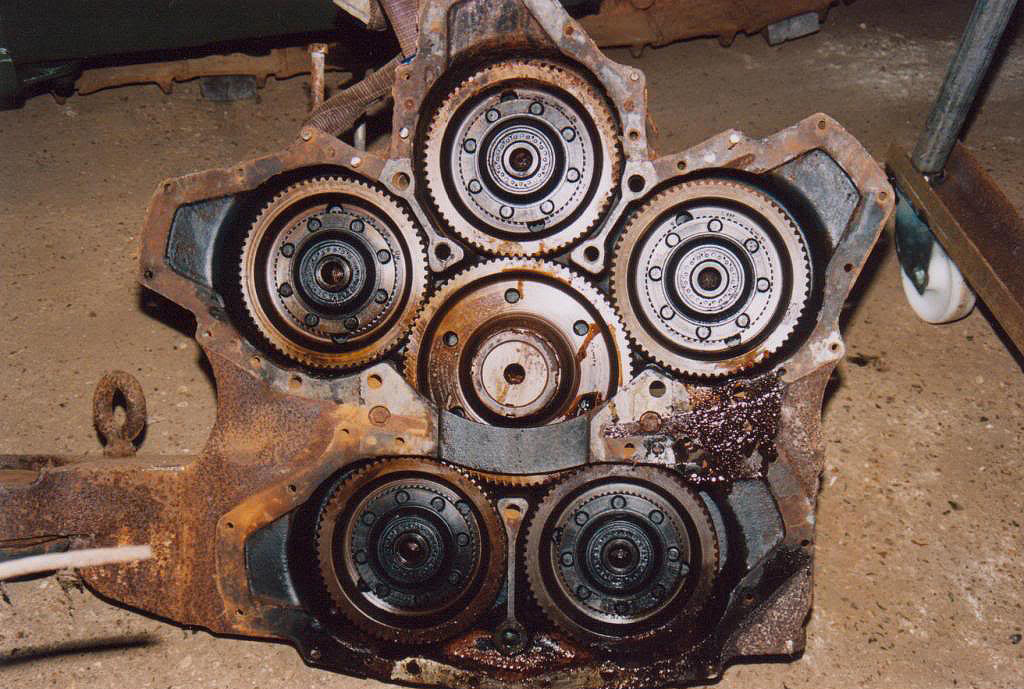
The A57 engine was mounted in the rear of the tank, and the crankshaft output flanges faced the front of the tank. The A57 retained the five crankshafts of the five six-cylinder engines.  A drive gear was coupled to the crankshaft of each engine bank. These five drive gears meshed with a single, central gear (all gears had herringbone teeth). The central gear drove the output shaft of the power plant. The output shaft went through the radiator and drove the cooling fan and clutch, which was attached to a drive shaft and then transmission.

A view of the gear case revealing the central drive gear that is driven by five outer gears, each coupled to their respective engine bank’s crankshaft. (Adrian Barrell image)

The A57 was originally equipped with five belt-driven water pumps. However, the belts would often break because of the alternating loads on the crankshaft pulleys. The design was changed to a single water pump with five outlets (one for each engine bank). This single water pump was driven by an accessory shaft from the central drive gear located on the opposite end of the central crankcase. Also at the rear of the tank, each engine bank had its own ignition coil and distributor that was gear-driven from the camshaft.

The first production engines had a single-barrel carburetor mounted directly on the intake manifold for each of the five engine sections. The different pipe lengths and contours leading from the air cleaner to the carburetors resulted in unequal fuel distribution. Metal vanes were added to direct airflow, and ultimately the five carburetors (each connected to its respective engine with a downpipe) were relocated in the same plane above the engine. This change simplified throttle linkages, the air cleaner arrangement, and maintenance.

The A57 Multibank had two oil pumps located in the central crankcase. One oil pump was a scavenge pump to transfer oil to a remote reservoir. The second pump was pressure pump that took oil from the reservoir and delivered high-pressure oil to all five engine sections.

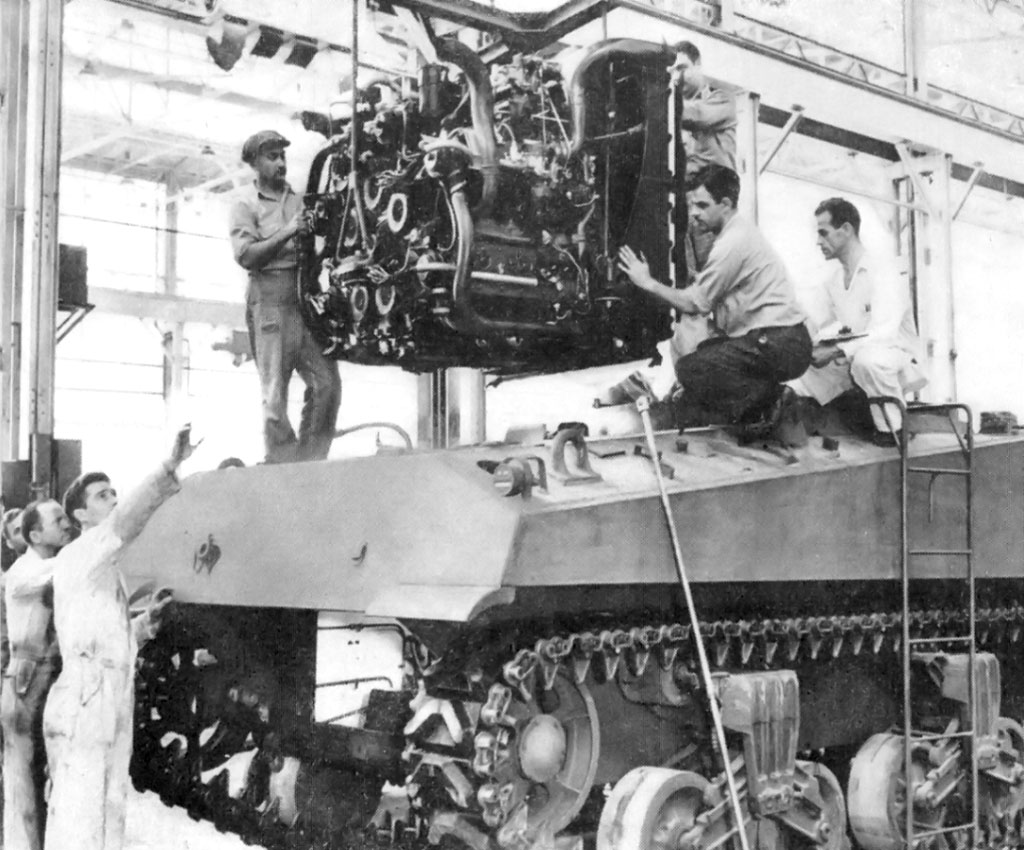
The 5,244 lb (2,379 kg) Chrysler A57 engine package being installed in a M4A4 Sherman tank. Note the engine’s size in comparison to the installers.

The A57 engine had a 3.4375 in bore and 4.50 in stroke, giving a total displacement of 1,253 cu in (20.5 L) from its 30 cylinders. The engine produced 445 hp (332 kW) and 1,060 lb ft (1,437 N m) of torque at 2,400 rpm. Given the arrangement of the engine sections, the Multibank was a relatively short but heavy engine, weighing 5,244 lb (2,379 kg) including radiator, cooling fan and clutch. Construction of the A57 utilized existing tooling from the 251 cu in (4.1 L) Chrysler six-cylinder engine, and the engines shared cylinder blocks, cylinder heads, pistons, connecting rods, and crankshafts.

On 3 June 1942, nine months after the initial engine discussion, the first of 109 M3A4 tanks were built with the A57 engine. However, the M3A4 tank was quickly replaced by the M4A4 Sherman tank, the first being produced on 30 June 1942. From April 1942 to September 1943, 9,965 Chrysler Multibank engines were built; 7,500 engines were installed in production tanks, and the remainder were built as spare engines. The A57 engine proved to be a very durable, reliable, and efficient power plant for medium tanks. Reportedly, the engine would still run with two of the five engine banks disabled from combat damage.

A number of Chrysler A57 Multibank engines survive, and some are still in working order in restored tanks.

Side view showing the relatively short length of the of the A57 engine at the Walter P. Chrysler Museum.

While similar engine concepts, no direct relation has been found between the Chrysler Multibank and the Perrier-Cadillac 41-75.

Sources:
Chrysler Engines 1922-1988 by Willem Weertman (2007)
Some Unusual Engines by L. J. K. Setright (1975)
http://autospeed.com/cms/title_The-Chrysler-A57-MultiBank-Engine/A_112613/article.html
http://en.wikipedia.org/wiki/Chrysler_A57_multibank
http://hmvf.co.uk/forumvb/showthread.php?10960-M4A4-restoration (amazing M4A4 restoration)
http://sbiii.com/chrymult.html

Mercedes-Benz T80 (Type 80) LSR Car

By William Pearce

German auto racer Hans Stuck wished to capture the world land speed record for himself and Germany. In the late 1930s, he worked to put together a team to achieve this goal. By 1937, Stuck had convinced Wilhelm Kissel, Chairman of Daimler-Benz AG, to have Mercedes-Benz develop and build the vehicle, which Dr. Ferdinand Porsche had agreed to design. Stuck also obtained project approval from Adolf Hitler, who saw the record as another propaganda tool to demonstrate Germany’s supposed technological superiority.

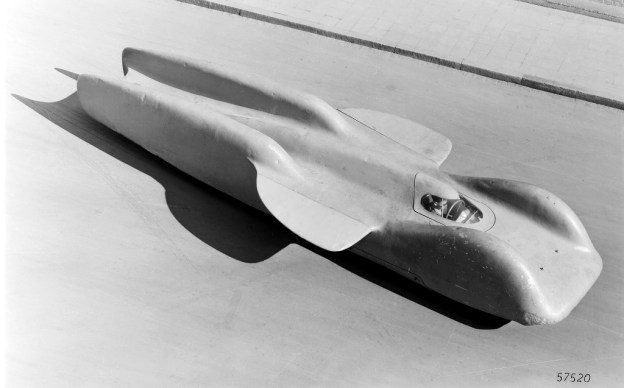
Mercedes-Benz T80. Hans Stuck’s project designed for over 373 mph (600 km/h) by Dr. Ferdinand Porsche. (Mercedes-Benz image)

The vehicle was officially known as the Mercedes-Benz T80 or Type 80. Dr. Porsche had first targeted a speed of 342 mph (550 km/h), utilizing a 2,000 hp (1,490 kW) engine. When the car was first planned in 1937, the speed record was held by Malcolm Campbell in the last of his Blue Bird cars at 301.473 mph (485.174 km/h) covering one km (.6 mi) and 301.129 mph (484.620 km/h) covering one mile (1.6 km). However, from 1937 through 1939, George Eyston in Thunderbolt and John Cobb in Railton had raised the record a total of five times, with Cobb achieving 369.74 mph (595.04 km/h) for the km (.6 mi) and 368.86 mph (593.62 km/h) for the mile (1.6 km) in August 1939. As these speed record challengers raised the record, the T80’s speed goal was raised as well. More power was made available from the engine, and when the T80 was nearly finished in 1939, the target speed for its record run was 373 mph (600 km/h) after 3.7 mi (6 km) of acceleration.

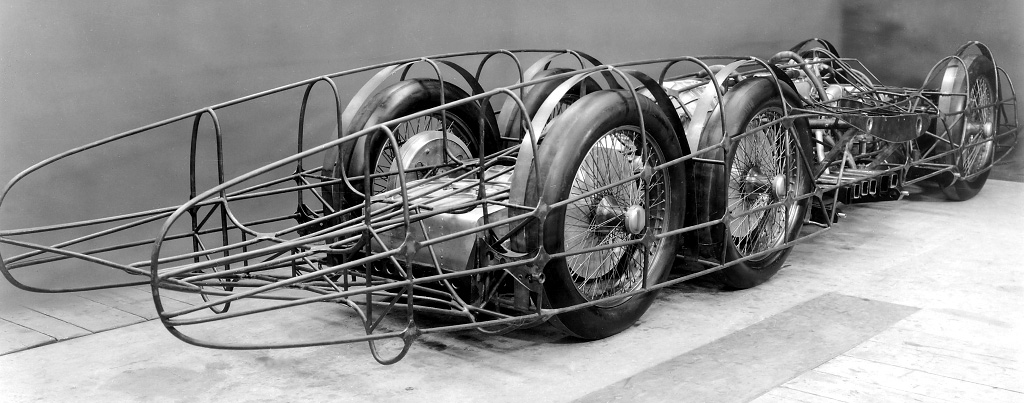
The T80 cost 600,000 Reichsmarks to complete; that is about $4 million in today’s USD. Aerodynamics specialist Josef Mikcl helped streamline the car’s body, which was built by aircraft manufacturer Heinkel Flugzeugwerke. The T80 incorporated a Porsche-designed enclosed cockpit, low sloping hood, and rounded fenders. The rear wheels were encased in elongated tail fins to help stabilize the vehicle at speed. Two small wings at the middle of the car provided downforce and ensured stability. The heavily streamlined twin-tailed body achieved a drag coefficient of 0.18, a very low figure even by today’s standards.

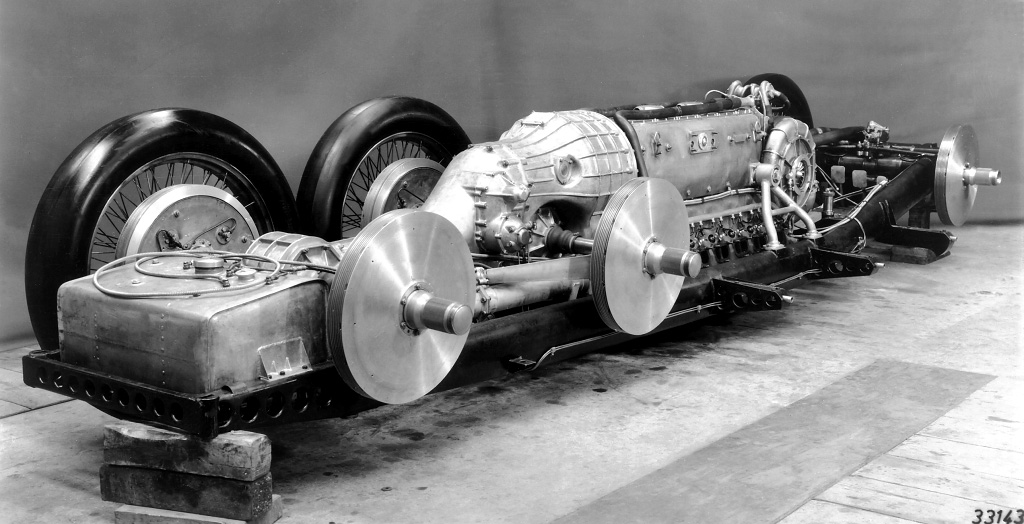
Chassis of the T80 with the DB 603 engine connected to the transmission. Note the drive arrangement to the four rear wheels and the fuel tank. (Mercedes-Benz image)

The car had three axles: the front provided steering, and the two rear axles were driven by a 2,717 cu in (44.5 L) Daimler-Benz DB 603 inverted V-12 aircraft engine. Ernst Udet, director of Germany’s Aircraft Procurement and Supply, provided the third DB 603 prototype engine for installation in the T80. The supercharged DB 603 engine with mechanical fuel injection was specially tuned to 3,000 hp (2,240 kW). The engine ran on a special mixture of methyl alcohol (63%), benzene (16%), ethanol (12%), acetone (4.4%), nitrobenzene (2.2%), avgas (2%), and ether (0.4%); it utilized MW (methanol-water) injection for charge cooling and anti-detonation.

Power from the engine was transmitted to the four drive wheels via a hydraulic torque converter to a single-speed final drive. To maintain traction, the T80 had a mechanical “anti-spin control” device. The front and rear wheels each had a sensor to mechanically detect wheel spin. If the rear wheels began to spin faster than the front, fuel to the engine was automatically reduced.

The framework of the T80’s body is shown here, illustrating how much longer the body was than the chassis. (Mercedes-Benz image)

The T80 was 26 ft 8 in (8.128 m) long and 4 ft 1 in (1.245 m) tall. Its body width was 5 ft 9 in (1.753 m) and 10 ft 6 in (3.20 m) wide including the wings. All six wheels were 7 in x 32 in and had a 4 ft 3 in (1.295 m) track. The vehicle weighed about 6,390 lb (2,900 kg).

The T80 vehicle had been unofficially nicknamed Schwarzer Vogel (Black Bird) by Hitler and was to be painted in German nationalistic colors complete with German Eagle and Swastika. Hans Stuck would have driven the T80 over a special stretch of the Dessau Autobahn (now part of the modern A9 Autobahn), which was 82 ft (25 m) wide and 6.2 mi (10 km) long with the median paved over. The record attempt was set for January 1940 and would have been the first absolute land speed record attempt in Germany.

The T80 as it looks now in the Mercedes-Benz Museum. (Mercedes-Benz image)

However, the outbreak of the war prevented the T80 run. In fact, the vehicle’s finishing touches were never completed, and it never moved under its own power. After the record attempt was cancelled, the T80 was garaged. In late February 1940, the DB 603 engine was removed, and the vehicle was stored in Karnten, Austria for the duration of the war. The Mercedes-Benz T80 was unknown outside of Germany until discovered by the Allies after World War II. Fortunately, the T80 survived the war relatively unscathed and was eventually moved into the Mercedes-Benz Museum in Stuttgart, where it is on permanent display in the Silver Arrows – Races & Records Legend room. (The T80’s body is on display. The chassis is in storage at a museum warehouse.)

On 16 September 1947, John Cobb achieved 394.19 mph (634.39 km/h) in the twin Napier Lion-powered Railton Mobil Special, surpassing the T80’s calculated Autobahn record run speed. However, after discovering the T80, the Allies had been quoted an astounding top speed of 465 mph (750 km/h) for the T80. Had the T80 been capable of this estimated top speed, the corresponding record would have been unequaled until 1964 when Craig Breedlove hit 468.72 mph (754.33 km/h) in the jet-powered Spirit of America. In addition, the T80 would still hold the record for the fastest piston-engined, wheel-driven vehicle.

Mercedes-Benz T80 leading the Silver Arrow display at the Mercedes-Benz Museum. (Mercedes-Benz image)

This article is part of an ongoing series detailing Absolute Land Speed Record Cars.

Sources:
The V12 Engine by Karl Ludvigsen (2005)
– “Rekord Krieg” by Charles Armstrong-Wilson. Racecar Engineering, Vol 22 No 1 (January 2012)
http://en.wikipedia.org/wiki/Mercedes-Benz_T80
http://www.autoevolution.com/news/mercedes-benz-t80-the-record-car-that-never-was-25555.html