Monthly Archives: November 2013

Djelmo Foresti Dark Blue

Djelmo Land Speed Record Car

By William Pearce

On 17 May 1922 at Brooklands, England, Kenelm Lee Guinness set an official world land speed record* of 133.75 mph (215.25 km/h). This record was set in a Sunbeam racer, powered by a 350 hp (261 kW) Sunbeam Manitou V-12 engine of 1,118 cu in (18.3 L) displacement. This car was later sold to Malcolm Campbell and became the first Blue Bird land speed record car. The Sunbeam Motorcar Company was very involved in record-breaking and racing at this time. At Sunbeam, Louis Coatalen and Vincenzo Bertarione designed a Grand Prix car, but it was never built. The design ended up being sold to Prince Djelaleddin (sometimes spelled Djelalledin).
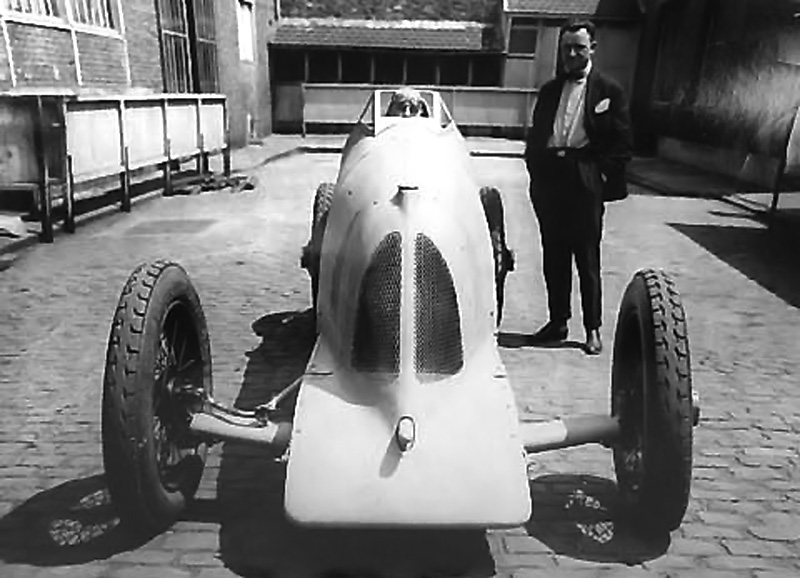
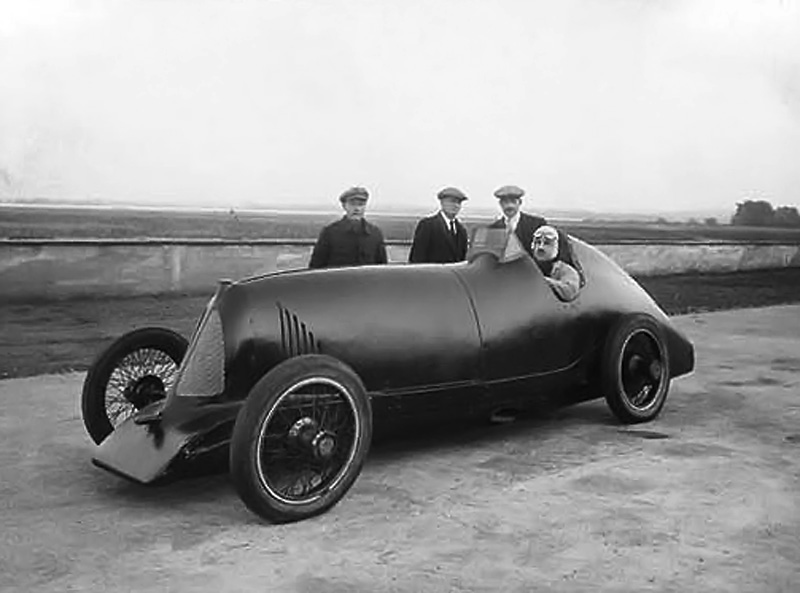
Djelmo Djelaleddin Foresti 1924

A picture from 1924 of the Djelmo racer with Price Djelaleddin behind the wheel and Giulio Foresti at right. The racer was painted light blue. Note the narrow track of the rear wheels.

The Egyptian Prince Djelaleddin lived in Paris, France and had an interest in setting a new land speed record. He hired Edmond Moglia, an Italian engineer living in Paris, to build the Sunbeam-designed racer for an attempt on the record. This new car was named Djelmo (a combination of Djelaleddin and Moglia’s names) and was built under a fair amount of secrecy.

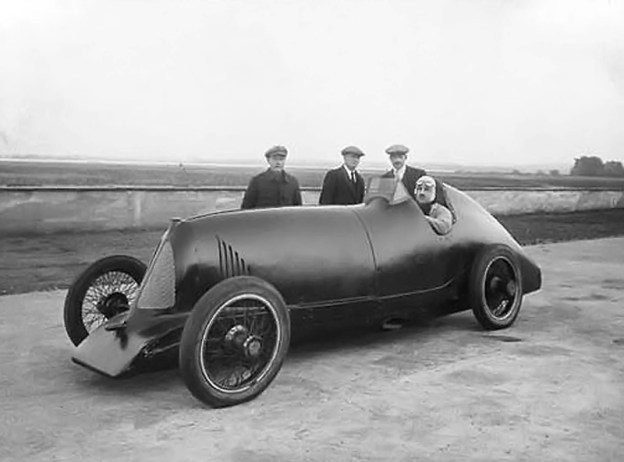
The Djelmo was a narrow and streamlined racer of a conventional layout, with the engine in front of the driver. The car was powered by a straight eight-cylinder engine with a 4.2 in (107 mm) bore and a 5.5 in (140 mm) stroke, for a total displacement of 615 cu in (10.1 L). Aluminum pistons were used, and the engine had a compression ratio of six to one. The cylinders were cast in two blocks of four. The two intake and two exhaust valves per cylinder were actuated by dual-overhead camshafts. The one-piece crankshaft was supported by nine main bearings. On the right side of the engine, one carburetor fed each pair of cylinders. On the left side, the eight exhaust stacks converged into one large pipe that exited low and just before the cockpit. Even though this engine was much smaller than the Manitou, it produced 355 hp (265 kW) when run at 3,000 rpm.
Djelmo Foresti Dark Blue

The Djelmo racer during what is believed to be its first public appearance. This image predates the one above, and reportedly, the racer was painted dark blue.

Three mounts were cast on each side of the engine’s crankcase. The rear mounts acted as the clutch housing to which the gearbox was mounted. The gearbox had two forward speeds and one reverse speed—the reverse gear was to satisfy French regulations. From the gearbox, power was sent to the rear wheels via a driveline geared directly to the rear axle; there was no differential. The rear wheels had a narrow track of only 37.4 in (.95 m). The front wheels had a much wider track of 58.3 in (1.48 m). The steering box and steering wheel were mounted to the top of the gearbox. To slow the Djelmo, a pedal worked a drum brake on the left rear wheel, and a hand lever worked a similar brake on the right rear wheel. The racer’s wheel base was 10.2 ft (3.1 m) and it weighted 2,006 lb (910 kg).

A few pictures of the seemingly complete racer were circulated in 1924. The Italian Giulio Foresti was selected as the driver, and the Djelmo was supposed to be ready for a record run in the United States in 1925. However, the car’s development was protracted, and its performance did not live up to expectations. A few test runs were conducted at sites in France, but these were just tuning sessions, not record attempts. The Djelmo underwent modifications to improve its performance and handling. Various carburetor set-ups were tried, a new windscreen was installed, and the Djelmo’s cowl and rear deck were reworked. The installation of a remote supercharger driven from the driveline was considered but never carried out.
Djelmo engine Pendine

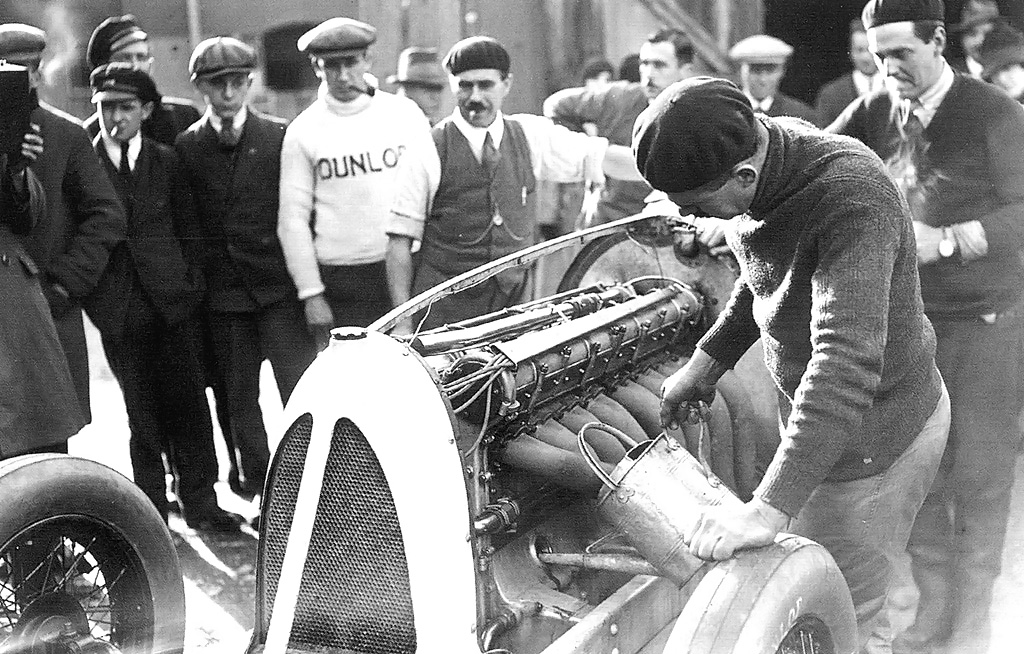
Foresti (at right) oversees oil being added to the Djelmo’s engine at Pendine Sands before a run on the beach. The integral front engine mount can be seen just below the oil can spout. Note the changes to the grill from the earlier images above.

By 1926, John Godfrey Parry-Thomas, in Babs, had increased the land speed record to 171.02 mph (275.23 km/h). It would be hard for the Djelmo to better this speed. In late 1926, Prince Djelaleddin set out to build a new car. The design was a progression of the Djelmo and called for two of the eight-cylinder engines to be placed in tandem with the driver in between. The front engine was to drive the front wheels and the rear engine the rear wheels. A double clutch and gear shift mechanism was to be used, all actuated by single controls. The estimated top speed of this racer was 250 mph (402 km/h).

By late 1927, Henry Segrave, in the Sunbeam 1000 HP “Mystery Slug,” had increased the land speed record to 203.79 mph (328.0 km/h). This speed was far beyond anything the Djelmo could hope for, despite its engine now producing between 400-450 hp (300-355 kW). Foresti had brought the Djelmo to Pendine Sands, Wales earlier that summer for some speed runs. He now focused on breaking the current British record of 174.88 mph (281.44 km/h) held by Campbell in his Napier-powered Blue Bird. Foresti was basically on his own and had no proper facilities in which to work on the Djelmo. This delayed the record attempt several months, as even minor replacement parts took hours or days to acquire. All the same, he became a fixture in the area and was welcoming to all visitors.
Djelmo before Foresti crash

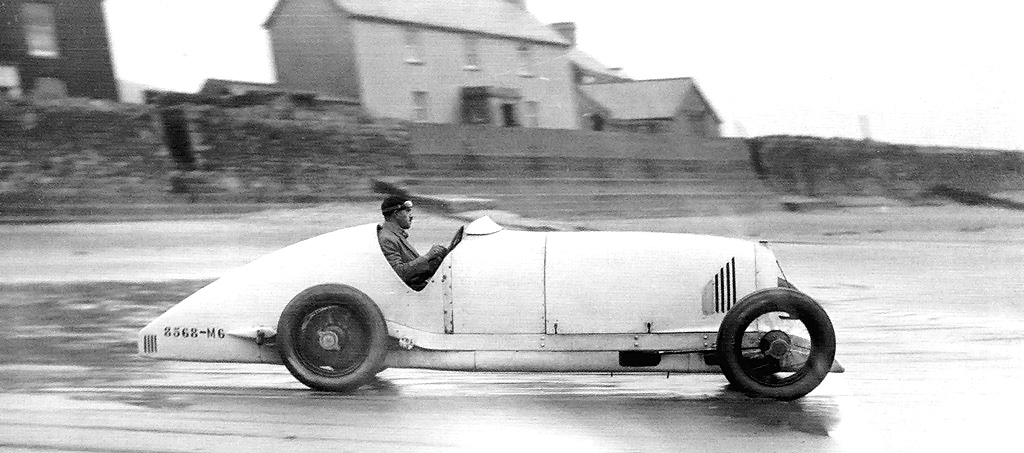
Foresti taking the Djelmo out on the beach. Note the racer’s revised windscreen and rear deck compared to the images from 1924.

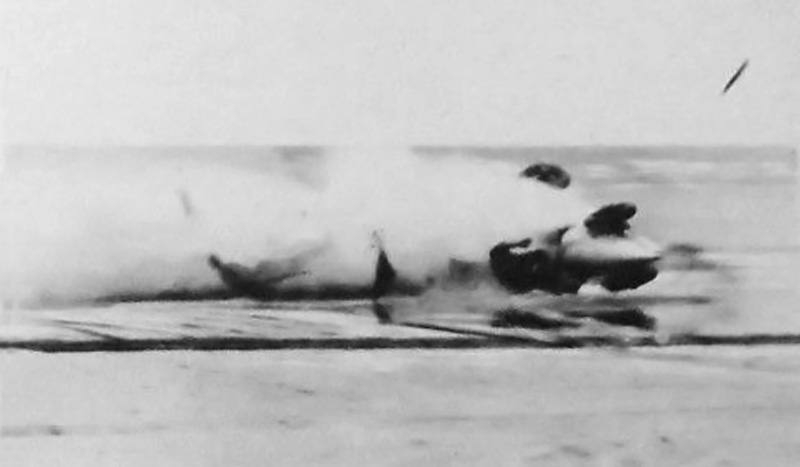
On 26 November 1927, Foresti took the Djelmo out on the sands to make a few runs. As was typical, Foresti wore only goggles and no other protection. The Djelmo had exhibited a tendency to fishtail at high speeds. While travelling on the beach at around 150 mph (240 km/h), Foresti lost control. The Djelmo rolled several times, and Foresti was ejected from the racer. Miraculously, Foresti suffered only minor injuries and walked toward rescuers. The fact that he was ejected clear of the rolling Djelmo and into the soft sand probably saved his life. The Djelmo was destroyed. Prince Djelaleddin had lost interest in these speed projects: the Djelmo was never repaired and the twin-engine racer was never built.

*Tommy Milton set a United States speed record at 156.046 mph (251.132 km/h) in a twin straight-eight-powered Duesenberg on 27 April 1920. His accomplishment was not officially recognized as a world record.
Djelmo crash Foresti eject

Foresti, just leaving the cockpit, is ejected from the Djelmo as it rolls on the beach. Amazingly, Foresti suffered only minor injuries.

This article is part of an ongoing series detailing Absolute Land Speed Record Cars.

Sources:
Land Speed Record by Cyril Posthumus and David Tremayne (1971/1985)
The Land Speed Record 1920-1929 by R. M. Clarke (2000)
– “Prince Designs Sixteen Cylinder Racer,” The Ogden Standard-Examiner, 24 October 1926
– “An Amazing Escape,” The Illustrated London News, 3 December 1927
http://en.wikipedia.org/wiki/Sunbeam_350HP
Beardmore Tornado Mk III

Beardmore Tornado Diesel Airship Engine

By William Pearce

In the early 1920s, William Beardmore & Company Ltd. began to design a series of high-power, low speed, direct-drive aircraft engines. From this line of engines and the company’s experience with diesel locomotive engines, Beardmore experimented with diesel aircraft engines. One of these engines was the compression ignition Typhoon. Designed by Alan Chorlton, the Typhoon was an inverted, water-cooled, straight-six engine with a 8.625 in (219 mm) bore and a 12 in (305 mm) stroke, giving it a total displacement of 4,207 cu in (68.9 L). In 1924, the British Air Ministry ordered compression ignition Typhoons to be used in the hydrogen-filled R100 and R101 airships. This decision was largely influenced by the fact that diesel (a low volatility fuel) did not have the quick ignition tendencies of normal fuel, thus reducing the fire risk.

Beardmore Tornado Mk I

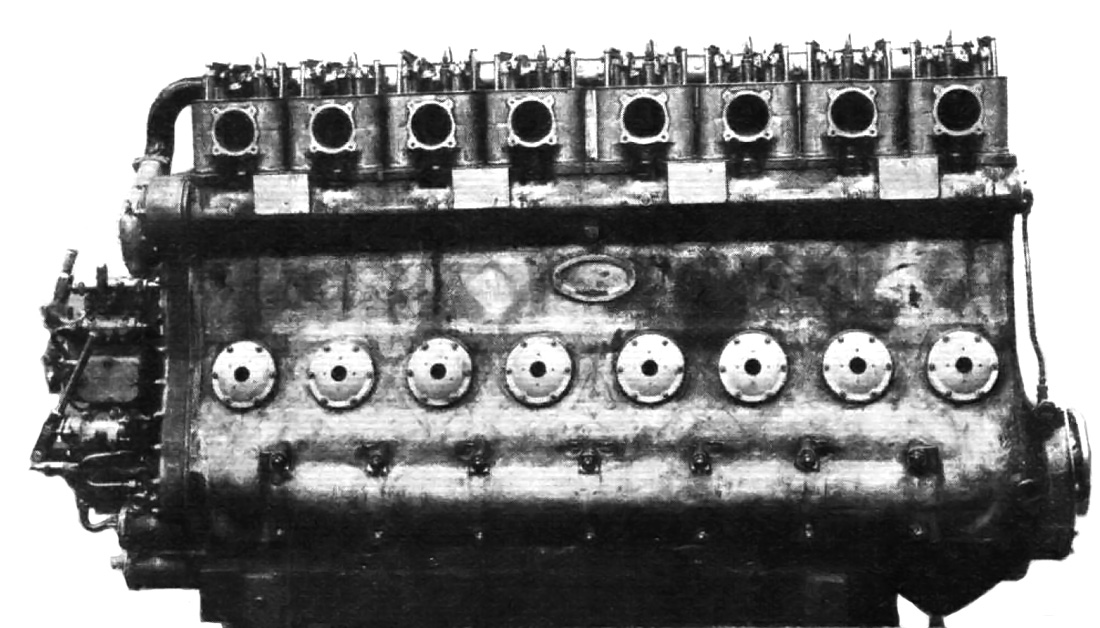
The Beardmore Tornado Mark I engine. Note the circular intake ports and access covers on the crankcase.

The R100 and R101 airships were part of the British Imperial Airship Scheme: a plan to improve communication with the far corners of the British Empire by establishing air routes. Both the R100 and R101 had a gas bag volume of over 5,100,000 cu ft (144,416 cu m), were over 710 ft (216 m) long, and had a maximum diameter of around 132 ft (40 m). The R100 was to be mostly designed and built by private industry using existing technology, while the R101 was to be designed and built by the government using experimental technology. After tests, the best aspects of both airships would be incorporated into later airships.

By 1926, with the airships under construction, the Air Ministry felt the Typhoon had reached its development potential. Beardmore offered a new Chorlton-designed six-cylinder engine that used steam-cooling and was not inverted. This engine was known as the Hurricane, but there was concern that it would not be powerful enough. Chorlton modified the Hurricane’s design by adding two additional cylinders. This engine was known as the Tornado and was expected to produce 700 hp (522 kW) at 1,000 rpm and 720 hp (537 kW) at the engine’s maximum rpm of 1,100. The Air Ministry ordered five Tornado engines for use on the R101, plus one additional engine as a spare. Tornado engines were also to be used on the R100. However, the R100 switched to standard fuel engines (Rolls-Royce Condors) because of developmental delays with the Tornado.

Beardmore Tornado Mk III section

Sectional view of the Beardmore Tornado Mk III. Note the two plain main bearings that sandwiched double Michell thrust bearings on the propeller shaft.

The Beardmore Tornado was a straight, eight-cylinder engine with a 8.25 in (210 mm) bore and 12 in (304 mm) stroke, giving a total displacement of 5,132 cu in (84.1 L). The engine’s compression ratio was 12.25 to 1. Each cylinder had its own aluminum-alloy head with two intake and two exhaust valves. The valves were actuated by rockers and short pushrods from a single camshaft that ran along the side of the engine, just below the head. One fuel injector for each cylinder was placed in the center of the head, between the valves. The fuel pump was positioned at the rear of the engine along with the water pump, oil pumps, and other accessories.

The Tornado utilized steam cooling. Water in the engine was allowed to boil; the steam was then condensed in radiators attached to the airship’s hull and circulated back into the engine. For starting, a decompressor opened one inlet valve to allow the engine to be spun over and primed. A 40 hp (30 kW) starting motor was used to start the Tornado through a 20 to 1 reduction.

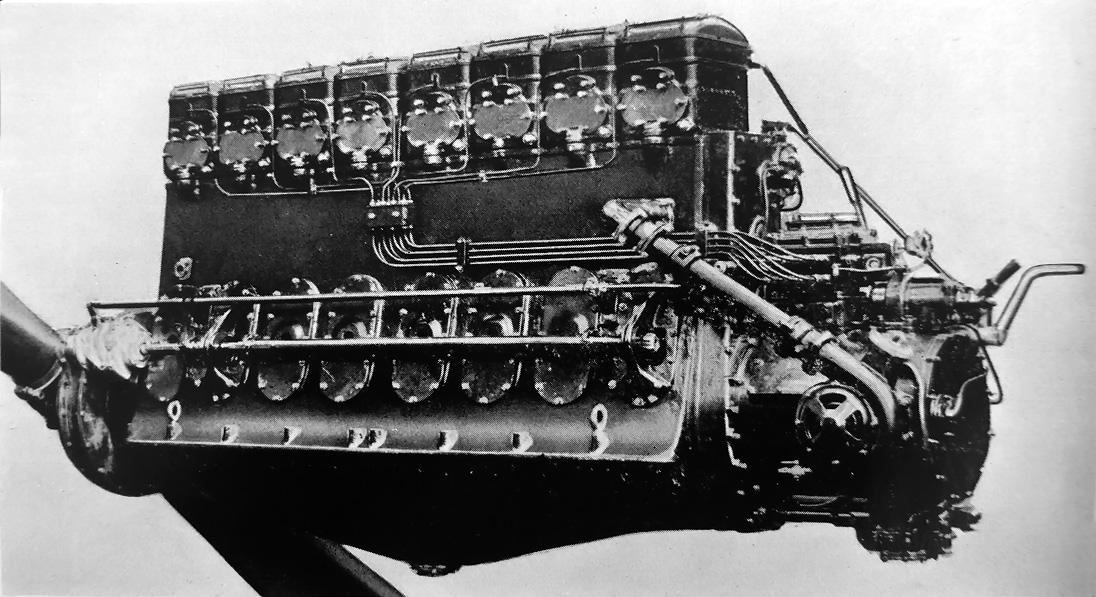
During testing, the Tornado was revised three times (Mark I, II, and III) in an attempt to cure various issues, including problems with torsional vibrations. The crankcase / cylinder block was of monobloc construction and cast in aluminum for the Mark I engine. The aluminum did not have sufficient strength, and cast iron was used, adding substantially to the engine’s weight. The cylinder heads were prone to cracking until heads specially made in Switzerland of cast steel resolved the issue. A series of large access holes with aluminum covers were provided along the crankcase. An aluminum sump was bolted to the bottom of the crankcase. With the steel crankcase, the Tornado Mark III had a dry weight of 4,200 lb (1,905 kg)—much heavier than the 3,000 lb (1,361 kg) of the Mark I engine.

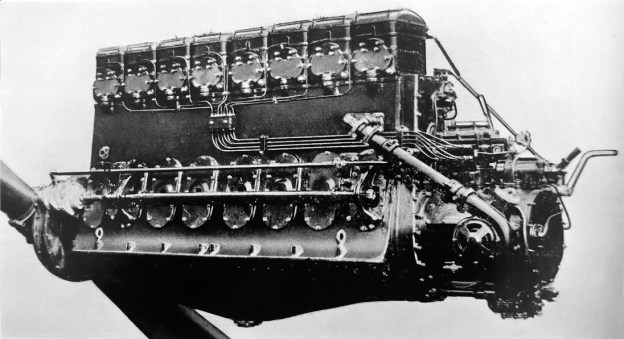
Beardmore Tornado Mk III

Beardmore Tornado Mk III engine. Note how the access covers are now oblong. No doubt the access holes were enlarged to help offset some of the weight of the cast steel crankcase.

The vibration issues of the Tornado were exacerbated by the long crankshaft. Effort was undertaken to strengthen the crankshaft by increasing the ten (two were at the propeller end) main journals from 5 in (127 mm) in diameter to 5.75 in (146 mm) in diameter. In addition, the crankshaft webs were increased to 8.5 in (216 mm). The Crankpins remained at 4.25 in (108 mm) in diameter. Other work to dampen vibrations included adding a flywheel to the rear of the engine and a spring coupling between the crankshaft and propeller. However, vibration issues persisted, being most evident at idle and at cruising engine speeds of 950 rpm. As a result of the issues, the Tornado had a continuous rating of only 585 hp (436 kW) at 890 rpm and a maximum of 650 hp (485 kw) at 935 rpm. Utilizing the permissible speed range, the engine was run 225 hours non-stop without issues. Fuel consumption was .385-.40 lb/hp/hr (234-243 g/kW/h).

On the R101, two of the Tornado engines were to be fitted with reversible pitch propellers to aid maneuvering, but these propellers failed during testing. As a stopgap measure, one engine was fitted with a propeller of reverse pitch; this would mean that only four engines provided forward thrust, and one engine was used as a reversing motor only. Later, two of the engines were fitted with a reversing gear that allowed them to be stopped and then run in the opposite direction, but all five engines could be used for forward thrust.

Beardmore Tornado in R101 car

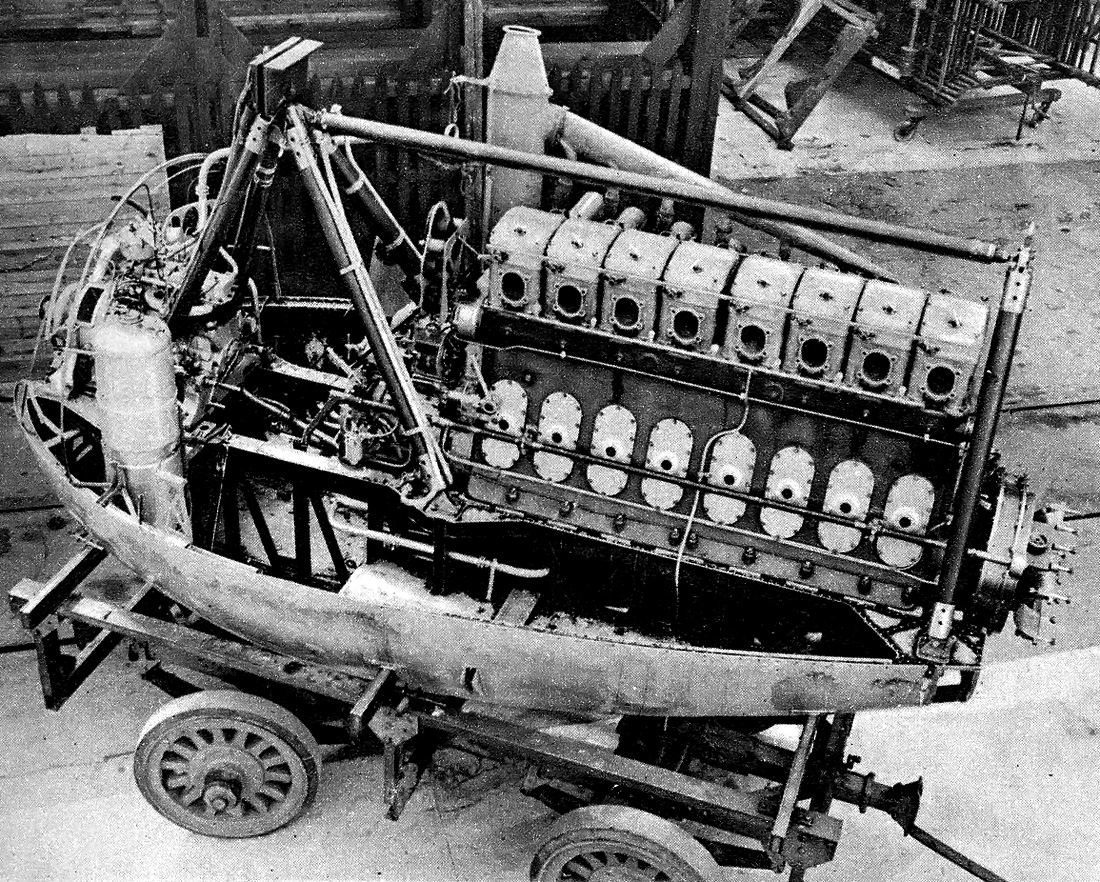
Beardmore Tornado in the engine car for the R101 airship. The propeller flange on the right was at the rear of the car. Note the varying lengths of exhaust pipes on the far side. Also, the intake ports have changed from circular, as seen on the Mark I engine, to oblong. In the front of the car (left side of image) was a generator.

Each Tornado engine was installed in an enclosed engine car on the R101. The cars hung below the airship and allowed for easy servicing and maintenance of the engines while on the ground or in flight. The cars could also be removed and replaced as a unit. Each car contained the Tornado’s starting motor. As installed on the R101, each pod weighed a portly 8,580 lb (3,892 kg).

Reportedly, the Tornado engines were installed on the R101 by 24 September 1929. Its first flight, which was over 5 hours, was on 14 October. After a series of flights, the R101 was found to be very overweight, and modifications to lighten the airship started on 30 November. Some of the modifications were to increase the size of the gas bags in the R101, despite the possibility that they could rub on the airship’s framework. An additional gas bag was installed in a new midsection of the R101. While the ship was down, a Tornado engine in a complete engine car was test run the equivalent flight time from London to Karachi, British India (now Pakistan) and back without any issues. The R101 returned to the air in June 1930 but still experienced issues: hydrogen leaked from the gas bags, and its outer skin covering had deteriorated and was prone to ripping. The R101 was down for repairs again.

Beardmore Tornado-powered R101

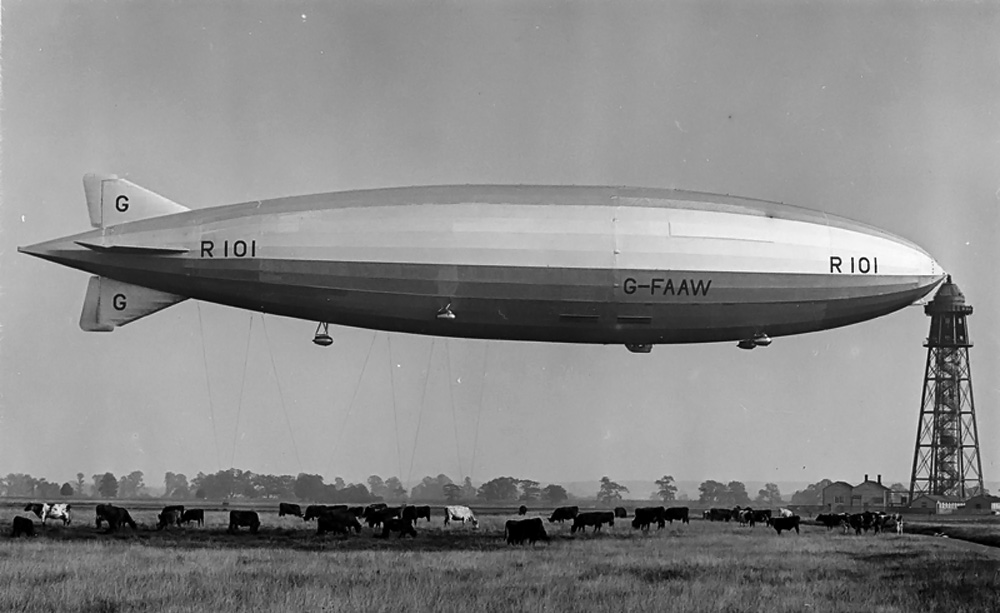
The 777 ft (237 m) long R101 airship moored at RAF Cardington. Four of the five Tornado engine cars can clearly be seen. The one at the rear of the R101 also provided airflow over the rudder to aid maneuvering.

Following the repairs, the R101 made its first trial flight (of almost 17 hours) on 1 October 1930. This would be the airship’s last flight before setting off for Karachi on 4 October. The R101’s spare Tornado engine had been shipped ahead, in case it was needed. On the evening of 4 October, the R101 started its voyage. About eight hours later, the airship was caught in a storm over Beauvais, France. The airship began to nose down out of control. It impacted the French countryside and burst into flames, ultimately killing 48 of the 54 people on board.

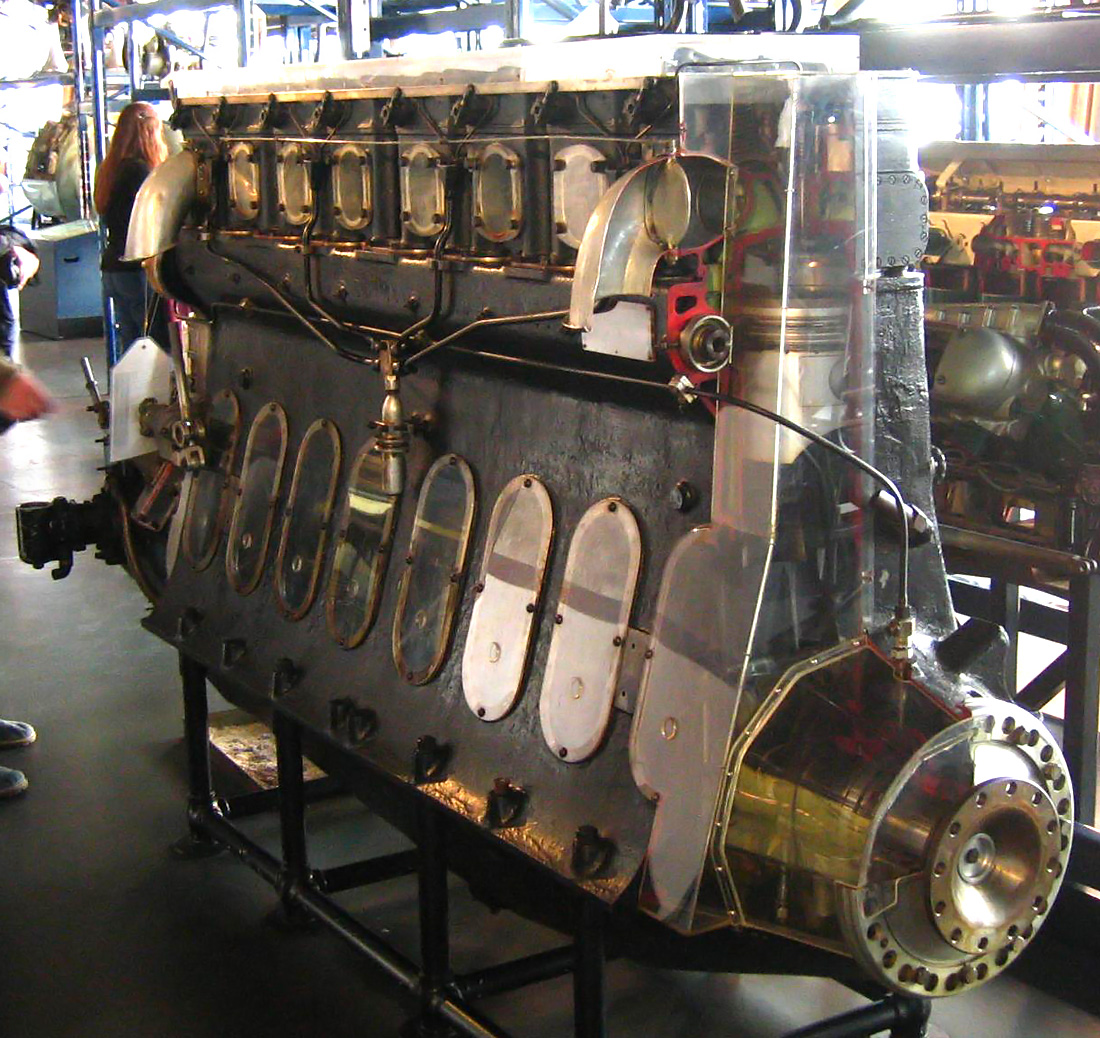
A board of inquiry investigated the R101 tragedy to determine the probable cause. They believed that skin in the front of the airship ripped during the storm and caused a gas bag to rupture. With the hydrogen escaping, the nose of the R101 became heavy and dropped toward the ground; the airship was doomed. Despite being overweight and under-powered, the Tornado engines did not play a role in the airship’s demise. After the R101’s crash, the R100 was grounded and later scrapped even though it had operated without major issues, even completing a flight to Canada and back. Eventually, the accident put an end to Britain’s airship programs. One of the R101’s Tornado engines was salvaged and returned to the United Kingdom. It is currently on display as a partial cutaway at the Science Museum in London.

During World War II, a British soldier deployed in India stumbled upon the last of the Tornado engines. The spare engine that had been shipped ahead of the R101 had been installed in a train and pressed into service. Harkening back to its origins, apparently the Tornado made a good diesel locomotive engine.

Beardmore Tornado from R101 at SM

The salvaged Beardmore Tornado engine from R101 airship. This engine is currently on display at the Science Museum in London. (Andy Dingley image via Wikimedia Commons)

Sources:
Beardmore Aviation 1913-1930 by Charles Mac Kay (2012)
Aeroshpere 1939 by Glenn Angle
Jane’s All the World’s Aircraft 1931 by C. G. Grey
The Modern Diesel fourth edition no date Illiffe & Sons Ltd
An Account of Partnership – Industry, Government and the Aero Engine by George Bulman and edited by Mike Neale (2002)
– “The Latest Beardmore Aero Engine,” Flight, 16 February 1928
– “R.101,” Flight, 11 October 1929
http://en.wikipedia.org/wiki/R101
http://en.wikipedia.org/wiki/Beardmore_Tornado
http://en.wikipedia.org/wiki/Imperial_Airship_Scheme