Monthly Archives: August 2013

Navy-Wright NW-1 Pulitzer

Navy-Wright NW-1 and NW-2 Racers

By William Pearce

Wright Aeronautical designed the T-2 engine in 1921 as a possible replacement for the Liberty V-12 engine and with the interest of the United States Navy. Like the Liberty, the Wight T-2 was a liquid-cooled V-12 engine. It also shared the same engine mount locations as the Liberty so that a T-2 could be installed in place of a Liberty. In the summer of 1922, the Navy saw an opportunity to test the 600 hp (447 kW), 1,948 cu in (31.9 L) T-2 engine and also create an air racer to compete in the upcoming Pulitzer Air Race.
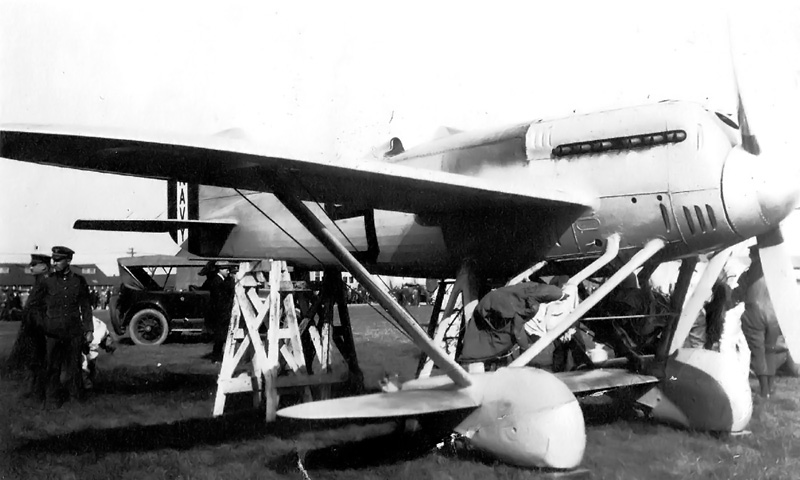
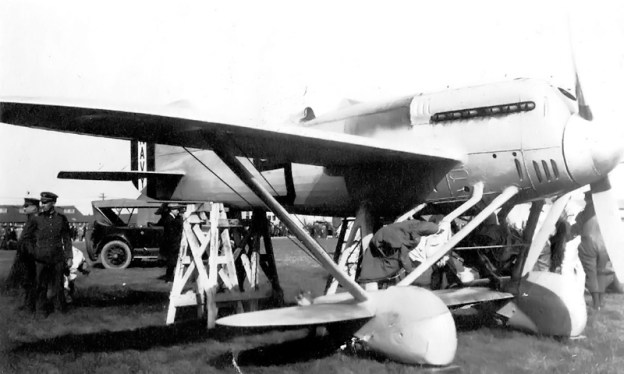
Navy-Wright NW-1 Pulitzer

The Navy-Wright NW-1 (A-6543) with race number 9 at Selfridge Field, Michigan for the 1923 Pulitzer Race. Note that the engine cowling covers the engine cylinder banks. The image illustrates the limited ground clearance of the wheel fairings.

Commander Jerome C. Hunsaker, head of the Navy Bureau of Aeronautics Design Section, designed the T-2-powered racer known as the Navy-Wright NW-1. Two examples were ordered (A-6543 and A-6544), and Wright built the aircraft at Long Island City, New York in a plant rented from the Chance Vought Company. The aircraft was constructed under a fair degree of secrecy, with few details being leaked to the press. Because of the lack of information, the press dubbed the aircraft the Mystery Racer.

The NW-1 was a sesquiplane with the large upper wing situated about mid-height on the fuselage and the much smaller, lower wing in line with the main gear. The main gear was covered with close fitting fairings with little ground clearance. Two Lamblin radiators for engine cooling were located under the streamlined fuselage and above the main gear. The fuselage had a steel tube frame and was metal-covered in front of the cockpit, the rest of the fuselage was fabric-covered. The upper wing was plywood-covered back to the rear spar. The rest of the wing, including the ailerons, was fabric-covered. The lower wing was entirely plywood-covered. The NW-1 was a large racer with a wingspan of 30 ft 6 in (9.3 m), a length of 24 ft (7.3 m), and a height of 11 ft (3.4 m). The aircraft weighed 2,480 lb (1,125 kg) empty and 3,000 lb (1,361 kg) gross. The Wright T-2 engine turned a 9 ft (2.74 m), two-blade, wooden propeller.
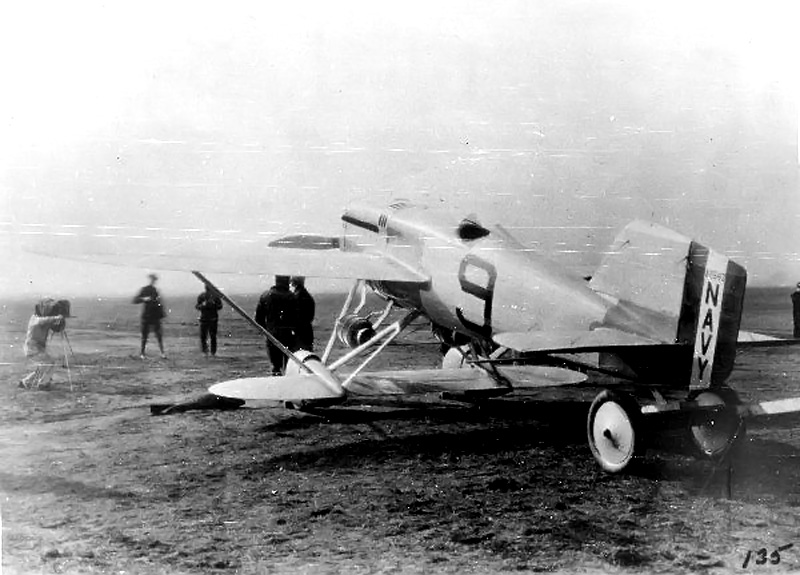
Navy-Wright NW-1 Pulitzer rear

This rear view of the NW-1 clearly shows the difference in span of the sesquiplane’s wings. Note the Lamblin radiator supported by the gear struts.

The NW-1 was designed and built in three months. This tight schedule combined with engine delays meant only the first aircraft (A-6543) would be completed in time for the Pulitzer Race. Even so, there was no time to test fly the aircraft. Once the Wright T-2 engine (second production engine made) was installed, the NW-1 was crated and shipped to Selfridge Field, Michigan for the Pulitzer Race. Upon arrival, the NW-1 was prepared for its first flight. On 11 October 1922, three days before the Pulitzer Race, Lt. Lawson H. Sanderson took the NW-1 for its first flight. Sanderson was also the pilot selected to fly the NW-1 in the Pulitzer Race. During the 30 minute flight, the aircraft was clocked at 209 mph (336 km/h). Back on the ground, Sanderson reported that the aircraft had good flying characteristics and that there were no issues.

On the day of the Pulitzer Race, 14 October 1922, the crew had to clear a path on the grass field to make sure no irregularities in the ground would interfere with the NW-1’s very low wheel fairings. Sanderson got the aircraft aloft and entered the course. After 150 km (93 mi) of the 250 km (155 mi) race, the NW-1 was in fifth place and averaging 186 mph (299 km/h). However, the oil temperature had risen to the upper limit of the gauge. The short test flight had not revealed that the aircraft’s oil cooler was insufficient. Sanderson found the gauge disconcerting and temporally “fixed” the issue by covering it with his handkerchief. Of course, this did nothing to alter fate.
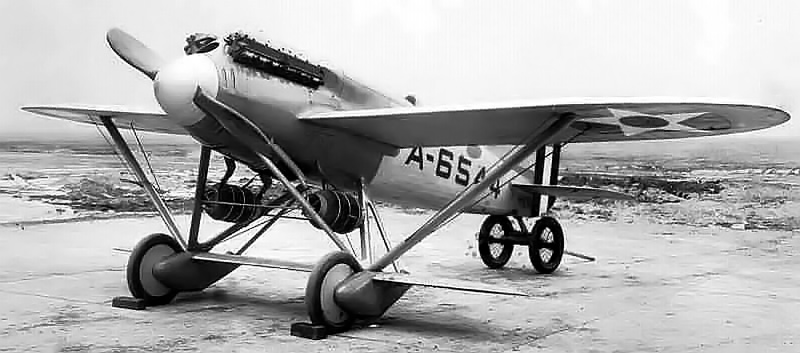
Navy-Wright A-6544

The second Navy-Wright NW-1 (A-6544). Note that the engine cowling no longer covered the engine cylinder banks and that the wheels are no longer covered by fairings.

A few minutes later, while over Lake St. Clair, Sanderson could smell the burning oil of the overheating engine and saw smoke trailing behind his racer. He pulled off the course and headed for the closest landfall. As he approached Gaulker Point, he saw the shore crowded with spectators. About then, the T-2 engine finally seized, giving Sanderson very few options. He headed for shallow water, and when he made contact with the water’s surface, the NW-1 quickly flipped over. Sanderson was now underwater, in the cockpit, and stuck in mud; he literally had to dig his way out. Remarkably, Sanderson emerged unharmed, but the NW-1 was destroyed.

Back in Long Island City, the second NW-1 (A-6544) was completed on 22 December 1922. This aircraft differed slightly from the earlier version. It had a modified engine cowling to aid cooling, and the wheel fairings were omitted. Because of the modifications, some sources say that the aircraft’s designation was changed to NW-2 at this time, but most others continued to refer to the aircraft as the NW-1. Obviously confident in the aircraft, Sanderson made the first flight, followed by a number of others, at Mitchel Field, New York. He reported that the oil cooling issue had improved but would still be a problem with warmer weather. He recorded a speed of 186 mph (299 km/h) with the engine at only 1,700 rpm.
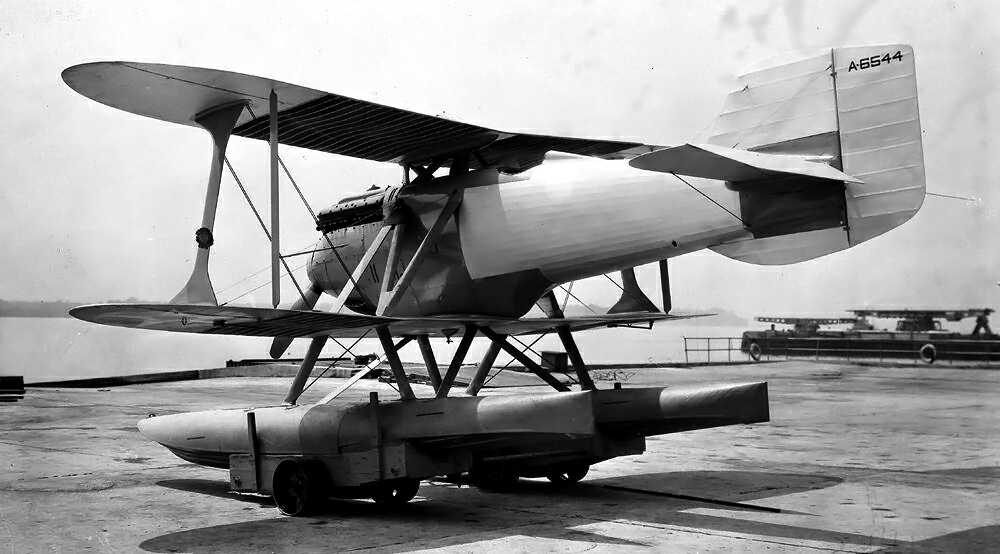
Navy-Wright NW-2 rear

NW-2 (A-6544) after conversion to a seaplane with two full-span wings. Note the two-blade propeller, the wing radiators, and ventral fin.

Sometime after January 1923, A-6544 was taken to Wright’s factory in Paterson, New Jersey. Here, the aircraft underwent a major conversion to a seaplane and unquestionably became NW-2. The plan was to use the NW-2 in the Schneider Trophy Race held at Cowes, Isle of Wight, United Kingdom in September.

Both of the original wings were removed and two full-span wings were installed, converting the aircraft into a proper biplane. Two floats replaced the landing gear, and surface wing radiators replaced the Lamblins. The aircraft’s tail and rudder were enlarged and a ventral extension was added. When the NW-2 emerged in July 1923, it was the most powerful seaplane in the world. The NW-2 had a wingspan of 28 ft (8.5 m), a length of 28 ft 4 in (8.6 m), and a height of 11 ft 7 in (3.5 m). The aircraft weighed 3,565 lb (1,617 kg) empty and 4,447 lb (2,017 kg) gross.

Lt. Adolphus W. Gorton chose to fly the NW-2 for the Schneider Race and was also the only one to fly the aircraft during testing. The NW-2 was shipped to the Naval Aircraft Factory on the Delaware River near Philadelphia, Pennsylvania for testing. The first flight following the conversion occurred on 23 July 1923. Gorton reported that the aircraft was tail-heavy and created excessive spray while on the water. At the time, the NW-2 had a large, 8 ft 6 in (2.59 m) diameter wooden propeller. Adjustments to the NW-2 were made, including replacing the two-blade propeller with a metal, three-blade, 7 ft 6 in (2.29 m) diameter unit.
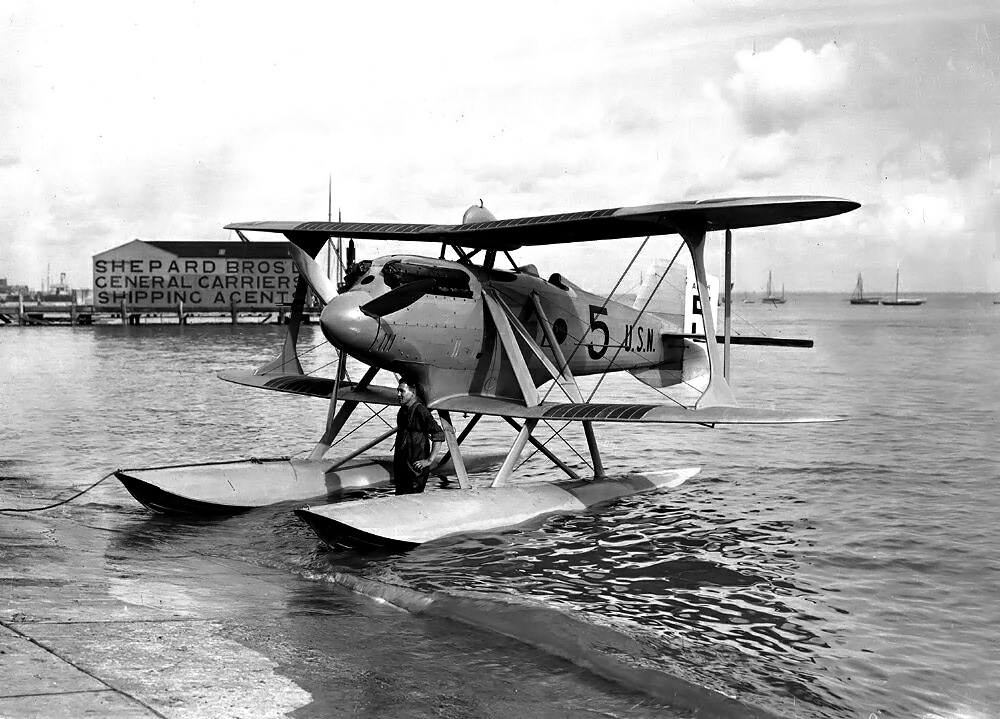
Navy-Wright NW-2

The NW-2 with race number 5 at the Isle of Wight and ready for the Schneider race. Note the three-blade propeller.

Test flights continued, and on 9 August 1923, Gorton was clocked at over 180.8 mph (291 km/h). On 18 August, Gorton, the NW-2, and the rest of the US Schneider team left for England on the SS Leviathan. After talking to the pilots of the Curtiss CR-3 racers also competing in the Schneider Trophy Race, Gorton realized that the NW-2 did not have the speed needed to win. As a result, the team decided to run the Wright T-2 engine at 2,250 rpm.

Gorton took the NW-2 up for a test flight and was clocked at an unofficial 204 mph (328 km/h). Everything had gone well on the flight. On 24 September 1923, Gorton took the NW-2 up again to get more familiar with the Schneider course. After 20 minutes of flight, while at a high-speed and a low-level, the Wright T-2 engine exploded, with parts flying in all directions. The NW-2 crashed into the waters of the Solent, flipped over and tossed Gorton out in the process. Unharmed, Gorton clung to pieces of wreckage until a boat rescued him. Like the NW-1, the NW-2 was completely destroyed after crashing into water. The Curtiss CR-3 racers went on to finish first and second in the Schneider Trophy Race.
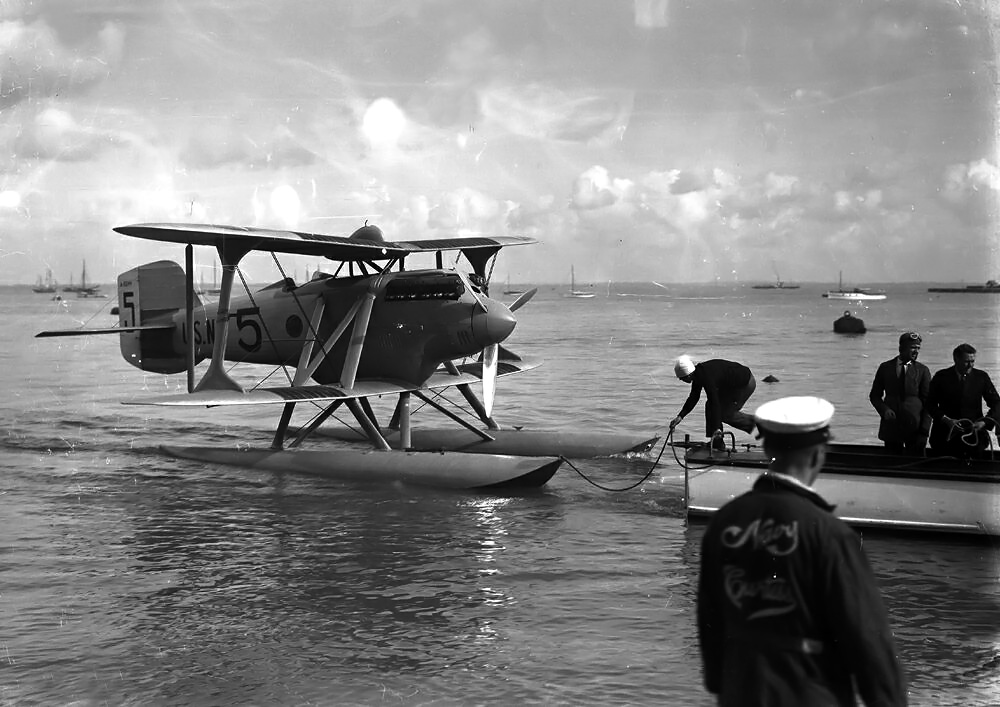
Navy-Wright NW-2 tow

The Navy-Wright NW-2 being towed before a test flight. Lt. Adolphus W. Gorton can be seen in the middle of the boat.

Sources:
The Speed Seekers by Thomas G. Foxworth (1975/1989)
The Pulitzer Air Races by Michael Gough (2013)
Schneider Trophy Seaplanes and Flying Boats by Ralph Pegram (2012)
The Air Racers by Charles A. Mendenhall (1971/1994)
http://woodenpropeller.com/forumvB/showthread.php?t=3235&highlight=hartzell
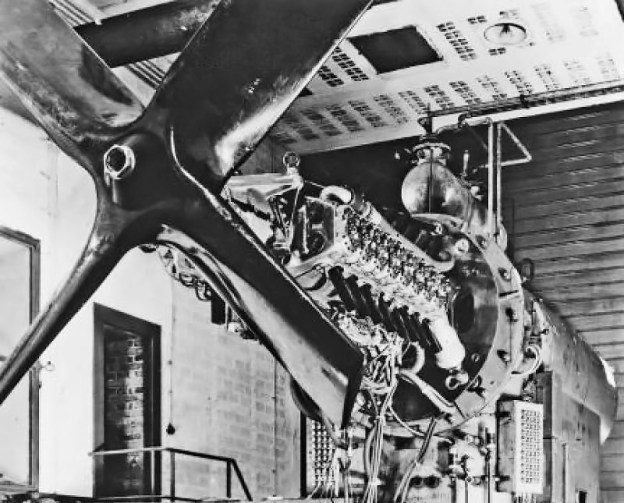
KHD Dz 710 test stand crop

Klöckner-Humboldt-Deutz (KHD) Dz 700, Dz 710, and Dz 720

By William Pearce

The German engine manufacturer Deutz AG can trace its roots back to the inventor of the four-stroke internal combustion engine, Nicolaus Otto. Gottlieb Daimler, Wilhelm Maybach, Rudolf Diesel, Robert Bosch, and Ettore Bugatti all worked for progenitors of Deutz at one time or another. In 1935, the company, then known as Humboldt-Deutz, was commissioned by the RLM (Reichsluftfahrtministerium or German Ministry of Aviation) to develop experimental two-stroke diesel engines.

KHD Dz 700 front

The eight-cylinder KHD Dz 700 two-stroke diesel before the engine was returned to Germany. Note the manifolds in between the cylinders for the incoming fresh air and the exhaust ports on the front of the cylinders. (Joe Gertler/Memaerobilia image)

This new line of engines was, in part, to compete with Junkers’ Jumo two-stroke diesels. The Junkers engines used two opposed pistons in the same cylinder which moved toward each other for the compression stroke. These pistons also covered and uncovered the intake and exhaust ports. Dr. Ing (Engineer) Adolf Schnürle, who was employed by Humboldt-Deutz, had earlier developed a new method for two-stroke cylinder porting. Schnürle’s method became known as Schnürle porting (or Schnuerle porting) and used reverse loop scavenging. In the cylinder, the exhaust port was positioned in between and slightly higher than the two intake ports. When the piston uncovered the ports, the charge of fresh air would enter and flow to the back of the cylinder. The fresh air would then reverse direction and push all remaining gases out the exhaust port. Being higher on the cylinder, the exhaust port was uncovered longer than the intake ports; this allowed the incoming fresh air charge to fully evacuate the exhaust gases from the cylinder.

Schnürle was put in charge of the new Humboldt-Deutz diesel engine project. Preliminary tests were conducted in Cologne, Germany on small single-cylinder and two-cylinder engines. In 1937, the Dz 700 was built. It was an eight-cylinder, two-stroke, air-cooled, diesel engine. The engine had a 3.15 in (80 mm) bore and a 3.94 in (100 mm) stroke, giving a total displacement of 245 cu in (4.0 L). The Dz 700 produced 158 hp (118 kW) at 2,800 rpm. The Dz 700 had a diameter of around 38 in (1 m) and weighed only around 120 lb (55 kg). A blower (weak supercharger) forced air through manifolds in between and then into the cylinders. Utilizing Schnürle porting, the two intake ports were positioned slightly lower in the cylinder than the two exhaust ports, and all were covered and uncovered by the piston.

KHD Dz 710 side

The 16-cylinder KHD Dz 710 two-stroke diesel. Note the blower at the end of the engine with the coolant pump below and the fuel injection pumps under the engine.

In 1938, a six-cylinder engine was designed for use in training aircraft. A merger occurred in 1939, and the company became Klöckner-Humboldt-Deutz (KHD). The diesel engine projects were relocated to Oberursel, Germany. Shortly after, development of the six-cylinder engine and the Dz 700, which was then under tests, was abandoned. With the start of World War II, the RLM was interested in engines of higher power.

In 1939, Schnürle began work on the Dz 710—a 16-cylinder, liquid-cooled, engine. The original design was a fuel injected, spark ignition engine, but the design was developed into a two-stroke diesel. The Dz 710 was a horizontally opposed (or boxer/flat) engine with two banks of eight cylinders. Again, the cylinders were equipped with Schnürle’s reverse loop scavenge porting, but the system was doubled with four intake ports and two exhaust ports for each cylinder. The intake ports were 2.02 in (51.2 mm) tall and the exhaust ports were 2.65 in (67.2 mm) tall. Intake air came through a blower geared to the crankshaft at the rear of the engine that charged the air to 7.4 psi (.51 bar). The air then flowed through passageways into both sides of the cylinders. Exhaust gases were expelled both above and below the cylinder banks.

KHD Dz 710 test stand

The horizontally opposed 16-cylinder KHD Dz 710 engine on a test stand in Oberursel, Germany. Note the exhaust pipes both above and below the cylinder bank.

The Dz 710 had a bore and stroke of 6.30 in (160 mm), giving a total displacement of 3,141 cu in (51.5 L). Direct fuel injection at 400 psi (27.58 bar) was used, and the compression ratio was 15 to 1. The engine also had a 0.4 to 1 propeller gear reduction. Recorded dimensions for the Dz 710 were a length of 94.5 in (2.40 m), a width of 53.1 in (1.35 m), and an estimated height of 39.4 in (1.00 m). The engine weighed 2,866 lb (1,300 kg).

Completed in 1943, the Dz 710 had a planned output of around 2,700 hp (2,013 kW), but development and testing was delayed by other war priorities; KHD was involved in the production of diesel truck engines. Two Dz 710 engines were built with a third partially completed. In 1944, a Dz 710 test engine achieved 2,360 hp (1,760 kW) at 2,700 rpm, and both engines had accumulated a total of about 150 hours of operation. A very good specific fuel consumption of 0.34 lb/hp/hr (207 g/kW/hr) was recorded at cruise power. However, the Dz 710 had trouble with its pistons and ultimately used a bolted steel plate piston crown. In addition, two crankshafts failed due to torsional vibrations.

A turbocharged version of the Dz 710 was planned with an estimated output of 3,060 hp (2,280 kW). Either a mockup or actual parts for the turbocharger installation were built, but it is not clear if this engine ran. The turbocharger would have increased the intake air pressure to 23.5 psi (1.6 bar).

KHD Dz 720 front

The 32-cylinder KHD Dz 720 was quite literally two Dz 710 stacked on top of each other with the upper engine inverted. This arrangement formed an H-32 engine with an estimated max output of 5,900 hp (4,400 kW) with turbocharging.

By 1944, in the quest for more power, the two Dz 710 engines were stacked to form the Dz 720 (KHD actually referred to this engine as the Dz 710 P2). This 32-cylinder H engine had a displacement of 6,282 cu in (102.9 L). The turbocharged H-32 had an estimated output of 5,900 hp (4,400 kW) while the engine blower version was forecasted to produce 4,600 hp (3,430 kW). With a .3125 to 1 gear reduction for a single propeller, the engine was originally intended for use in large, long-range aircraft. However, the German Navy showed interest in utilizing it for high-speed boats. While the Dz 720 should have similar length and width as the Dz 710, the actual recorded dimensions were a length of 106.3 in (2.70 m), a width of 65.0 in (1.65 m), and an estimated height of 78.7 in (2.00 m). Perhaps the extra 11.8 in (0.3 m) length of the Dz 720 incorporated a combining gear converting the two Dz 710 power sections to a single output shaft. Dz 720’s weight was documented as 5,732 lb (2,600 kg) with engine blowers and 6,393 lb (2,900 kg) for the  turbocharged version.

Schnürle was very committed to the Dz 710 engine. At the end of World War II, he made it clear to the Army Air Force that he was willing to go to the United States with his engines and continue their research and development. While the Dz 700 and the two Dz 710 engines were taken to the United States, it was not for Schnürle to continue their development. The ultimate disposition of the Dz 710 engines has not been found, but the eight-cylinder Dz 700 radial engine ended up in a private collection in Florida. Around 1998, it was purchased by a private collector in Germany and returned to that country.

KHD Dz 720 side

Side view of the KHD Dz 720. Note the spacer placed in between the Dz 710 power sections to provide clearance for the blowers on the left of the image. The Dz 720 was a very tall engine which would have made installation in an aircraft difficult.

The Historical Society of the Motorenfabrik Oberursel is looking for any information regarding the KHD Dz 710 engines and their disposition in the United States. Please click here for details and contact information (PDF file).

Sources:
– Correspondence with Helmut Hujer, Motorenfabrik Oberursel Historian
– Correspondence with Joe Gertler of Memaerobilia and The Raceway Collection
Flugmotoren und Strahltriebwerke by von Gersdorff, Schubert, and Ebert (2007)
The Development of Piston Aero Engines by Bill Gunston (1993/2001)
Jane’s All the World’s Aircraft 1945-46 by Leonard Bridgman (1946)
http://www.secretprojects.co.uk/forum/index.php?topic=5288.0
http://www.gkmo.net/
http://en.wikipedia.org/wiki/Schnuerle_porting
http://www.ibiblio.org/pub/academic/history/marshall/military/airforce/engines.txt
http://en.wikipedia.org/wiki/Deutz_AG