Yearly Archives: 2013

Lockhart Stutz Black Hawk Indy

Lockhart Stutz Black Hawk LSR Car

By William Pearce

Perhaps the only thing faster than Frank Lockhart’s phenomenal rise on the early auto racing scene, was the tragic end of his career. Nicknamed “Boy Wonder” by the press, Lockhart only raced at the Indianapolis 500 twice. His first run was in 1926 when he took the place of an injured driver in a 183 cu in (3.0 L) Miller race car. During practice, he set a one-lap track record of 115.488 mph (185.86 km/h). During the race, he passed 14 cars on the fifth lap as he made his way to the front from starting 20th. He went on to win the race with over a two lap lead.

Lockhart and Stutz Black Hawk

Frank Lockhart and the Stutz Black Hawk Special at Daytona Beach, Florida in April 1928.

At Indianapolis in 1927, Lockhart qualified first, at 120.100 mph (193.28 km/h). At the time, it was the fastest lap ever recorded on the track. He led the first 81 laps of the race, a record that would stand for 64 years. After a pit stop, he regained the lead on lap 91, only to have a connecting rod break on lap 120 and take him out of the race. Of the 280 laps he ran at Indy, he led 205 (73.21%) of them. Lockhart is one of only three drivers to have led more than 45% of their laps at Indy, and he has the second highest percentage overall (Juan Pablo Montoya has the highest percentage of laps led at 83.50%, for 167 laps led of 200 run).

In May of 1927, Lockhart set a qualifying record of 147.729 mph (237.74 km/h) on the 1.5-mile (2.4 km) board track at Atlantic City, New Jersey in his 91 cu in (1.5 L) Miller race car. It wasn’t until 1960, 33 years later, that another driver turned a faster lap at an American speedway. In his short American Automobile Association (AAA) career, Lockhart started 61 races, won 27 of them and finished in the top three 37 times.

Lockhart Stutz Black Hawk Indy

Lockhart sits in the Stutz Black Hawk LSR car during its unveiling at the Indianapolis Motor Speedway.

But Lockhart was more than just a race car driver; he was an innovator with the mind of an experimental engineer. Between the 1926 and 1927 season, Lockhart and his team, which included Zenas and John Weisel and Ernie Olsen, developed an intercooler for Lockhart’s supercharged 91 cu in (1.5 L) Miller engine. They had noticed that while the supercharger pressurized the air, it also heated it, making it less dense. If the air could be cooled, the denser air would allow the engine to create more power. Later in the year on 13 June 1927, Lockhart filed a patent for his intercooler, and U.S. patent no. 1,807,042 was issued on 26 May 1931.

On 11 April 1927, Lockhart took his standard Miller race car to the Muroc Dry Lake in California for an International Class F record attempt. This race car was powered by a supercharged Miller 91 cu in (1.5 L) engine equipped with Lockhart’s intercooler. Lockhart established a new class record, averaging 164.009 mph (263.947 km/h). At that speed, Lockhart became the fourth fastest driver ever, behind only Henry Segrave’s 203.793 mph (327.973 km/h) run in the Sunbeam 1000 HP Mystery (The Slug), Malcolm Campbell’s 174.883 mph (281.447) run in the Napier-Campbell Blue Bird, and J.G. Parry-Thomas’s 171.019 mph (275.229 km/h) run in Babs. All of the faster vehicles were purpose-built Land Speed Record (LSR) cars powered by large, powerful aircraft engines.

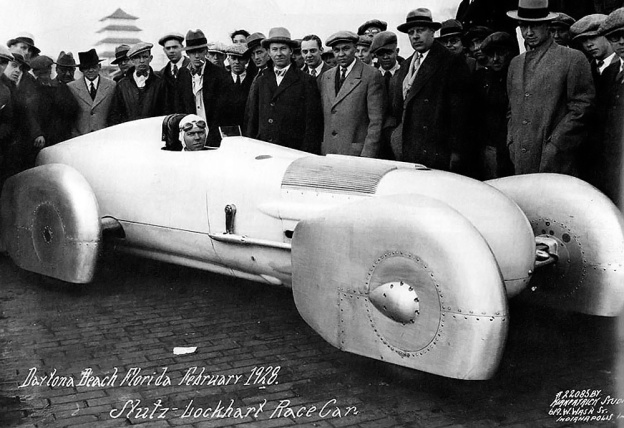
Lockhart Stutz Black Hawk side

Lockhart ready for a run in the Black Hawk at Daytona Beach in February 1928, as spectators look on. The hole on the top of the car, in front of the cockpit, was the carburetor inlet for the right engine bank. There was another hole on the other side for the left engine bank.

By mid-1927, Lockhart had become focused on building a LSR car to break Segrave’s current world speed record of 203.793 mph (327.973 km/h). Lockhart partnered with Fred Moskovics, President of the Stutz Motor Car Company, to build the special LSR car. Lockhart and the Weisel brothers designed the LSR car. The Stutz Company funded about half of the project, so the LSR car would wear the Stutz name. Lockhart funded the rest of the project from his race winnings.

A team was assembled in Indianapolis to build the LSR car. What emerged on 12 February 1928 was the Stutz Black Hawk Special—a comparatively small streamlined car powered by a 180.4 cu in (2.96 L) Miller V-16 (more accurately a U-16) engine with intercooled twin superchargers. The intercooler was formed into the engine cover, allowing air flowing over the car’s body to cool the air/fuel mixture before it entered the engine. The car was made up of a central body, with each wheel housed in its own streamlined fairing. The Black Hawk was perhaps the first car to be designed with the aid of a wind tunnel. Scale models were tested in both the Curtiss and the Army Air Services wind tunnels. Reportedly, the car’s wind resistance was measured as .0061 lb/mph². The Black Hawk was 15 ft 9 in (4.80 m) long with a 112 in (2.84 m) wheelbase. The body was only 24 in (0.61 m) wide, and the car’s total width including the wheels was around 60 in (1.52 m).

Lockhart Stutz Black Hawk engine

Seen here are the two Miller straight-eight engines mounted on a common crankcase that made up the Black Hawk’s 16-cylinder engine. In this rear view, one can see the gears of the crankshafts are geared to the lower, central gear.

The engine was basically two 91 cu in (1.5 L) Miller inline-eight engines installed 30-degrees apart on a common crankcase. Each straight-eight engine’s crankshaft was geared to a central gear at the rear of the engine. The flywheel was attached to the central gear. To cool the engine, a tank in the font of the car held a radiator that was cooled with 80 lb (36 kg) of ice. The engine’s bore was 2.1875 in (55.56 mm), stroke was 3.0 in (76.2 mm), and weight was around 630 lb (286 kg). The engine produced more than 550 hp (410 kW) at 8,300 rpm and, utilizing the wind tunnel data, was predicted to propel the 2,800 lb (1,270 kg) Black Hawk LSR car to a maximum speed over 280 mph (450 km/h). The estimated cost of the LSR car was between $70,000 and $100,000 ($0.9 to $1.3 million in 2013 USD).

Lockhart joined Campbell and other racers at Daytona Beach, Florida in mid-February 1928 for speed record runs sanctioned by the AAA. On 19 February, Campbell set a new record at 206.956 mph (333.064 km/h) in the now more-streamlined Napier-Campbell Blue Bird. The next day, Lockhart made one run against the wind at 200.222 mph (322.226 km/h). This was slightly faster than Campbell’s against the wind run from the previous day. Unfortunately, clutch issues prevented Lockhart from making the return run.

Lockhart Stutz Black Hawk beach

An optimistic Lockhart in the cockpit of the Stutz Black Hawk on the beach at Daytona in February 1928. Bill Sturm is at the front of the car adding ice to the cooling tank, as Jean Marcenac approaches with more. Ray Keech is standing next to Lockhart. Note the finning on the engine cover that served as the intercooler.

With the sanctioned event coming to a close, Lockhart made another run on 22 February in bad weather conditions. During the run at over 200 mph (322 km/h), Lockhart encountered a rain-squall that reduced his visibility to nothing. He lost control of the car, and the Black Hawk spun into the sea, rolling over several times. Lockhart was pinned in the car as the waves crashed over his head. Spectators rushed to his aid, shielding him from the incoming waves and holding his head above the water while others attached ropes to the car. More spectators joined in and began dragging the car to the beach, until a tow truck arrived to pull it the rest of the way in. Lockhart had to be freed from the wreck with the aid of crowbars and blowtorches. He suffered three severed tendons in his left wrist, some bad bruising, and was in shock.

The Black Hawk was transported back to Indianapolis where it was quickly rebuilt and repaired. Lockhart, his car, and his team arrived back at Daytona Beach on 20 April 1928, only two months after his accident. Again, the speed record runs were sanctioned by the AAA, and other racers were present. Also making runs was Ray Keech in the White Triplex, a vehicle powered by three Liberty V-12 aircraft engines.
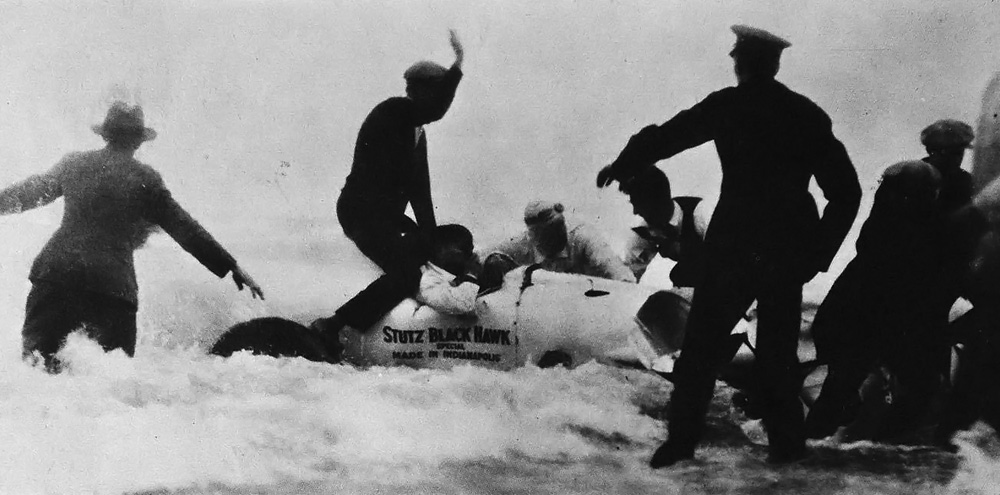
Lockhart Stutz Black Hawk crash1

Spectators, press, and police rush to the aid of Frank Lockhart after his car has rolled into the surf. Lockhart could have drowned had it not been for O.D. Craig holding his head above water.

On 20 April 1928, Lockhart made a run and achieved 200.33 mph (322.40 km/h) on the return leg. The Black Hawk’s Miller engine was suffering carburation problems. Meanwhile, Keech made a series of runs, steadily improving in speed. On 22 April 1928, Keech got the Triplex up to an average of 207.55 mph (334.02 km/h), setting a new world record.

On 25 April 1928, Lockhart made a test run during which his rear right tire locked up under braking during the return. The carburation problems seemed to be resolved, and by 7:30 AM, Lockhart was making another run. The first leg was recorded at 203.50 mph (327.50 km/h), and everything went well. As the Black Hawk was prepared for the return run, Lockhart told his team that he was going to go for the record. Screaming down the beach at over 220 mph (355 km/h), about 700 ft (213 m) before the end of the course, the right rear tire blew, and the Black Hawk went out of control. The car skidded in the sand for about 400 feet (122 m), went sideways, and became airborne. The Black Hawk traveled another 503 ft (153 m), crashing down on the beach several times as it rolled. Lockhart was thrown 51 ft (15 m) from the vehicle. He was transported to a hospital where he was pronounced dead, Lockhart was only 25 years old.

Lockhart Stutz Black Hawk run

Lockhart flies the Black Hawk south down the beach at Daytona during a run.

Subsequent investigation revealed that the right rear tire had been damaged at some point during earlier runs. The tire had continued to deteriorate as the additional passes were made. The 16-cylinder engine was salvaged from the Black Hawk wreck. It was rebuilt and installed in the Sampson “16” Special, owned by Alden Sampson. Bob Swanson raced the car in the 1939 and 1940 Indy 500, finishing sixth in 1940. The car was also driven by Deacon Litz in 1941 and Sam Hanks in 1946. The Sampson “16” Special, with the 16-cylinder engine still installed, is currently on display at the Indianapolis Motor Speedway Hall of Fame Museum in Indianapolis, Indiana.

There are two Lockhart Stutz Black Hawk replicas. One replica is owned and displayed by Turner Woodward in his historic Stutz Building in Indianapolis, Indiana. The second is a running (but not with a 16-cylinder engine) replica that is being finished by Jeb Scolman of Jebs Metal and Speed in Long Beach, California.

The following is a YouTube video (sorry for the music) of the ill-fated speed run uploaded by SportingHistory. The south-bound (ocean on the left) run is shown from the air first, and then the north-bound return crash. The crash is very violent.

This article is part of an ongoing series detailing Absolute Land Speed Record Cars.

Sources:
Frank Lockhart: American Speed King by Morgan-Wu and O’ Keefe (2012)
The Miller Dynasty by Mark Dees (1981/1994)
http://gordonkirby.com/categories/columns/archive/lockhart_legend.html by Gordon Kirby
http://en.wikipedia.org/wiki/Frank_Lockhart
http://en.wikipedia.org/wiki/List_of_Indianapolis_500_lap_leaders
http://blog.hemmings.com/index.php/2011/09/28/replica-of-the-ill-fated-stutz-black-hawk-special-to-debut-at-long-beach-motorama/
http://www.autoweek.com/article/20061222/free/61206028
FMA IAe 30 Ñancú

By William Pearce

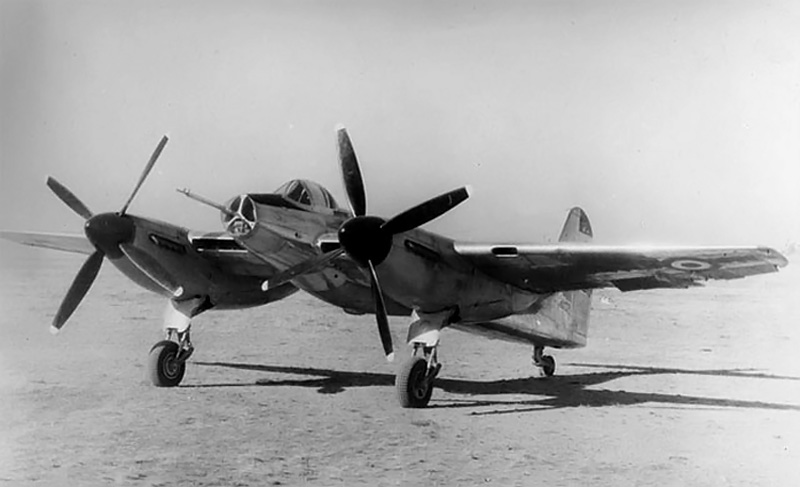
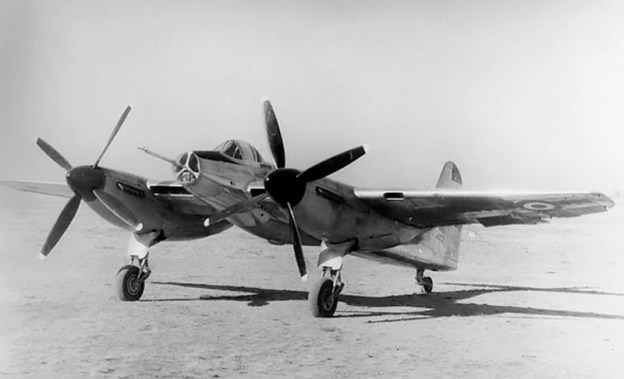
Following World War II, Argentina experienced an influx of former German and Italian engineers. One such engineer was Cesare Pallavicino, formally with the Italian aircraft firm Caproni. Pallavicino was brought into the Instituto Aerotécnico (IAe) to design a twin-engine escort fighter. This project would become the IAe 30 Ñancú.

The sleek Argentine FMA IAe30 Namcu with what appears to be a damaged aileron.

The sleek Argentine FMA IAe 30 Ñancú with what appears to be a damaged aileron.

Initially, Pallavicino submitted two jet-powered designs and one piston-powered design. The piston-powered design was chosen for development as the IAe 30. In addition to Argentine engineers, Pallavicino was also able to bring on a number of former Caproni engineers to work on the project. Three IAe 30s were ordered and construction of the first prototype began in July 1947.

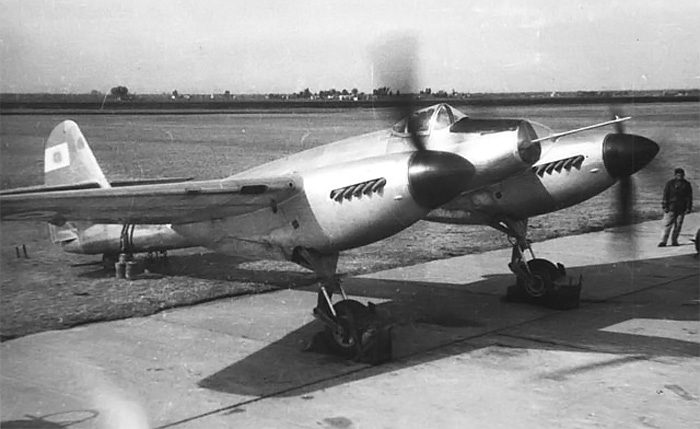
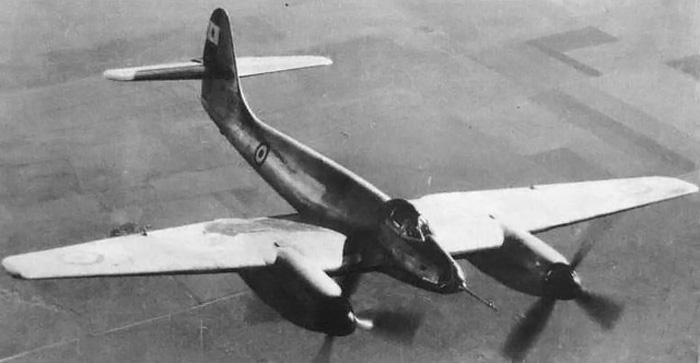
Powered by two 1649 cu in (27.0 L) Rolls-Royce Merlin 134/135 engines that produced 2,035 hp (1,517 kW) each, the Ñancú resembled the de Havilland Hornet, but it was an original, all-metal design. The propellers were four-blade de Havilland units, 12 ft (3.66 m) in diameter. The aircraft had a wingspan of 49 ft 3 in (15 m) and a length of 37 ft 10 in (11.52 m). The aircraft’s empty weight was 12,313 lb (5,585 kg), and it had a gross weight of 19,301 lb (8,755 kg). The IAe 30’s top speed was 460 mph (740 km/h) and cruise speed was 311 mph (500 km/h). Range was 1,678 mi (2,700 km).

The IAe 30 during a ground run of its Merlin engines.

The IAe 30 during a ground run of its Merlin engines. Note the streamlined engine nacelles.

The proposed armament consisted of four 20 mm Hispano-Suiza cannons mounted in the aircraft’s lower fuselage, under the wings. In addition, a 550 lb (250 kg) bomb could be carried under the fuselage, and five 3.25 in (83 mm) rockets could be fitted under each wing. However, the prototype was never armed.

The IAe 30 team was under a lot of pressure to quickly complete the aircraft. A few corners were cut during design and testing but the aircraft, mostly complete, was ready for ground tests on 8 June 1948 (some say 9 June). Despite wind tunnel tests not being completed, the IAe 30 took to the air for the first time with Captain Edmundo Osvaldo Weiss at the controls on 18 July 1948 (some say 17 July). Initial flight tests revealed that the aircraft performed well and possessed good handling characteristics.

On a cross country flight from Córdoba to Buenos Aires on 8 August 1948, the Ñancú averaged 404 mph (650 km/h) at only 60% power. While flying level at 18,370 ft (5,600 m) during the flight, the aircraft reached 485 mph (780 km/h) with the aid of a strong tail wind. Based on the initial performance of the aircraft, an order for 210 IAe 30s was placed.

The Ñancú in flight displaying is resemblance to a de Havilland Hornet.

The Ñancú in flight, displaying is resemblance to the de Havilland Hornet.

During  continued testing the aircraft achieved 560 mph (900 km/h) in a dive. Only minor changes of the aircraft were required, but it took a long time for the changes to be implemented. Part of the delay was poor communication between the test pilots and the design staff. One pilot who flew the Ñancú and reported very favorable results was Professor Matthies, better known as Kurt Tank. Tank was a German aircraft designer who had worked for Focke-Wulf during World War II, designing the Fw 190 fighter, among others. After the war, he immigrated to Argentina and assumed the pseudonym Pedro Matthies.

In early 1949, the prototype was badly damaged when test pilot Carlos Fermín Bergaglio misjudged a landing. Although the aircraft could have been repaired, there was no interest in doing so. The prototype had achieved its design goals and showed great potential. However, the jet age had arrived, and the Fuerza Aérea Argentina (Argentine Air Force) was focused on jet aircraft for their future fighters. Argentina had purchased 100 Gloster Meteor jet fighters, which were delivered by September 1948. Citing “financial reasons,” the order for the IAe was cancelled in late April 1949. The Fabrica Militar de Aviones (FMA), the state-run overseer of the IAe, made the decision to abandon the project. The damaged prototype and the two unfinished prototypes were scrapped, ending the story of one of the last piston-engine fighters to be developed.

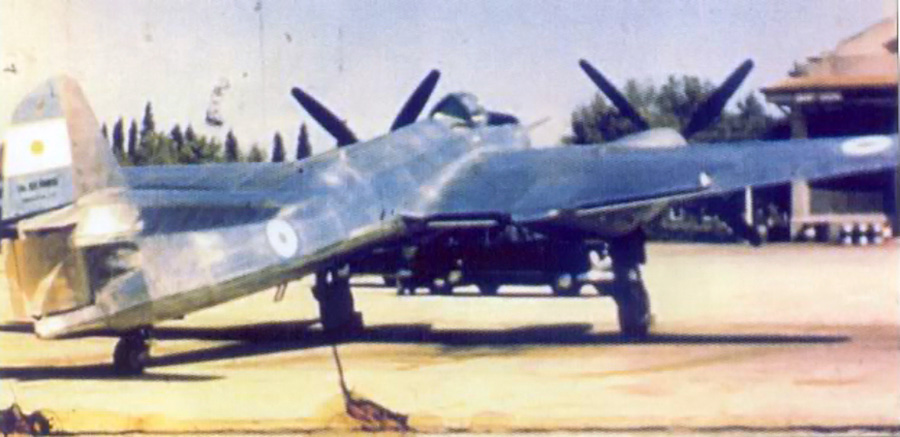
A rare color image of the IAe 30.

A rare color image of the IAe 30. Note the split rudder.

Sources:
– “IAe Ñancú: Argentinian Eaglet,” Wing of Fame Volume 5 by Jim Winchester (1996)
The Complete Book of Fighters by Green and Swanborough (1994)
Jane’s All the World’s Aircraft 1949-1951 by Leonard Bridgham (1949)
http://en.wikipedia.org/wiki/IAe_30_%C3%91anc%C3%BA

Beardmore Cyclone, Typhoon, and Simoon Aircraft Engines

By William Pearce

In the early 1920s, William Beardmore & Company Ltd. began to design a series of high-power aircraft engines. One of the major problems facing aircraft designers at that time was converting the relatively high rpm of the engine to the low speed needed for a fixed-pitch propeller. Adding a propeller gear reduction increased the engine’s weight, complexity, and potential points of failure.

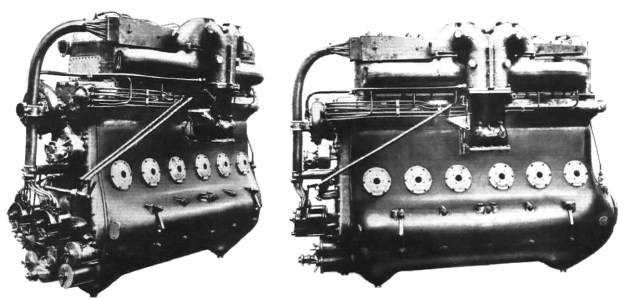
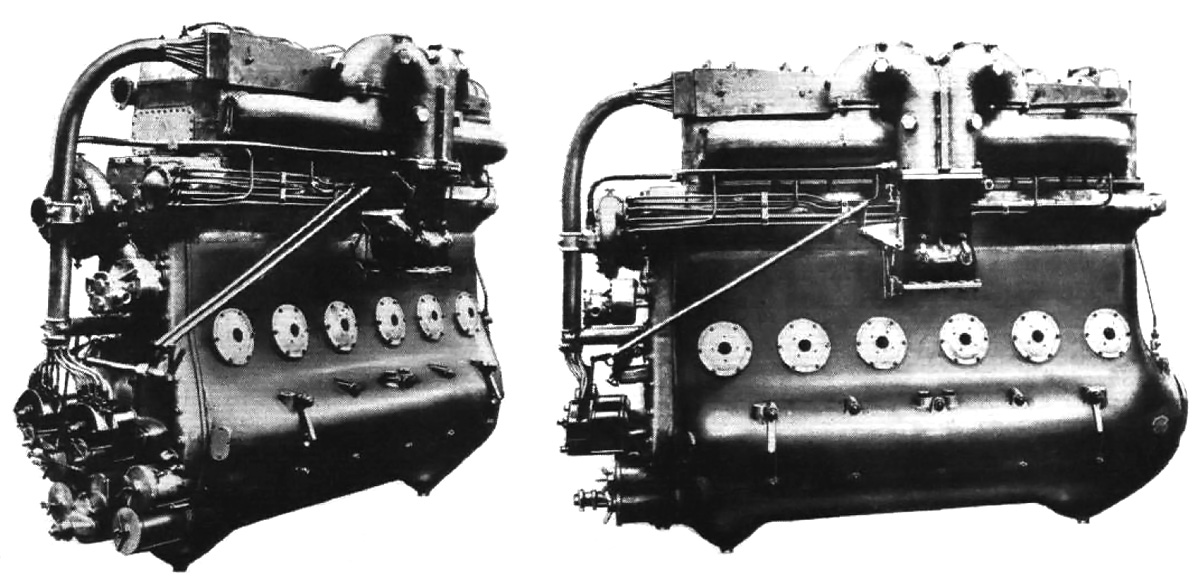
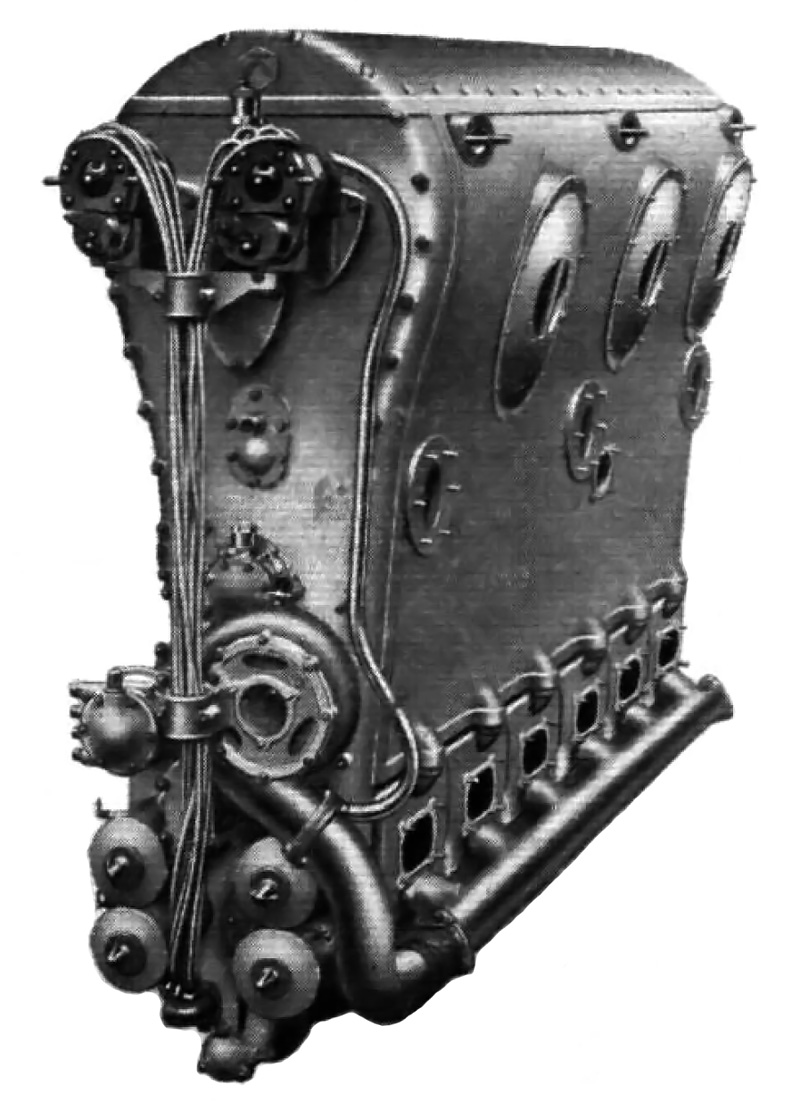
The 4207 cu in (68.9 L), straight-six Beardmore Cyclone.

The 4,207 cu in (68.9 L), straight-six Beardmore Cyclone.

Alan Chorlton, head of the Beardmore engine department, sought an alternative to the propeller reduction gear by having a relatively slow turning engine. In order for an engine to generate high power at low rpm, its cylinder must have a very large displacement.

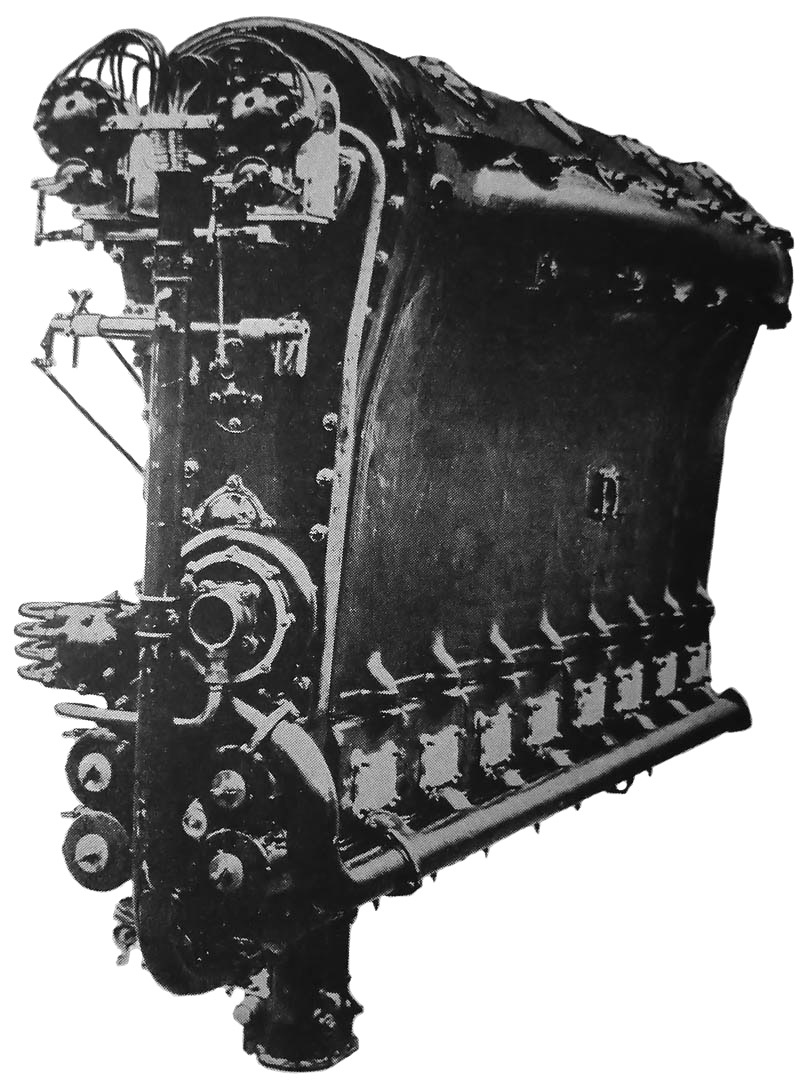
Beardmore’s first high-power, low rpm aircraft engine designed by Chorlton was really two engines, the Cyclone and the Typhoon, whose development ran parallel. The Beardmore Cyclone was a water-cooled, straight-six engine with a 8.625 in (219 mm) bore and a 12 in (305 mm) stroke, giving it a total displacement of 4,207 cu in (68.9 L). The Beardmore Typhoon was essentially the same engine but in an inverted configuration. Almost all parts were interchangeable between the two engines.

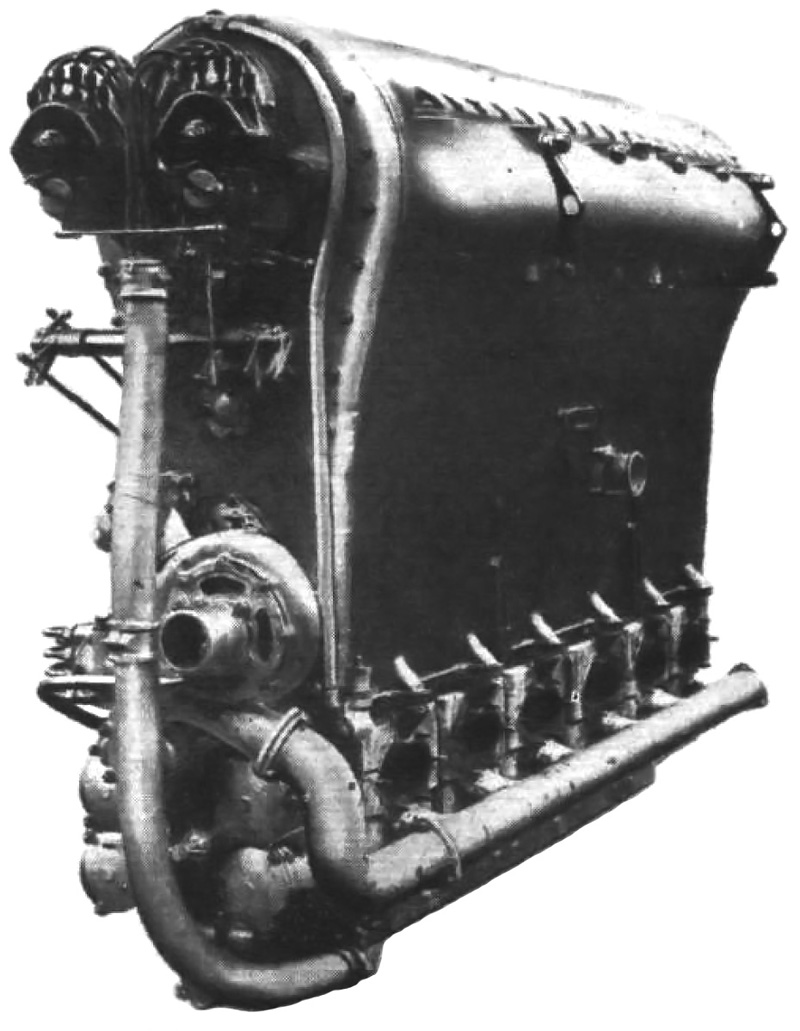
The Beardmore Typhoon inverted engine.

The Beardmore Typhoon inverted engine.

Both the Cyclone and Typhoon used an aluminum crankcase that also formed the cylinder block. Thin steel Cylinder liners were inserted into the crankcase toward the crankshaft. The cylinder liners were supported by a flange toward the cylinder head and sealed by a ring toward the crankshaft. Each cylinder had its own detachable head. The four valves per cylinder were actuated via rockers and short pushrods from the single camshaft, which ran along the side of the engine just below the head. For the Cyclone, the camshaft was on the right side of the engine but, being rotated 180-degrees to the inverted position, the camshaft was on the left side of the Typhoon (both when viewed from the rear).

Two spark plugs were fitted to the top of each cylinder and fired by two Watford C6SM magnetos. The magnetos along with the water, oil, and fuel pumps were driven off the rear of the engines by a series of intermediate gears. Aluminum pistons with three compression rings and one oil-scrapper ring were used. The compression ratio was 5.25 to 1.

The Cyclone I was first run in 1922 and generated 700 hp (522 kW) at 1,220 rpm. Development continued, and by 1927, the Cyclone II was producing 850 hp (634 kW) at 1,350 rpm but could produce 950 hp (708 kW) at the same rpm with a larger carburetor. Fuel consumption was .48 lb/hp/hr (292 g/kW/h), and the engine weighed 2,150 lb (975 kg). The Cyclone was 80.3 in (2 m) long, 35 in (.9 m) wide, and 61.125 in (1.55 m) tall. Reportedly, only one Cyclone II was built, and it was sold to Heinkel Flugzeugwerke in Germany.

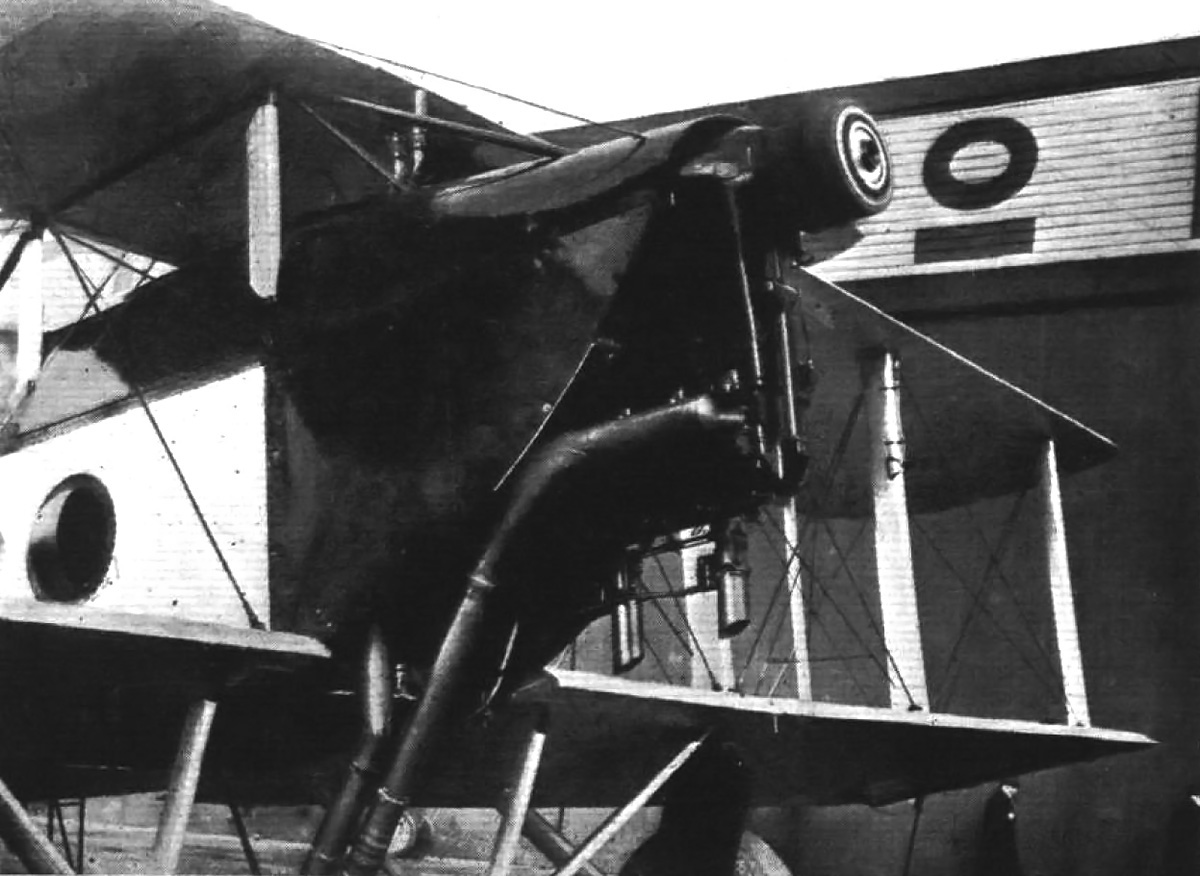
The Typhoon in the Avro 549C Aldershot IV during an engine run.

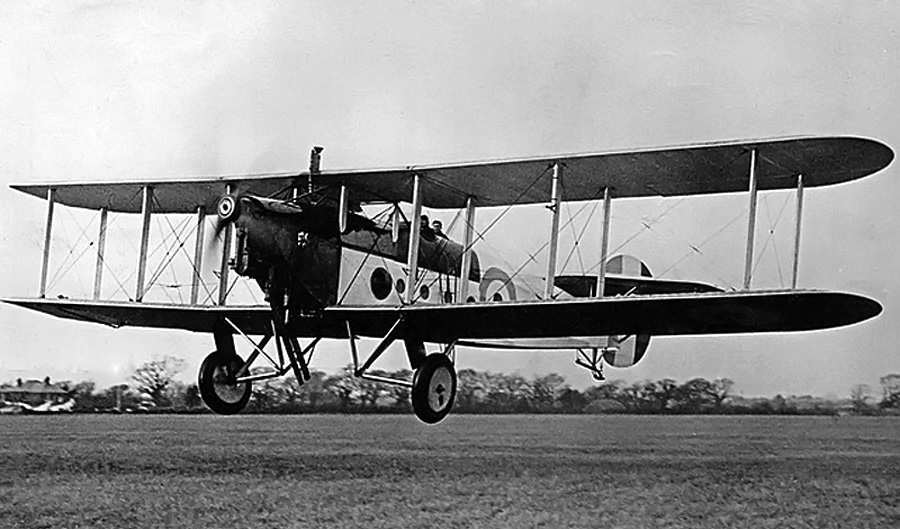
The Typhoon in the Avro 549C Aldershot IV during an engine run.

As already mentioned, the Typhoon was an inverted version of the Cyclone. The date the engine was first run is not clear, but the Typhoon was mentioned along with the Cyclone in a Beardmore brochure from 1924. The Typhoon I (some say Typhoon II) originally produced 800 hp (597 kW) at 1,350 rpm but was developed to 925 hp (690 kW) at the same rpm by 1926. Fuel consumption was .46 lb/hp/hr (280 g/kW/h), and the engine weighed 2,233 lb (1,013 kg). The Typhoon was 80.3 in (2 m) long, 38.5 in (.98 m) wide, and 59.3 in (1.5 m) tall. The Typhoon was installed in an Avro 549 Aldershot (J6852), replacing the Napier Cub engine. The Typhoon-powered aircraft, re-designated Avro 549C Aldershot IV, first flew on 10 January 1927. After a demonstration flight on 24 January 1927, pilot Bert Hinkler reported that the Typhoon engine was remarkably smooth.

The Beardmore Typhoon-powered Avro 549C Aldershot IV flown by Bert Hinkler during a flight demonstration on 24 January 1927. The inverted engine allows a good view from the cockpit.

The Beardmore Typhoon-powered Avro 549C Aldershot IV flown by Bert Hinkler during a flight demonstration on 24 January 1927.

Reportedly, this image is of the 750 hp (559 kW), semi-diesel Beardmore Typhoon.

Reportedly, this image is of the 750 hp (559 kW), compression ignition Beardmore Typhoon.

A low-speed, large displacement engine design was very suitable for compression ignition, and another Typhoon engine was built as a diesel. Some sources report this engine as the Typhoon I, while others simply refer to it as the Typhoon C.I. In addition, the engine was sometimes noted as a semi-diesel (surface ignition). However, the power output of 750 hp (559 kW) at 1,400 rpm suggests that it was a true compression ignition diesel. Regardless, the diesel Typhoon was dimensionally the same as the standard Typhoon. The engine was under development along with the Cyclone and standard Typhoon and is mentioned in some of the articles regarding those engines. Some sources state that this engine was installed in the Avro 549 Aldershot, but that does not seem to be the case. No evidence has been found that this engine ever flew. However, in 1924, the Air Ministry ordered nine compression ignition Typhoons to be used in the R101 airship under construction. By 1926, the Air Ministry felt the Typhoon had reached its development potential and changed the order to the Beardmore Tornado engine, then under development.

The 1,100 hp (820 kW), 5528 cu in (90.6 L), inverted, straight-eight, Beardmore Simoon aircraft engine.

The 1,100 hp (820 kW), 5,528 cu in (90.6 L), inverted, straight-eight, Beardmore Simoon aircraft engine.

The Beardmore Simoon engine was a further development of the standard Typhoon but was designed at the same time. Compared to the Typhoon, the Simoon’s bore was reduced to 8.5625 in (217.5 mm), but the stroke remained the same at 12 in (305 mm). However, two additional cylinders were added. This gave the inverted, straight- eight Simoon engine a total displacement of 5,528 cu in (90.6 L). The Simoon maintained the 5.25 to 1 compression ratio of the previous engines, and fuel consumption was .48 lb/hp/hr (292 g/kW/h). Normal output was 1,100 hp (820 kW) at 1,250 rpm, but 1,200 hp (895 kW) could be achieved at 1,350 rpm. The Simoon was 98 in (2.5 m) long, 37.6 in (.96 m) wide, and 72.6 in (1.84 m) tall. The Simoon’s height increase over the Cyclone and Typhoon was due to an additional sump protruding from the lower rear of the engine. The engine weighed 2,770 lb (1,256 kg). The Simoon was installed in the second Blackburn T.4 Cubaroo (N167), replacing a Napier Cub engine. The Simoon-powered Cubarro first flew early in 1927.

None of these large, low-speed, high power engines were a success, and only a small number were made.

Sources:
Aerosphere 1939 by Glenn Angle (1940)
Beardmore Aviation 1913-1930 by Charles Mac Kay (2012)
Jane’s All the World’s Aircraft 1928 by C.G. Grey (1928)
British Piston Aero Engines and their Aircraft by Alec Lumsden (1994/2003)
Avro Aircraft since 1908 by A J Jackson (1965/1990)
Blackburn Aircraft since 1909 by A J Jackson (1968/1989)
– “The Beardmore “Cyclone’ Aero Engine,” Flight (4 November 1926)
– “The Beardmore ‘Typhoon’ Mark I Engine,” Flight (27 January 1927)
– “The Beardmore Cyclone and Typhoon,” Flight (5 July 1928)
– “British Aero Engines,” Flight (29 May 1924)

Inside the Cylinder of a Diesel Engine – by Harry Ricardo

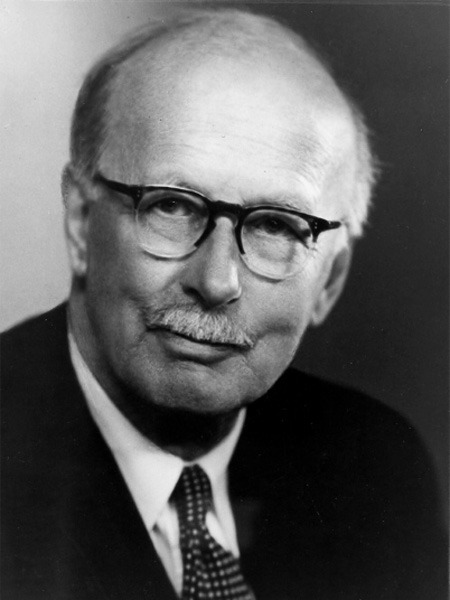
Sir Harry Ricardo as seen in 1955 at age 70.

Sir Harry Ricardo as seen in 1955 at age 70.

Sir Harry Ricardo (26 January 1885 – 18 May 1974) was one of the foremost engine designers and researchers of the internal combustion engine. During the First World War, Ricardo designed significantly improved engines for early British tanks. Between the wars, he researched the physics of internal combustion and the design of combustion chambers. This work led to the use of octane ratings, stratified charge, and intake swirl (vortex). Ricardo was instrumental in the development of the sleeve valve engine, particularly for aircraft use. His work and research contributed greatly to the high-power aircraft engines of World War II. After the war, he continued to develop the Diesel pre-combustion chamber (Comet), originally designed in the 1930s, which made high-speed diesel engines possible.

The following excerpt is from a lecture Harry Ricardo gave to the Royal Society of Arts on 23 November 1931.

I am going to take the rather unconventional course of asking you to accompany me, in imagination, inside the cylinder of a diesel engine. Let us imagine ourselves seated comfortably on the top of the piston, at or near the end of the compression stroke. We are in complete darkness, the atmosphere is a trifle oppressive, for the shade temperature is well over 500 Celsius – almost a dull red heat – and the density of the air is such that the contents of an average sitting-room would weigh about a ton; also it is very draughty, in fact, the draught is such that, in reality, we should be blown off our perch and hurled about like autumn leaves in a gale. Suddenly, above our heads, a valve opens and a rainstorm of fuel begins to descend. I have called it a rainstorm, but the velocity of droplets approaches much more nearly that of rifle bullets than of raindrops.

For a while nothing startling happens, the rain continues to fall, the darkness remains intense. Then suddenly, away to our right perhaps, a brilliant gleam of light appears, moving swiftly and purposefully; in an instant this is followed by a myriad others all around us, some large and some small, until on all sides of us the space is filled with a merry blaze of moving lights; from time to time the smaller lights wink and go out, while the larger ones develop fiery tails like comets; occasionally these strike the walls, but, being surrounded by an envelope of burning vapour, they merely bounce off like drops of water spilt on a red hot plate.

Right overhead all is darkness still, the rainstorm continues, and the heat is becoming intense; and now we shall notice that a change is taking place. Many of the smaller lights around us have gone out, but new ones are beginning to appear, more overhead, and to form themselves into definite streams shooting rapidly downwards or outwards from the direction of the injector nozzles.

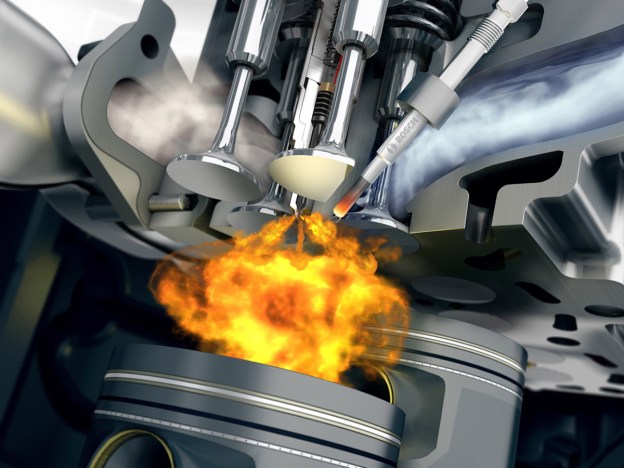
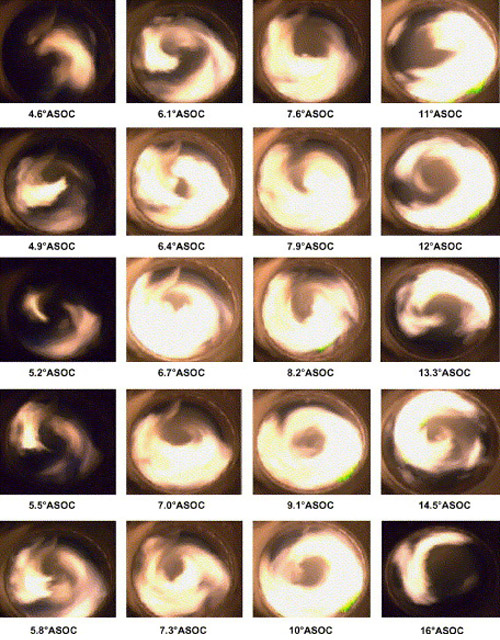
Fuel being burnt as it is injected into a diesel cylinder. (Bosch image)

Fuel igniting as it is injected into a diesel cylinder. (Bosch image)

Looking round again we see that the lights around are growing yellower; they no longer move in a definite direction, but appear to be drifting listlessly hither and thither; here and there they are crowding together in dense nebulae, and these are burning now with a sickly, smoky flame, half suffocated for want of oxygen. Now we are attracted by a dazzle, and looking up we see that what at first was cold rain falling through utter darkness, has given place to a cascade of fire as from a rocket. For a little while this continues, then ceases abruptly as the fuel valve closes.

Above and all around us are still some lingering fire balls, now trailing long tails of sparks and smoke and wandering aimlessly in search of the last dregs of oxygen which will consume them finally and set their souls at rest. If so, well and good; if not, some unromantic engineer outside will merely grumble that the exhaust is dirty and will set the fuel valve to close a trifle earlier.

So ends the scene, or rather my conception of the scene, and I will ask you to realise that what has taken me nearly five minutes to describe may all be enacted in one five hundredth of a second or even less.

– Harry Ricardo

View of a diesel combustion chamber showing the combustion sequence (ASOC: After Start of Combustion).

View of a diesel combustion chamber showing the combustion sequence (ASOC: After Start of Combustion).

More on Sir Harry Ricardo:
Engines & Enterprise: The Life and Work of Sir Harry Ricardo by John Reynolds (1999)