Monthly Archives: December 2012

Napier Cub E66 engine

Napier Cub (E66) – First 1,000 hp Aircraft Engine

By William Pearce

Early in 1919, Montague Napier, President of D. Napier & Son Ltd., decided that his company should focus entirely on aircraft engines. The company’s first aero-engine, the very successful 450 hp (336 kW) Lion, was in full production. Napier began to think about its replacement, or at least a complementary engine to diversify the product line. Napier approached the British Air Ministry with his new engine plans, and in September 1919, his company was awarded a contract to build six of these new engines at 10,000 GBP each.
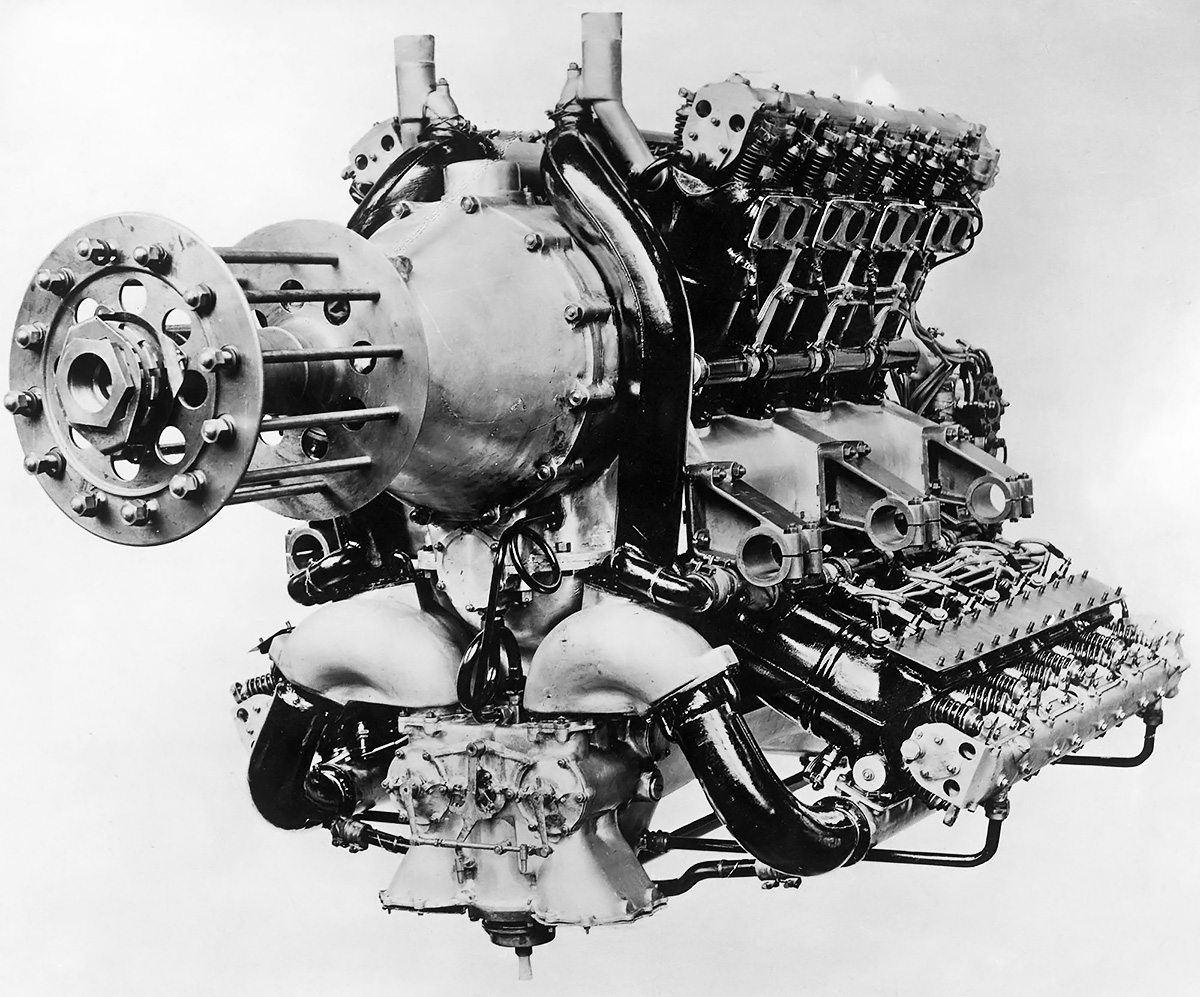
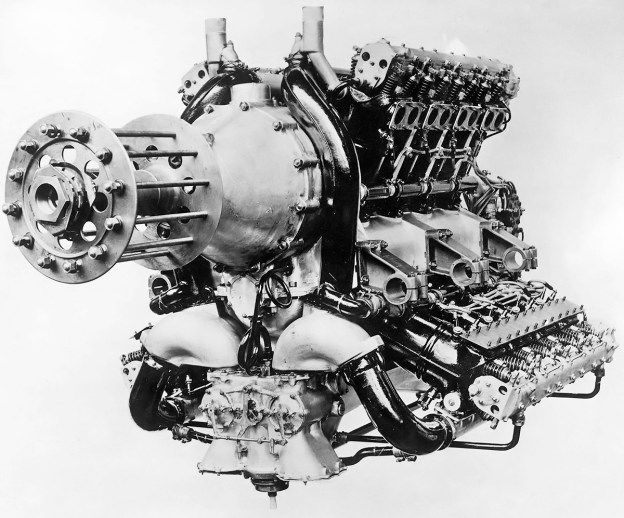
Napier Cub E66 engine

The 1,000 hp (746 kW), 16-cylinder Napier Cub. Below the propeller gear reduction are the two duplex carburetors with an induction pipe leading to each cylinder bank.

What Napier had envisioned, and the Air Ministry purchased, was a large power plant of 1,000 hp (746 kW)—enough power for one engine to propel a large bomber aircraft. The engine was given the Napier designation E66 but was referred to as the Cub. Despite its diminutive name, the Cub was a much larger engine than the Lion. The Napier Cub was unlike any engine before or since.

The Napier Cub was a liquid-cooled, 16-cylinder engine with four banks of four cylinders arranged in an X configuration on an aluminum crankcase. The banks were not equally spaced: the angle between the top banks was 52.5 degrees; the banks on either side were angled at 90 degrees; and the angle between the bottom banks was 127.5 degrees. Reportedly, the engine was so arranged to relieve stress on the crankshaft and to ease the engine’s installation in aircraft.
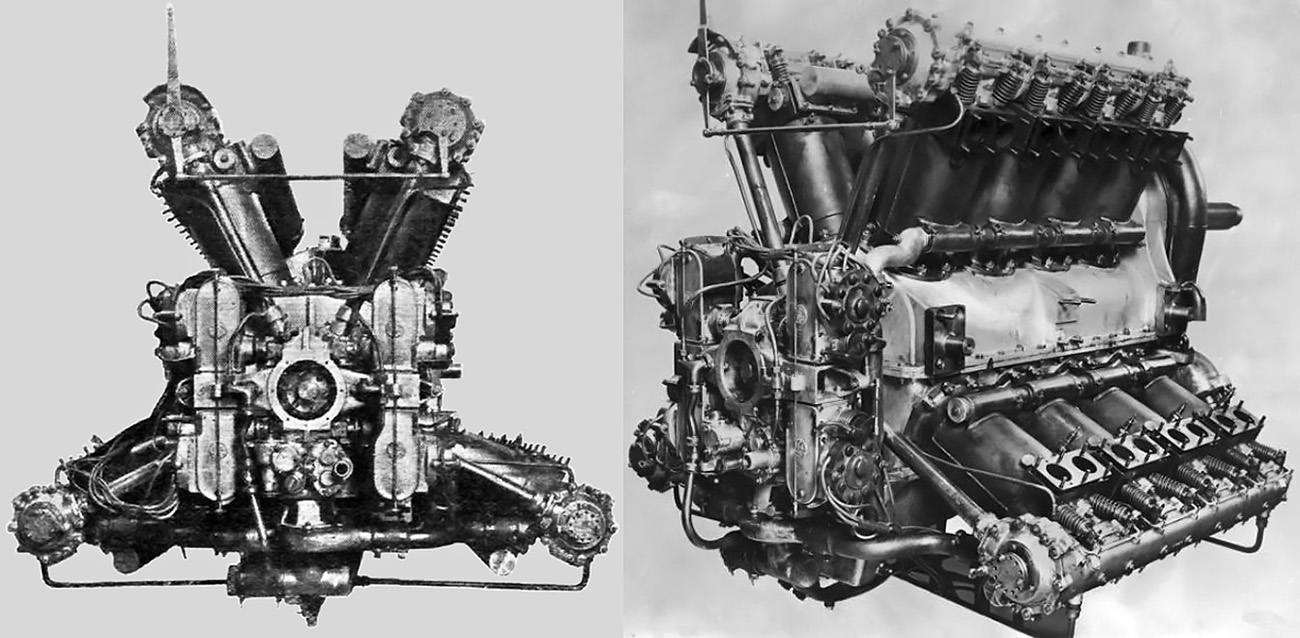
Napier Cub E66 rear

The Napier Cub was the first aircraft engine to exceed 1,000 hp (746 kW). These rear views illustrate the cylinder bank angles, the four magnetos on the back of the engine, the housings for the camshaft drive, and the exposed valves.

The Cub used individual steel cylinders of a 6.25 in (158.75 mm) bore and 7.5 in (190.5 mm) stroke and were encased in separate welded-steel water jackets. The engine displaced 3,682 cu in (60.3 L). The Cub’s compression ratio was 5.3 to 1. The engine was 57 in (1.45 m) wide, 64.25 in (1.63 m) tall, 71.8125 in (1.9 m) long, and weighed 2,450 lb (1,111 kg).

Each of the Cub’s four connecting rods consisted of one master rod and three articulated rods. The pistons were aluminum and had two compression and two oil-scrapper rings. Each cylinder bank had a single overhead camshaft that was driven via a vertical shaft. The vertical shafts were at the rear of the engine and driven from the crankshaft. The overhead camshaft actuated four exposed valves per cylinder. The Cub had a 0.49 propeller gear reduction through the use of spur gears that raised the propeller shaft. The propeller shaft’s bearing arrangement allowed the engine to be used in either a tractor or pusher configuration.
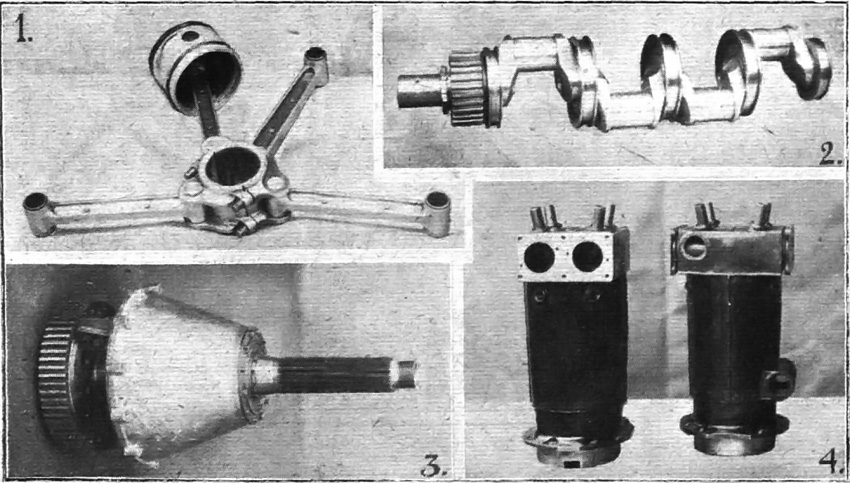
Various parts of the Napier Cub: 1) Connecting rod assembly with one articulated rod attached to the bearing cap. 2) Four-throw crankshaft with roller bearings and spur reduction gear. 3) Propeller shaft with large spur reduction gear. 4) Two of the Cub's cylinders with the valve ports visible on the left cylinder and the water-cooling ports visible on the right cylinder.

Various parts of the Napier Cub: 1) connecting rod assembly with one articulated rod attached to the bearing cap; 2) four-throw crankshaft with roller bearings and spur reduction gear; 3) propeller shaft with large spur reduction gear; 4) two of the Cub’s cylinders with the valve ports visible on the left cylinder and the water-cooling ports visible on the right cylinder.

Dual ignition was provided by four magnetos geared off the rear of the engine. The single water circulation pump was located at the lower rear of the engine, was driven at 1.5 times camshaft speed, and had one outlet to supply each cylinder bank. Two duplex carburetors were located under the gear reduction at the front of the engine. Each carburetor fed two manifolds: one for an upper cylinder bank and the other for a lower bank.

The Napier Cub was first run in late 1920. It was the first aircraft engine to surpass the 1,000 hp (746 kW) mark, achieving 1,057 hp (788 kW) at 1,900 rpm during an early test. The second Cub engine built was first run in early 1922. That same year, the Cub was installed in a modified Avro 549 Aldershot I (J6852, the first prototype) and re-designated Aldershot II. The Aldershot was a long-range, heavy bomber bi-plane. It had a 68 ft (20.7m) wingspan, was 45 ft (13.7 m) long, and weighed around 6,200 lb (2,812 kg). The Cub-powered Aldershot II first flew on 15 December 1922, piloted by Bert Hinkler. The Aldershot II continued to fly for about four years before the Napier Cub was removed and another test engine (an 800 hp / 597 kW Beardmore Typhoon) was installed.
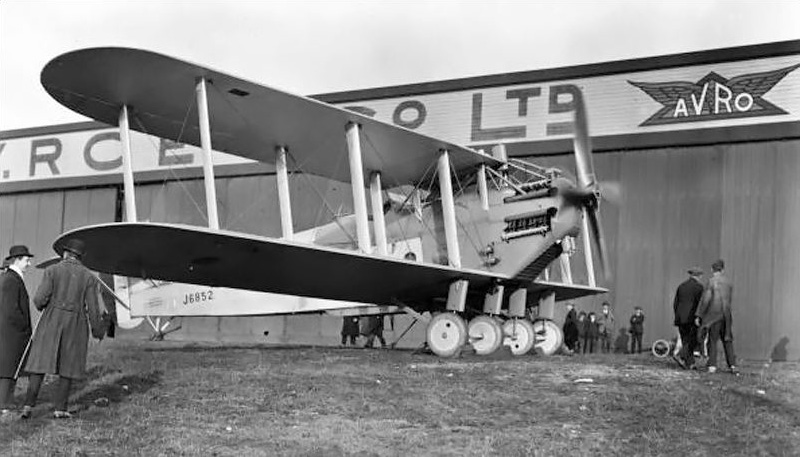
Napier Cub-powered Avro Aldershot II (J6852). This was the first Aldershot prototype, originally powered by a 650 hp Rolls-Royce Condor V-12 engine. To support the Cub, the aircraft had its main gear doubled to four wheels. After three years of Cub-power, the aircraft was re-engined with an 800 hp Beardmore Typhoon (straight-six semi-diesel).

Napier Cub-powered Avro Aldershot II (J6852). This was the first Aldershot prototype, originally powered by a 650 hp (485 kW) Rolls-Royce Condor V-12 engine. To support the Cub, the aircraft was strengthened and had its main gear doubled to four wheels. After two years of Cub-power, the aircraft was re-engined with an 800 hp (597 kW) Beardmore Typhoon.

A Napier Cub was also installed in both of the two Blackburn T.4 Cubaroos built. The Cubaroo was a long-range coastal defense bi-plane capable of carrying a 21-in (.533 m) torpedo or equivalent bomb load of 2,000 lb (907 kg). The aircraft had an 88 ft (26.8 m) wingspan, was 54 ft (16.5 m) long, and weighed 9,632 lb (4,396 kg) empty and 19,020 lb (8,709 kg) fully loaded. The Cubaroo was possibly the largest single-engine aircraft in its day. The first Cubaroo (N166) took to the air in the summer of 1924, piloted by P.W.S. ‘George’ Bulman. The aircraft was delivered to Martlesham Heath for flight trials in October 1924. Several engine failures were noted as well as a tendency for the engine to overheat during a high-power climb.

The second Cubaroo (N167) had a revised radiator and first flew in early 1925. Both Cubaroo aircraft were flown in various aviation displays and used for testing. N166 was damaged beyond repair in a landing accident on July 16, 1926. N167 continued to fly with Cub-power until 1927, when it was re-engined to test the 1,100 hp (820 kW) Beardmore Simoon.
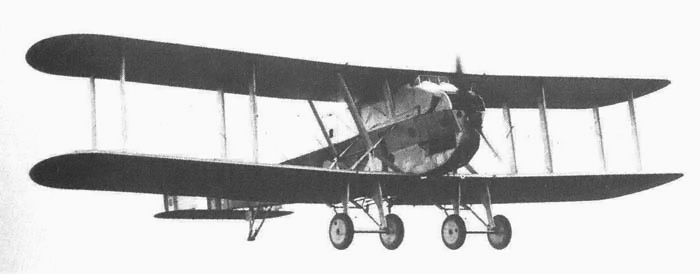
The first Blackburn Cubaroo (N166) in flight. The 1,000 hp Cub seemed to be quite adequate for the aircraft.

The first Blackburn Cubaroo (N166) in flight. The 1,000 hp (746 kW) Cub seemed to be quite adequate for the large aircraft.

Another aircraft designed to use the Napier Cub was the Avro 556. With a wingspan over 95 ft (30 m), this aircraft was even larger than the Cubaroo, although intended for the same purpose of carrying a 21-in (.533 m) torpedo. This aircraft was never built; instead, the basic design was used for the twin Rolls-Royce Condor-powered Avro 557 Ava.

By June 1925, the concept of a single, large aircraft engine powering a very large aircraft fell to the wayside in favor of multiple engines, which gave some degree of enhanced safety. The Air Ministry lost its interest in the Napier Cub, and the world’s first 1,000 hp (746 kW) aircraft engine faded to obscurity.
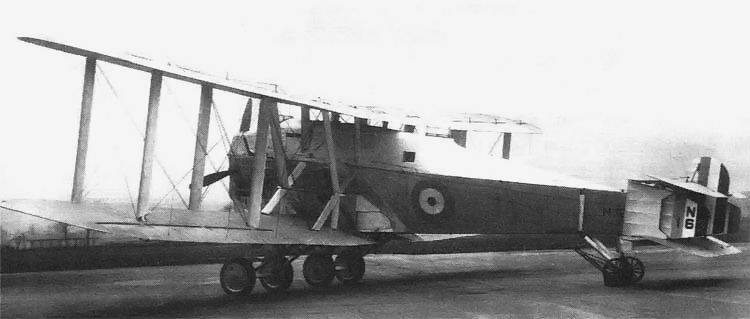
The second Blackburn Cubaroo (N167) with the revised radiator to cool the Napier Cub.

The second Blackburn Cubaroo (N167) with the revised radiator to cool the Napier Cub.

Sources:
Aerosphere 1939 by Glenn Angle (1940)
Men and Machines by Wilson and Reader (1958)
By Precision Into Power by Alan Vessey (2007)
Avro Aircraft since 1908 by A J Jackson (1965/1990)
Blackburn Aircraft since 1909 by A J Jackson (1968/1989)
The British Bomber since 1914 by Francis Mason (1994)
British Flight Testing: Martlesham Heath 1920-1939 by Tim Mason (1993)
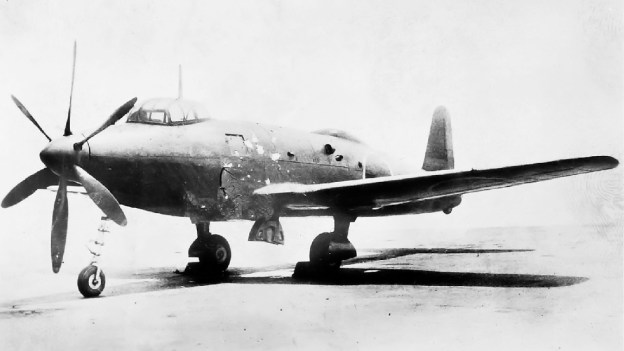
Yokosuka (Kugisho) R2Y1 Keiun

By William Pearce

Late in 1938, the Heinkel He 119 experimental high-speed reconnaissance aircraft was shown to a Japanese Naval delegation visiting Germany. The Japanese liked the speed and range of the He 119, and overall, were impressed by the aircraft. Based on the positive initial interest, the Japanese sent a group of technicians from the Yokosuka Naval Air Technical Arsenal (Yokosuka, also known as Kaigun Koku Gijutsusho or Kugisho) to Germany for a closer examination of the He 119. Eventually, Commander Hideo Tsukada was able to purchase two He 119 prototypes and a license to manufacture the aircraft in Japan.

The standard image of the Yokosuka R2Y1 Keiun. Speculation suggests the first scoop on the side of the aircraft provided cooling air for the engine's internal exhaust baffling, the second, larger scoop provided induction air for the normally aspirated Aichi [Ha-70] engine installed in the prototype, and the final two ports were for the engine's exhaust.

The standard image of the Yokosuka R2Y1 Keiun. Speculation suggests the first scoop on the side of the aircraft provided cooling air for the engine’s internal exhaust baffling, the second, larger scoop provided induction air for the normally aspirated Aichi [Ha-70] engine installed in the prototype, and the final two ports were for the engine’s exhaust.

The two He 119 prototypes were delivered via ship to Japan in 1941 (some say 1940). The aircraft were reassembled at Kasumigaura Air Field, and flight tests occurred at Yokosuka Naval Base. During an early test flight, one of the He 119s was badly damaged in a landing accident, and it is believed the other He 119 suffered a similar fate. Plans to produce the He 119 never moved forward, but the Japanese were still interested in a high-speed reconnaissance aircraft and felt the general configuration of the He 119 held promise.

Inspired by the Heinkel He 119, Yokosuka began to design an aircraft of a similar layout, known as the Y-40, in 1943. Headed by Commander Shiro Otsuki, the aircraft project was a pressurized, two-seat, unarmed, high-speed, reconnaissance aircraft of all-metal construction that featured tricycle retractable gear. The design was approved, and the Y-40 officially became known as the R2Y1 Keiun (Beautiful Cloud). The construction of two prototypes was ordered.

A good view of the R2Y1 where a radiator inlet can be seen under the wing and in front of the main gear. The ventral scoop was an intake for the turbocharger and intercooler but these were not installed on the prototype.

A good view of the R2Y1 where a radiator inlet can be seen under the wing and in front of the main gear. The ventral scoop was an intake for the turbocharger and intercooler but these were not installed on the prototype.

The R2Y1 had a 45.93 ft (14 m) wingspan and was 42.81 ft (13.05 m) long. The aircraft stood 13.91 ft (4.24 m) high, weighed 13,260 lb (6,015 kg) empty, and had a maximum weight of 20,725 lb (9,400 kg). The Keiun had an estimated top speed of 447 mph (720 km/h) at 32,810 ft (10,000 m) and a cruise speed of 288 mph (463 km/h) at 13,125 ft (4,000 m). Maximum range was an estimated at 2,240 mi (3,610 km). The pilot sat under a raised bubble-style canopy that was toward the extreme front of the aircraft. The radio operator/navigator occupied an area in the fuselage just behind and a little below the pilot.

The Keiun was powered by two 60-degree, inverted V-12 Aichi Atsuta 30 series engines, licensed-built versions of the Daimler-Benz DB 601. The engines were coupled together by a common gear reduction in a similar fashion as the DB 606. The resulting 24-cylinder power unit was known as the Aichi [Ha-70]. With a 5.91 in (150 mm) bore and 6.30 in (160 mm) stroke, the engine displaced 4,141 cu in (67.8 L) and was installed behind the cockpit and above the wings. The Aichi [Ha-70] engine was to be turbocharged and rated at 3,400 hp (2,535 kW) for takeoff and 3,000 hp (2,237 kW) at 26,247 ft (8,000 m). Without the turbocharger, the engine was rated at 3,100 hp (2,312 kW) for takeoff and 3,060 hp (2,282 kW) at 9,843 ft (3,000 m). The engine drove a 12.47 ft (3.8 m), six-blade propeller via a 12.8 ft (3.9 m) long extension shaft that ran under the cockpit. Engine cooling was achieved by radiators under the fuselage and inlets for oil coolers in the wing roots. A ventral air scoop was located behind the engine to provide induction air for the turbocharger and air for the intercooler.

The R2Y1 Keiun undergoing taxi tests in May 1945.

The R2Y1 Keiun undergoing taxi tests in May 1945.

By the fall of 1944, the direction of the war had changed, and Japan no longer needed a high-speed reconnaissance aircraft. The R2Y1 Keiun was all but cancelled when the design team suggested the aircraft could easily be made into a fast attack bomber. In addition, the Aichi [Ha-70] power plant would be discarded, and one 2,910 lb (1,320 kg) thrust Mitsubishi Ne 330 jet engine would be installed under each wing. A fuel tank would be installed in the space made available by the removal of the piston engine. This jet-powered attack bomber had an estimated top speed of 495 mph (797 km/h). The project was approved, and the new aircraft was designated R2Y2.

The decision was made to finish the nearly completed R2Y1 airframe and use it as a flight demonstrator to assess the flying characteristics of the aircraft. With pressurization, the turbocharger, and the intercooler omitted, the R2Y1 prototype was completed in April 1945 and transferred to Kisarazu Air Field for tests. Ground tests revealed that the aircraft suffered from nose-wheel shimmy and engine overheating.

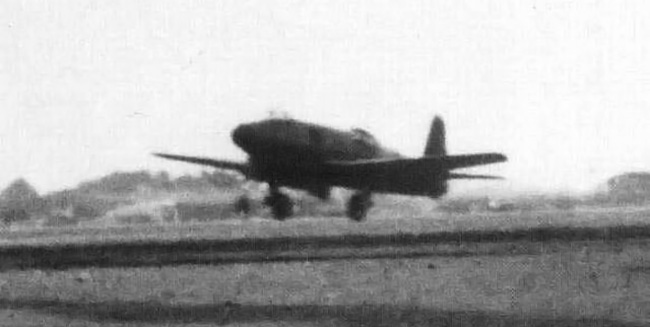
Yokosuka R2Y1 Keiun taking off from Kisarazu Air Field for its first an only flight.

Yokosuka R2Y1 Keiun taking off from Kisarazu Air Field for its first an only flight.

Adjustments were made to overcome the issues, and the Keiun took to the air on 29 May 1945 (date varies by source and is often cited as 8 May 1945), piloted by Lt. Commander Kitajima. The flight proved to be very short because the engine quickly overheated, and a fire broke out in the engine bay. Lt. Commander Kitajima quickly returned to the field, and the R2Y1 suffered surprisingly little damage. On 31 May during a ground run to test revised cooling, the engine was mistakenly run at high power for too long and overheated. The engine was removed from the aircraft to repair the damage. The R2Y1 sat awaiting repair for some time before it was destroyed by Japanese Naval personnel to prevent its capture by American forces (some say it was destroyed in an Allied bombing raid). Because of the end of the War, the second R2Y1 prototype was never completed nor was the design work for the R2Y2.

The unfinished second R2Y1 prototype as seen at the end of WWII. Note the wing root and ventral intakes. The hole in the center of the bulkhead in the nose was for the propeller's drive shaft.

The unfinished second R2Y1 prototype as seen at the end of WWII. Note the wing root and ventral intakes. The hole in the center of the bulkhead in the nose was for the propeller’s drive shaft.

Sources:
– “Yokosuka R2Y1 Keiun: Japan’s mid-engined twin” Wings of Fame, Volume 12 (1998)
Japanese Secret Projects by Edwin Dyer (2009)
Japanese Aircraft of the Pacific War by Rene Francillon (1970/2000)
Japanese Aero-Engines 1910–1945 by Mike Goodwin and Peter Starkings (2017)
General View of Japanese Military Aircraft in the Pacific War by Airview (1956)
Japanese Aircraft Performance & Characteristics TAIC Manual by Edward Maloney (2000)
http://www.secretprojects.co.uk/forum/index.php/topic,15633.0/all.html

Heinkel He 119 V4 front

Heinkel He 119

By William Pearce

In the 1930s, brothers Siegfried and Walter Günter were pushing the limits of aerodynamics as they designed aircraft for Heinkel Flugzeugwerke in Germany. Perhaps the ultimate expression of their aerodynamic beliefs was the Heinkel He 119. The Günter brothers and Ernest Heinkel envisioned the He 119 as an unarmed, high-speed reconnaissance aircraft or light bomber.

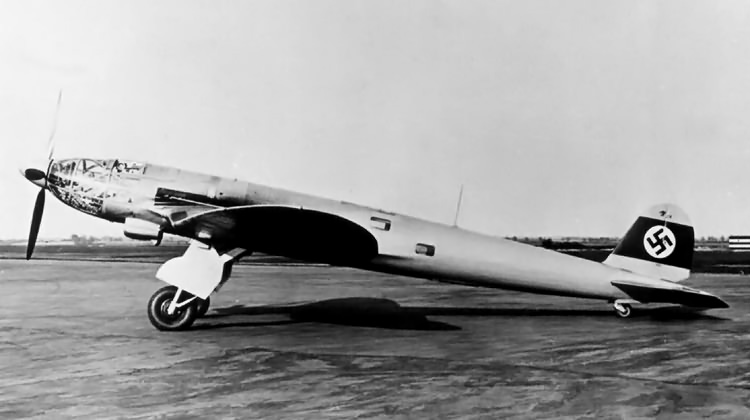
Heinkel He119 V1 side

Heinkel He 119 V1 prototype with the hastily installed radiator to augment the evaporate cooling system.

Work on the He 119 began in the summer of 1936 as a private venture funded by Heinkel Flugzeugwerke. The aircraft appeared to have a fairly standard layout as an all metal, low-wing monoplane with retractable gear. However, the very streamlined fuselage hid the He 119’s unorthodox power arrangement. To achieve the low-drag necessary for high-speed operations, the engine was buried in the fuselage, just behind the cockpit and above the wings. An enclosed drive shaft extended forward from the engine, through the cockpit, between the pilot and co-pilot, and to the front of the aircraft where it drove a 14 ft 1 in (4.30 m), metal, variable-pitch, four-blade propeller.

No engine produced the power needed for the He 119, so two Daimler-Benz DB 601 engines were placed side-by-side and coupled together through a common gear reduction. The DB 601 was a liquid-cooled, 12-cylinder, 60 degree, inverted Vee engine with a 5.91 in (150 mm) bore and 6.30 in (160 mm) stroke. When coupled, the 24-cylinder engine was known as the DB 606; it displaced 4,141 cu in (67.8 L) and produced 2,350 hp (1,752 kW). The inner banks of the DB 606 were pointed nearly straight down and exhausted under the aircraft. The side banks’ exhaust was expelled just above the He 119’s wings.

Daimler-Benz DB 606

The Daimler-Benz DB 606 engine was comprised of two DB 601 engines joined to a common gear reduction.

The DB 606 engine in the He 119 was to be cooled exclusively by surface evaporative cooling, where steam from the heated coolant was pumped under the skin of the wing’s center section. Here, the steam would cool and condense back into liquid. The liquid was then pumped back to the engine. However, during testing the system proved to be inadequate, and a radiator was added below the fuselage, just before the wings. The first prototype had a fixed radiator that was rather hastily installed. The subsequent prototypes included an improved radiator that was extended during low-speed operations but was semi-retracted into the fuselage as the aircraft’s speed increased.

The He 119’s cockpit formed the nose of the aircraft. The cockpit was entirely flush with the 48 ft 7 in (14.8 m) fuselage and was extensively glazed with heavily framed windows. The pilot and co-pilot accessed the cockpit by separate sliding roof panels. In the aft fuselage were provisions for a radio operator and a ventral bay for cameras. Another bay for either large cameras or a maximum of 1,200 lb (1,000 kg) of bombs was located in fuselage, just aft of the wing spar.

Heinkel He 119 nose radiator

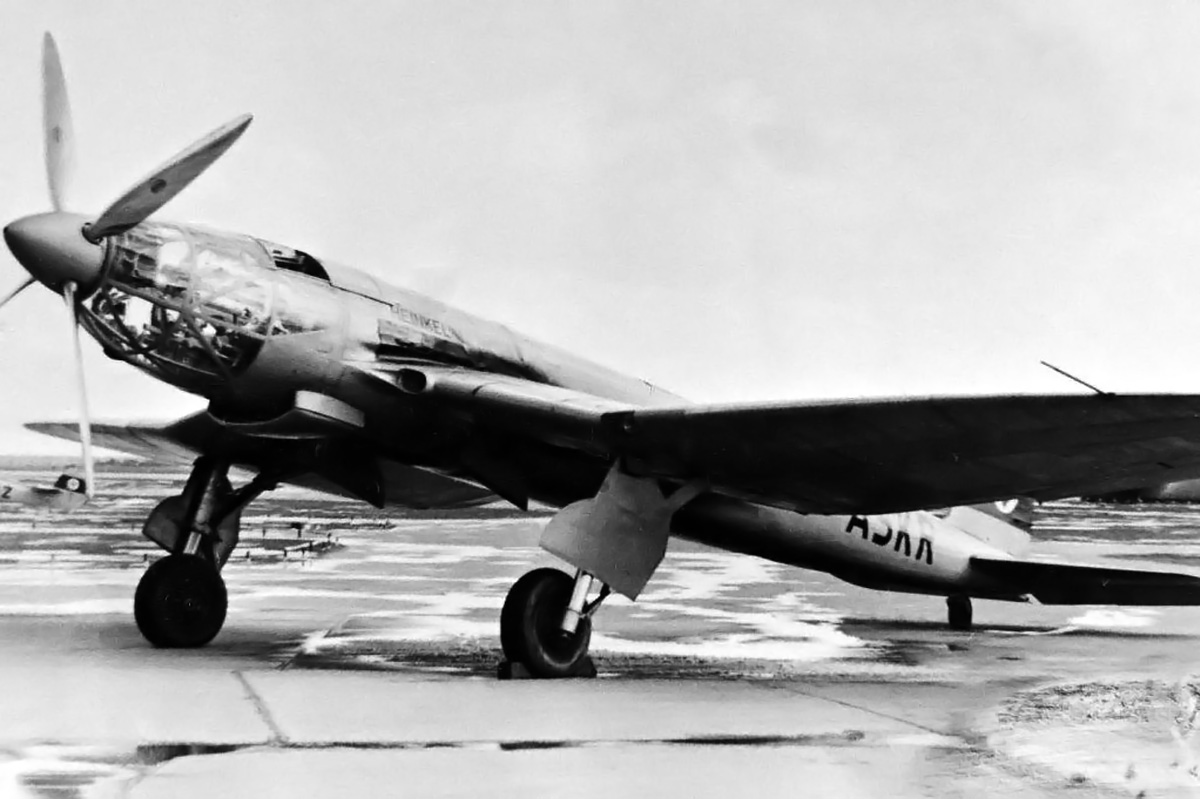
A good view of the He 119’s glazed cockpit is provided in this image. Most sources state this aircraft is V4, but it possesses the exhaust ports of V1. Note the extended radiator.

The He 119 had a wingspan of 52 ft 6 in (16 m). To provide for proper ground clearance, conventional main landing gear would have been too long to fit in the inverted-gull, semi-elliptical wing. A telescoping strut was devised that would collapse as the gear retracted. This allowed the gear to fit within the wing and also extend to provide the needed ground clearance.

Heinkel kept the He 119 a secret during construction, and the first prototype (V1) flew in June 1937 with Gerhard Nitschke at the controls. Even with the bulk of the added radiator, the aircraft achieved 351 mph (565 km/h), which was faster than fighter aircraft of the day. This speed validated Heinkel and the Günter brothers’ position that the fast bomber did not need to be armed. However, when the aircraft was revealed to German officials, they insisted the aircraft be armed with upper and lower guns operated by separate gunners. German officials did allow the continued experimentation of the aircraft; at this point, the aircraft was officially designated He 119. The addition of the guns lowered the aircraft’s speed, and it appears that only the upper gun was included in other prototypes, housed under a sliding panel.

Heinkel He 119 V2 with windows in the rear fuselage for the radio operator.

Heinkel He 119 V2 with windows in the rear fuselage for the radio operator. Reportedly, this is the last He 119 built with the semi-elliptical wing.

It is at this point that sources disagree on the He 119’s history. One theory is that the second prototype (V2) first flew in September 1937, followed by the fourth prototype (V4) in October 1937. The He 119 V4 set a speed record on 22 November 1937 and was destroyed in a follow-up attempt on 16 December. A total of eight aircraft were built; the seventh (V7) and eighth (V8) were purchased by and subsequently shipped to Japan.

The other theory, supported by German Heinkel expert Dr. Volker Koos, is that the V1 was prepared (which included the installation of a new radiator as used on the subsequent prototypes) for the record flight. The V1 flew the record flight and crashed during the follow-up attempt. The first flight of V2 was in 1938, and V4 first flew in May 1940. Most likely, only four aircraft were built, and V2 and V4 were shipped to Japan.

Side view of the He 119 V3. The updated wing used on the V3 and all further He 119 aircraft can be seen as well as tail modifications to increase the seaplanes stability.

Side view of the He 119 V3. The updated wing used on the V3 and all further He 119 aircraft can be seen as well as tail modifications to increase the seaplane’s stability.

All sources agree that the He 119 carrying the registration D-AUTE made the record flights. The third prototype (V3) was first flown after V4 because V3 was built as a seaplane. All prototypes from V3 on were built with a new wing that had a straight leading edge and a slightly reduced span of 52 ft 2 in (15.9 m).

After careful examination of various photos, it appears that the He 119 registered at D-AUTE had the semi-elliptical wing as used on the first two prototypes. It also appears that the exhaust ports above the wing on V1 were unique and at an angle, with each port slightly higher (relative to the fuselage) than the port preceding it. All other He 119s had exhaust ports in a straight line relative to the fuselage. D-AUTE appears to have the ports as seen on V1. Based on the information available, it seems more likely that V1 did indeed make the record flights. Sadly, given the secrecy under which the He 119 was built, the propaganda subterfuge surrounding the record flights, and the destruction of German documents during World War II, the exact aircraft identities as well as the number built may never be definitively known.

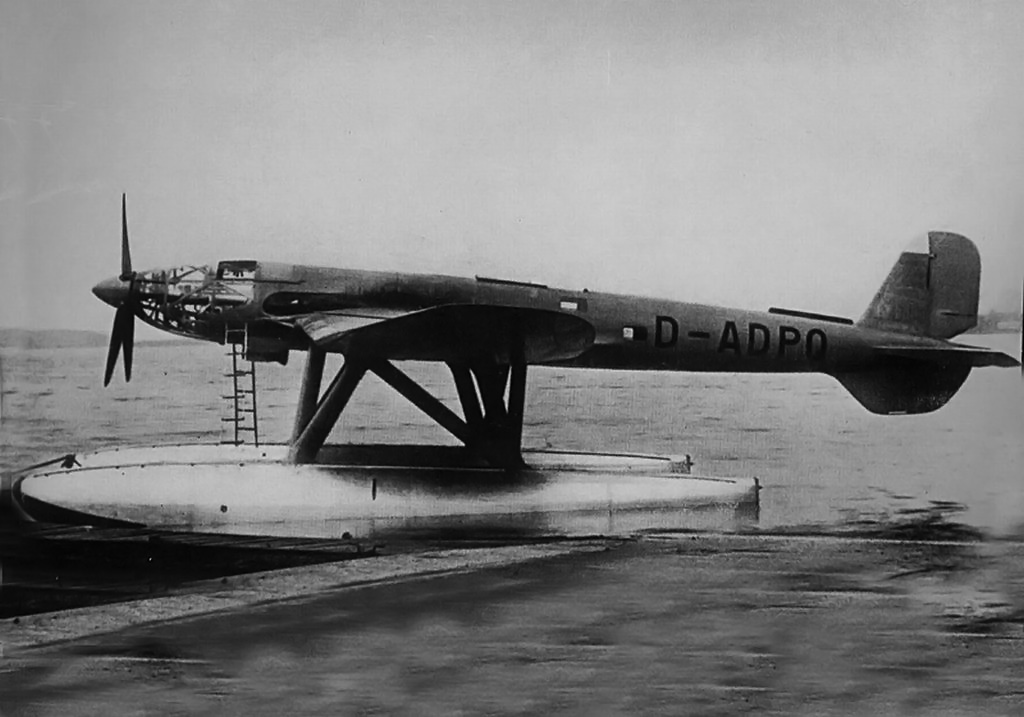
Heinkel He 119 V3 b

The Heinkel He 119 V3 seaplane taxiing under its own power. This aircraft was to be used on an attempt to set a new 1000 km (621 mi) seaplane record, but such plans were cancelled after the other He 119’s crash.

Regardless of the specific airframe, on 22 November 1937, the He 119 set a world record for flying a payload of 1,000 kg (2,205 lb) over a distance of 1,000 km (621 mi). For propaganda purposes, the He 119 was labeled He 111U and also He 606. Due to weather, the He 119 was forced to fly lower than anticipated which reduced its airspeed. Even though the He 119 set the record at 313.785 mph (504.988 km/h), the speed was seen as a disappointment that did not represent the He 119’s true capabilities. Indeed, the record was broken about two weeks later by an Italian Breda Ba 88.

A follow-up flight to reclaim the record occurred on 16 December 1937.  With over half the distance flown and the He 119 averaging just under 370 mph (595 km/h), the DB 606 engine quit. The pilots, Nitschke and Hans Dieterle, attempted an emergency landing at Travemünde but hit a drainage ditch. The He 119 was destroyed; Nitschke and Dieterle were injured, but they survived. The engine failure was a result of a faulty fuel transfer switch. After the crash, Heinkel was ordered not to attempt any further record flights with the He 119.

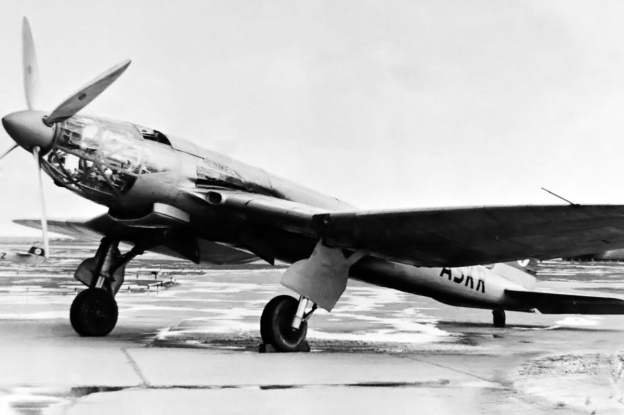
Heinkel He 119 V4 front

Many sources identify this aircraft (D-ASKR) as the He 119 V2. Interestingly, the wing root intake for the supercharger and lower lip of the radiator do not match those found on other images of V2. The features do match those found on V3.

Other He 119 prototypes took over the test flights. He 119s with the new wing demonstrated a top speed of around 370 mph (595 km/h) and a range of 1,865 mi (3,000 km). Despite the floats, the He 119 V3 seaplane had a top speed of 354 mph (570 km/h) and a range of 1,510 mi (2,430 km). The V3 aircraft also had a ventral fin added to counteract the destabilizing effects of the floats. Unfortunately, the German authorities did not have any interest in producing the He 119 in any form because of its unorthodox features. Reportedly, some of the remaining aircraft served as test-beds for the DB 606 and DB 610 engines. The remaining He 119s in Germany were scrapped during World War II.

Late in 1938, the He 119 was shown to a Japanese Naval delegation that expressed much interest in the aircraft. In 1940 the Japanese purchased a manufacturing license for the He 119 along with two of the prototype aircraft. These aircraft were delivered via ship to Japan in 1941 (some say 1940). The aircraft were reassembled at Kasumigaura Air Field, and flight tests occurred at Yokosuka Naval Base. During an early test flight, one of the He 119s was badly damaged in a landing accident, and it is believed the other He 119 suffered a similar fate. While it was not put into production, the He 119 did provide the Japanese with inspiration for the Yokosuka (Kugisho) R2Y1 Keiun high-speed reconnaissance aircraft.

Heinkel He 119 V2 with the Japanese Naval delegation.

The Heinkel He 119 with the Japanese Naval delegation. The sliding roof panel for the pilot’s cockpit access can clearly be seen. Note the differences with the wing root intake and lower lip of the radiator compared to the D-ASKR aircraft.

Sources:
– “An Industry of Prototypes – Heinkel He 119”, Wings of Fame, Volume 12 by David Donald (1998)
Warplanes of the Third Reich by William Green (1970/1972)
http://www.whatifmodelers.com/index.php/topic,21627.0/
http://forum.12oclockhigh.net/showthread.php?t=14198